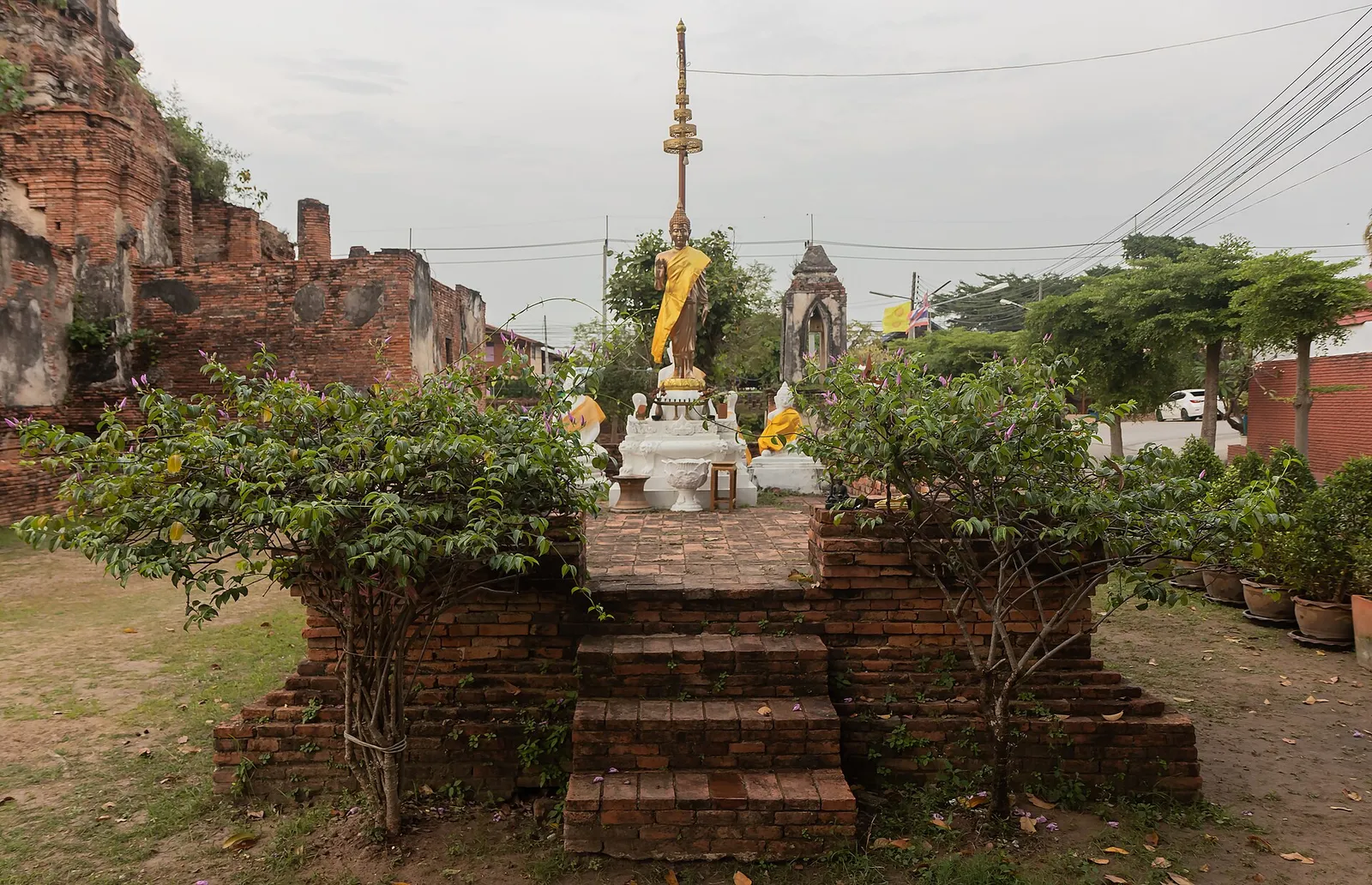
Ayutthaya was, for four centuries, one of the largest and richest cities in the world, a river island capital of temples and palaces that traders from Europe and Asia wrote home about. It was destroyed in the eighteenth century and never rebuilt, and what remains is a landscape of brick towers, headless Buddhas and foundations spread across a modern town. It is an hour and a half from Bangkok and it is the best day trip from the city.
What you are looking at
A capital that was sacked and abandoned, rather than a temple complex built as a site.
The scale is the thing. The ruins are not gathered in one park; they are spread across an island town, with temples in fields, beside roads and behind houses. Getting between them is part of the day.
It is brick and laterite, weathered to a deep red-brown, and almost entirely unroofed. That is the opposite of Bangkok’s gilded, active temples, and the contrast is why seeing both matters.
Very little is reconstructed, which is what gives it its atmosphere and also why it benefits from explanation.
The three worth prioritising
Three sites carry the day, and choosing them rather than attempting everything is the whole trick.
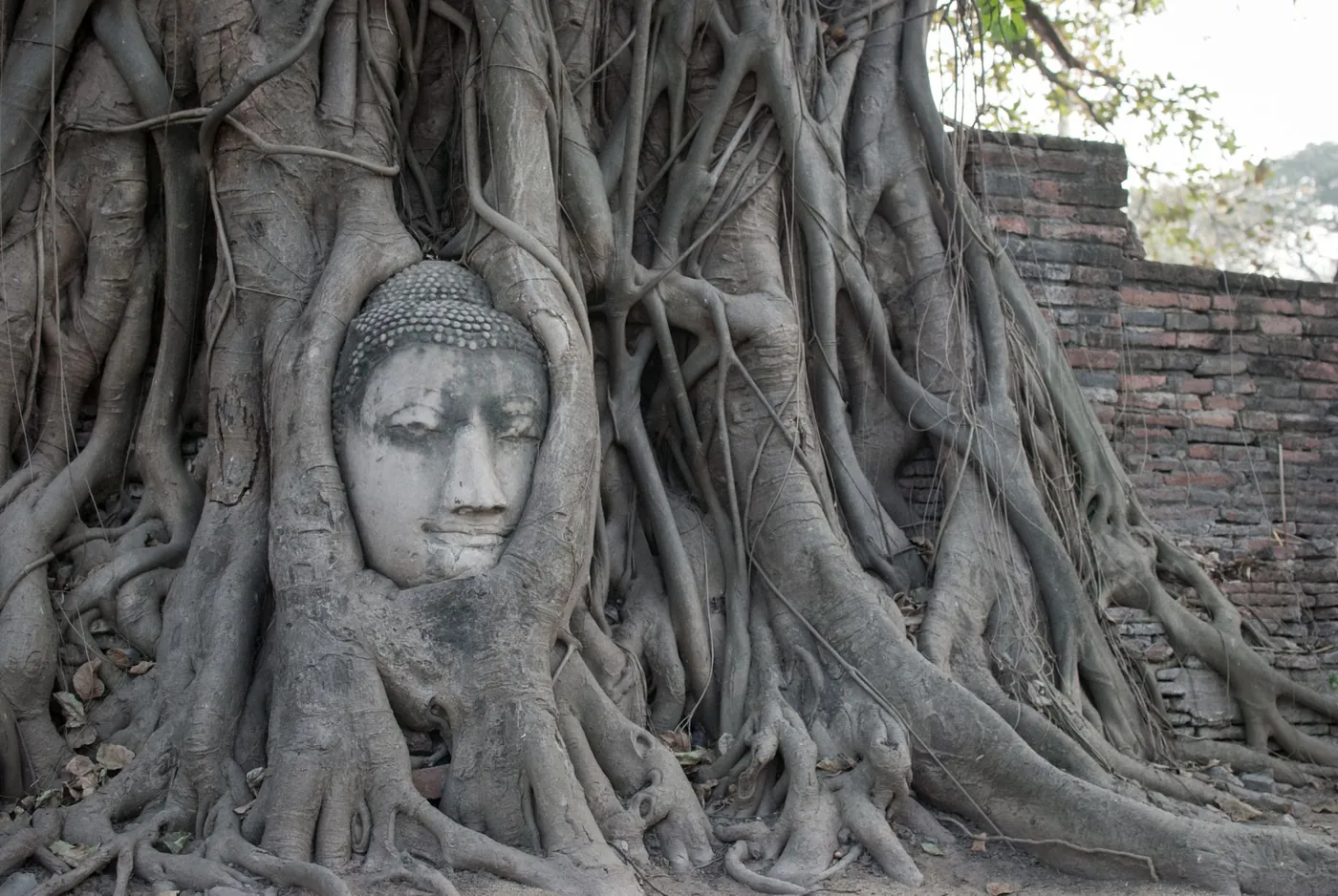
The Buddha head in the tree roots. A stone head, lost in a collapse centuries ago, gradually enclosed by the roots of a growing fig. It is the image on every poster of Thailand and it is genuinely arresting in person. It sits within a larger ruined complex worth walking.
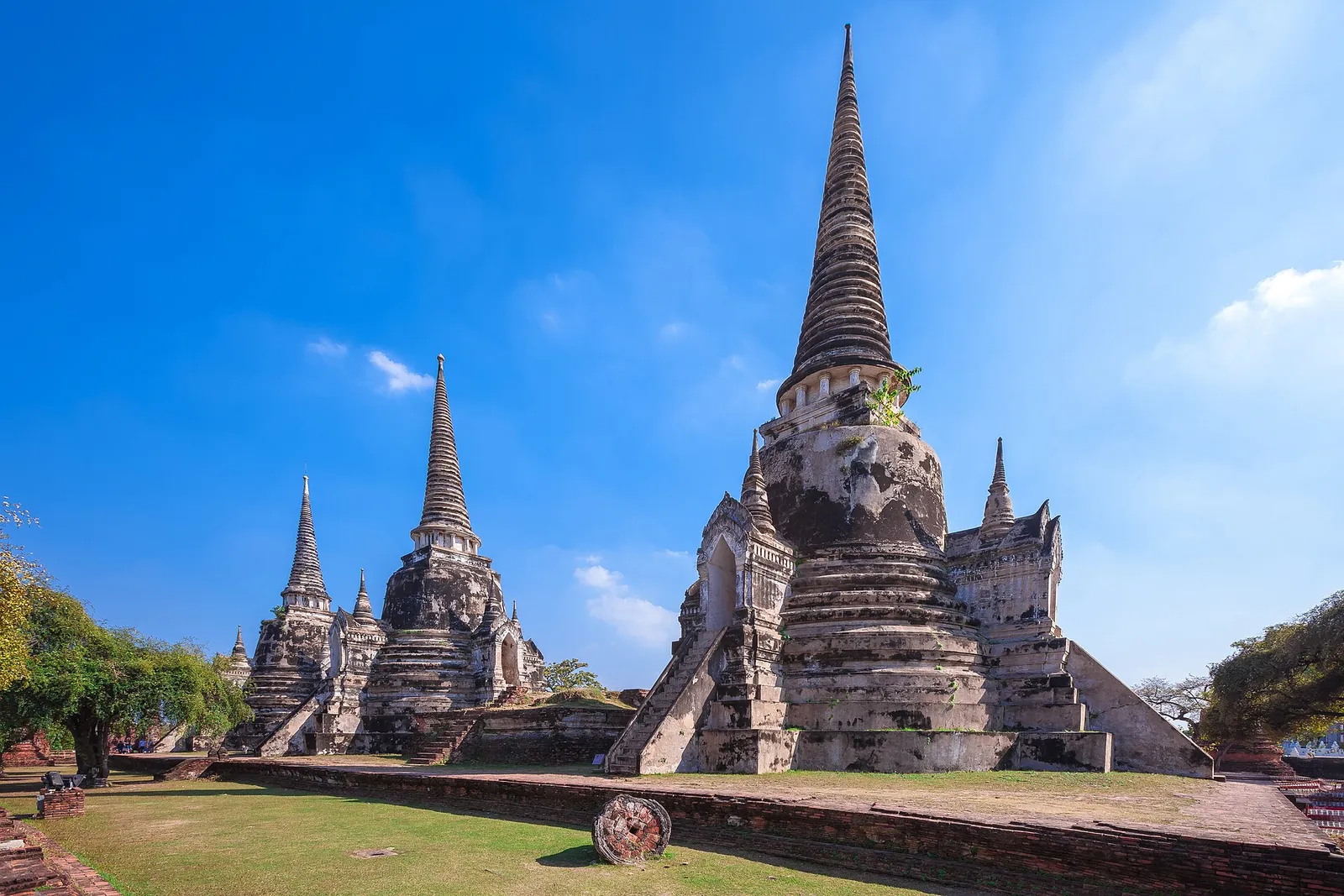
The temple with three chedis in a row. Three bell-shaped towers standing in line, the most photographed silhouette in the old city and the most complete thing here.
The central prang of the old royal complex, a tall corn-cob tower surrounded by rows of headless seated Buddhas, which is the site that best conveys what was lost.
Add a fourth if you are enjoying it and stop before the sixth, which is when brick starts looking like brick.
Getting there
The train is the best independent option: from a Bangkok station in roughly an hour and a half, cheap, frequent enough, and a pleasant ride through the outskirts and the rice fields.
Minivans are faster and less comfortable.
An organised day typically combines transport, a guide and sometimes a river boat on the return, which is slow and lovely and removes the need to think.
A private car with a driver is straightforward to arrange from Bangkok and suits a group.
Driving yourself is unnecessary and needs the correct licence and permit.
Getting around once there
The sites are too far apart to walk between comfortably.
A tuk-tuk by the hour or the day is the standard arrangement: agree a route and a price at the station, and the driver waits at each site.
A bicycle is cheap, available everywhere and excellent in the cool season and in the early morning.
A scooter requires the correct licence and an international permit, and checks do happen.
Walking within each site is significant, so shoes rather than sandals.
Practical notes
Dress respectfully. These are religious sites even in ruin: shoulders and knees covered, and shoes off where indicated at active temples.
Do not climb on the ruins, or sit or stand with your back to or above a Buddha image, which is genuinely offensive here and is signposted.
Carry water and a hat. There is very little shade.
Tickets are per site at the main ruins, with a combined option, and the arrangements are posted at the entrances.
Eat by the river, which is where the pleasant lunch is, and try the local river prawns if they appeal.
Where it fits with the other day trips
Ayutthaya is the history day and it pairs naturally with the other two classic trips from Bangkok rather than competing with them.
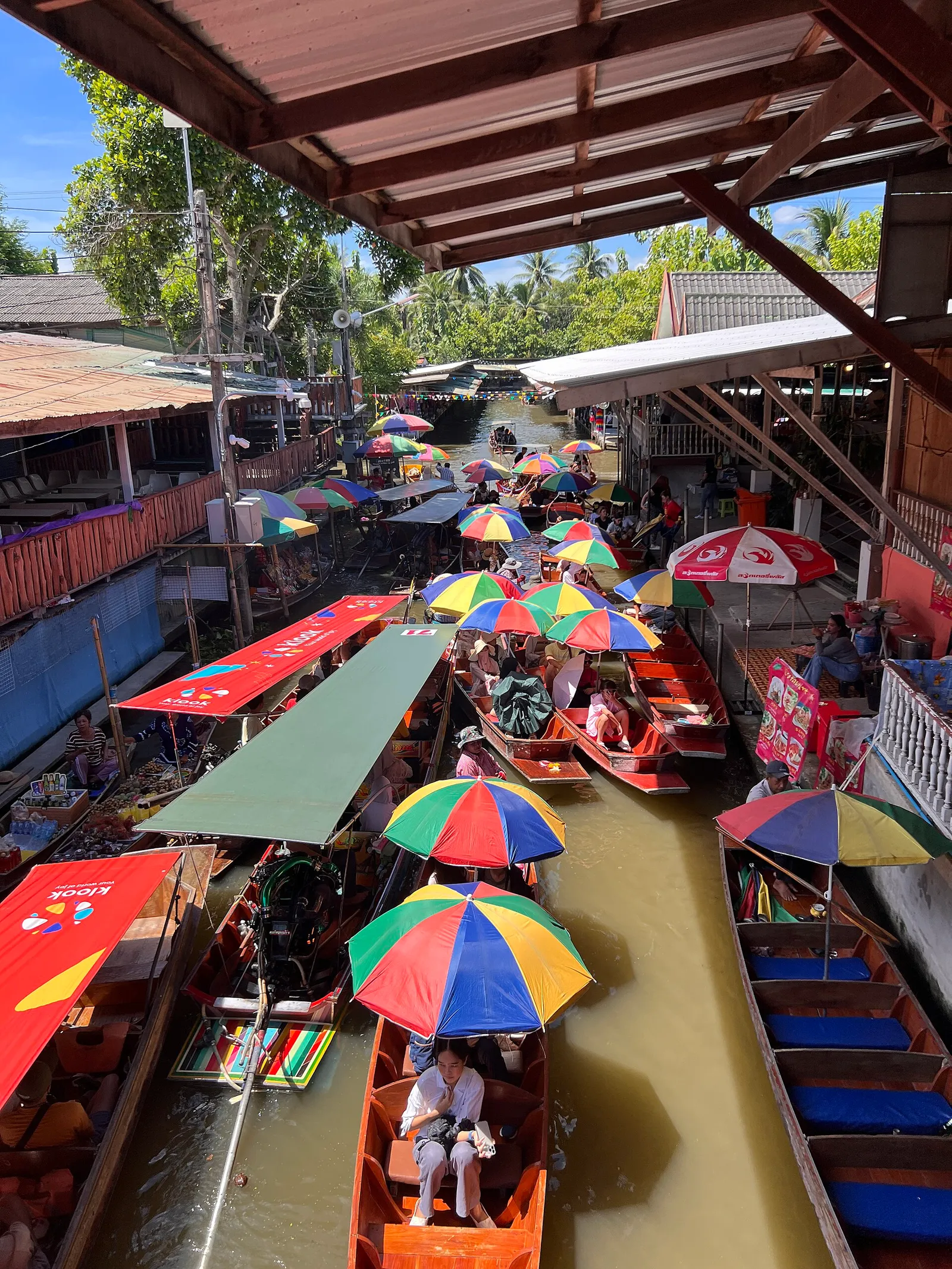
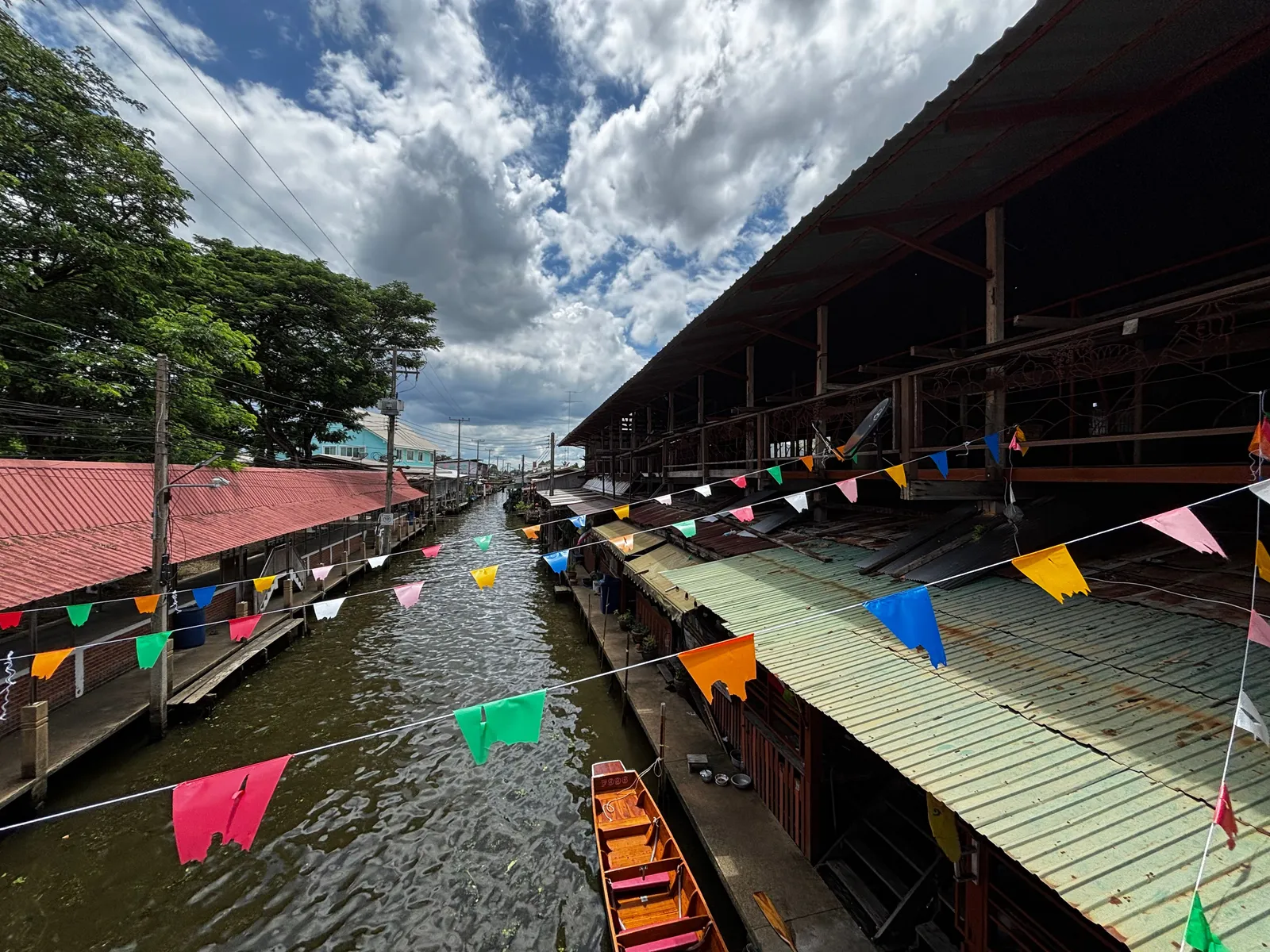
The floating markets are the early-morning water day, and they have their own complications about which one to choose; our guide to Bangkok’s floating markets covers which are staged and which are working.
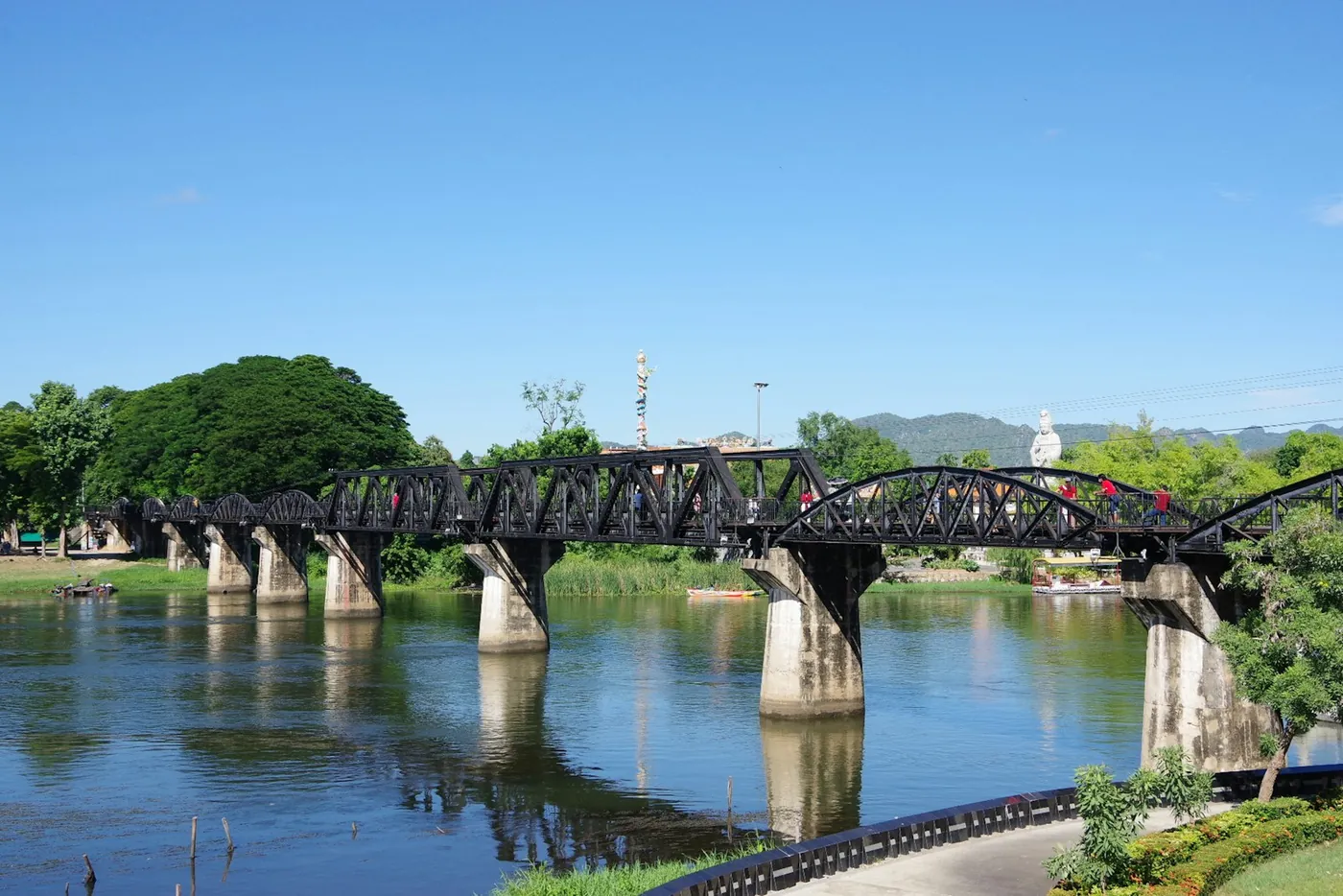
Kanchanaburi to the west is the other big day out, longer, greener, and built around a very different piece of history; our guide to Kanchanaburi covers it.
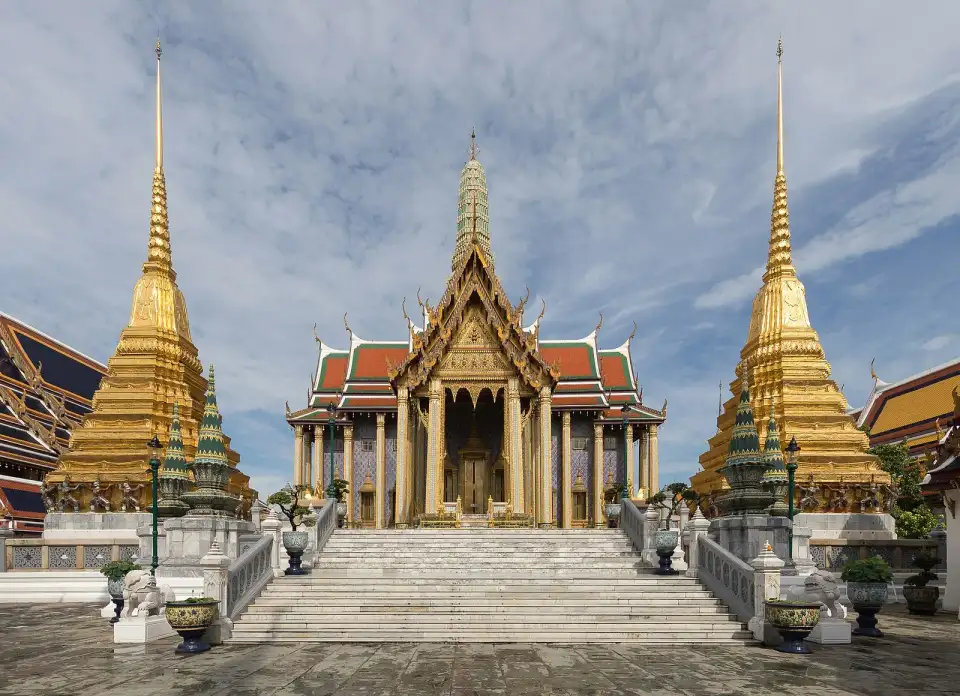
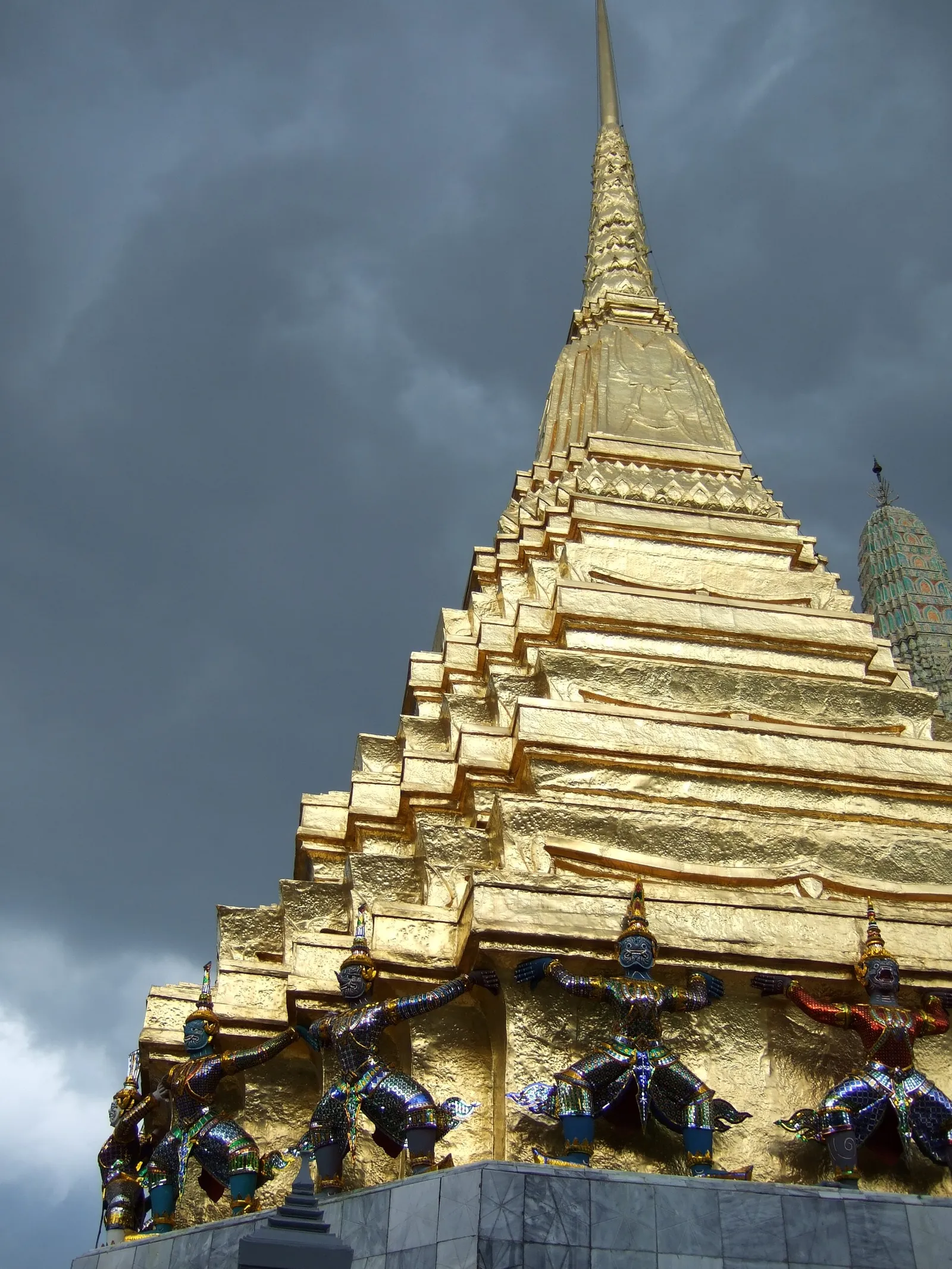
And seeing Ayutthaya after Bangkok’s living temples rather than before is worth doing deliberately, because the contrast is what makes the ruins land; our guide to Bangkok’s temples and the Grand Palace covers the other half of that pairing.
The short version
Take the earliest train from Bangkok, hire a tuk-tuk by the day at the station, and see three sites rather than six: the Buddha head in the tree roots, the three chedis in a row and the central prang of the royal complex. Be finished with the walking before the middle of the day, because there is no shade and the brick holds heat. Eat lunch by the river, dress as you would for a temple, and see Bangkok’s gilded temples first so the ruins mean something.
Ayutthaya sits naturally inside a longer cultural route rather than as a single day out. Our five days of temples and culture links Bangkok, Ayutthaya and Chiang Rai.