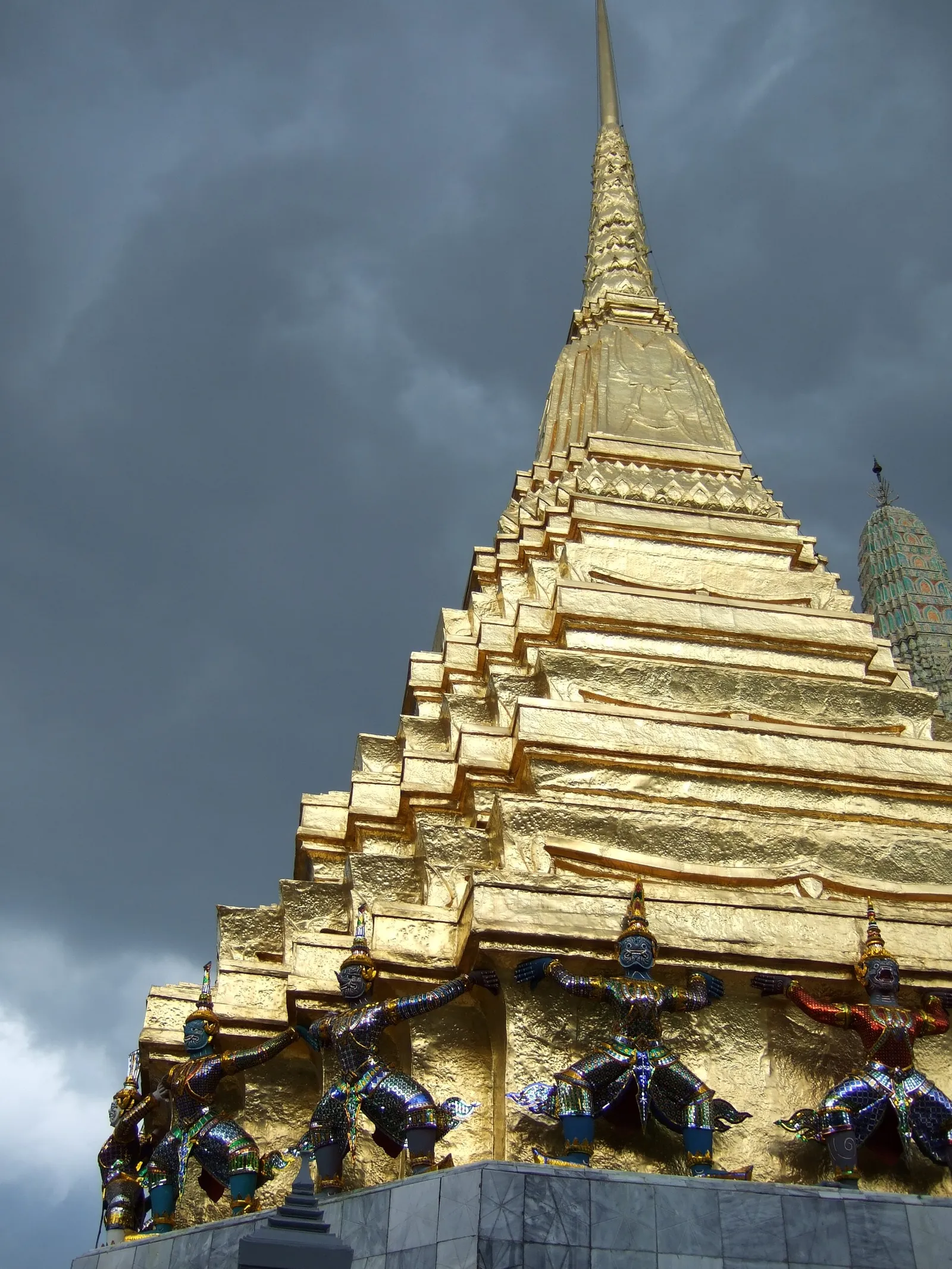
Three sights sit within a short walk and a boat ride of each other in old Bangkok, and between them they hold the country’s most sacred Buddha image, its largest reclining one and its most photographed spire. They are also hot, crowded, strict about clothing and surrounded by people trying to sell you something else. All of that is manageable with a plan, and the plan is mostly about the hour you arrive. Here is how to do the Grand Palace, Wat Pho and Wat Arun properly.
The Grand Palace: what it actually is
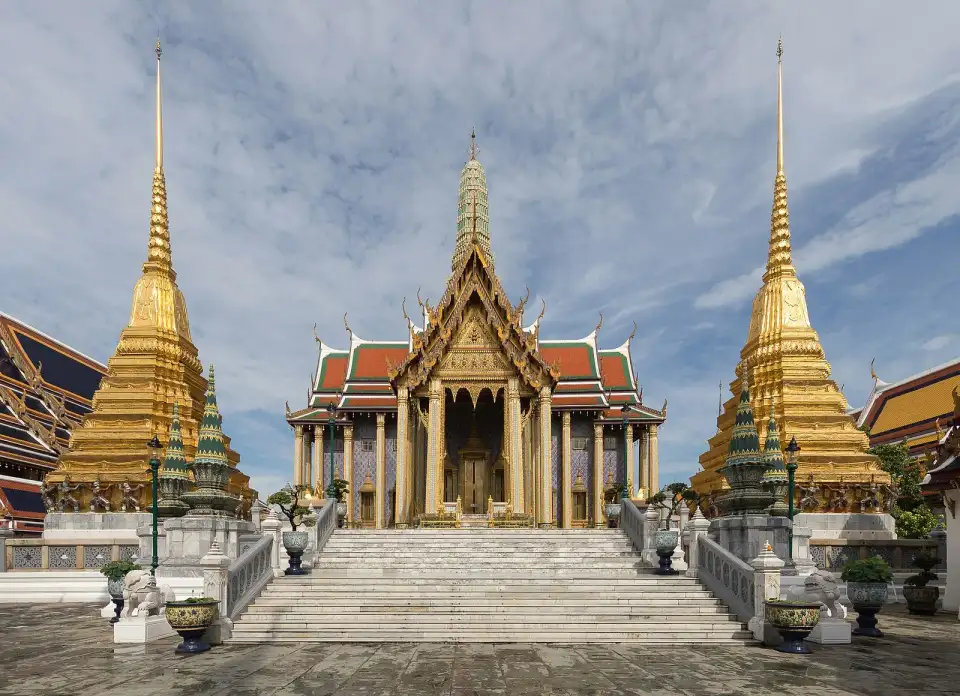
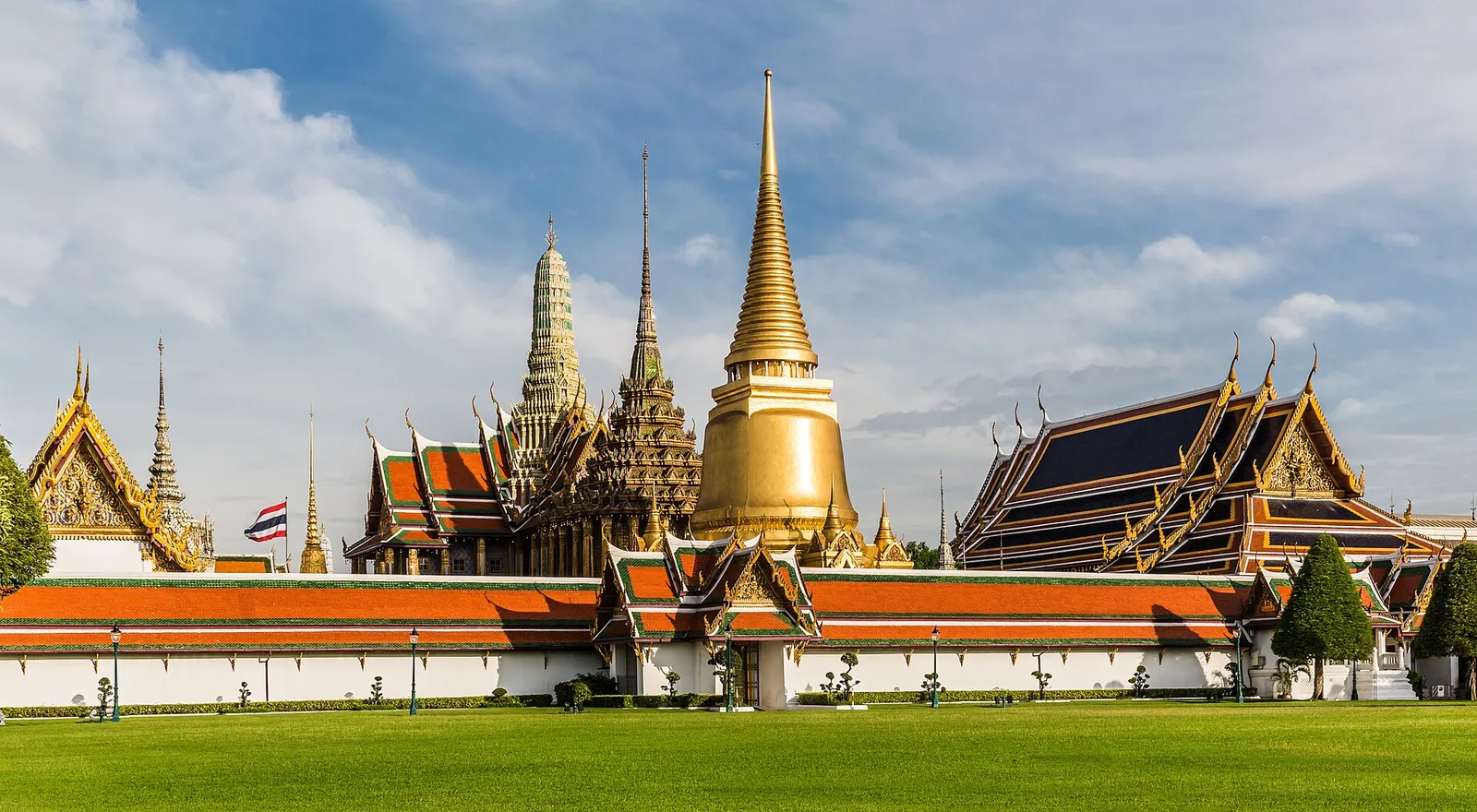
The Grand Palace is not one building but a walled city within the city, built as the royal residence when the capital moved here in the late eighteenth century and used for state ceremony ever since. Inside the walls sit throne halls, pavilions, a model of Angkor Wat, and the country’s most important temple.
That temple is Wat Phra Kaew, and the reason it matters is the Emerald Buddha, a small dark-green jade figure high on a gilded pedestal. It is the most revered Buddha image in Thailand, its robes are changed by the King himself three times a year with the seasons, and photography inside the hall is not permitted. Visitors who arrive expecting something enormous are always briefly surprised and then, usually, moved.
Around it runs the cloister of murals, more than a hundred painted panels telling the Ramakien, the Thai version of the Ramayana. It is easy to walk straight past. Do not: it is one of the great narrative artworks in Southeast Asia and it is free once you are inside.
Getting in without the friction
Four practical things decide how the visit goes.
Dress correctly before you leave the hotel. Shoulders and knees covered, for men and women alike, no vests, no shorts, nothing sheer or ripped. It is enforced at the gate. Cover-ups are available on site, which means a queue in the sun for something you could have worn.
Arrive at opening. The complex is largely unshaded, the coach parties land mid-morning and the heat builds fast. The first hour is a different experience from the third.
Buy at the official ticket office. The price is published and the ticket usually includes a nearby royal residence and museum, which most visitors never use.
Ignore anyone who approaches you outside. Which brings us to the one scam every visitor meets.
Wat Pho: the one people love most
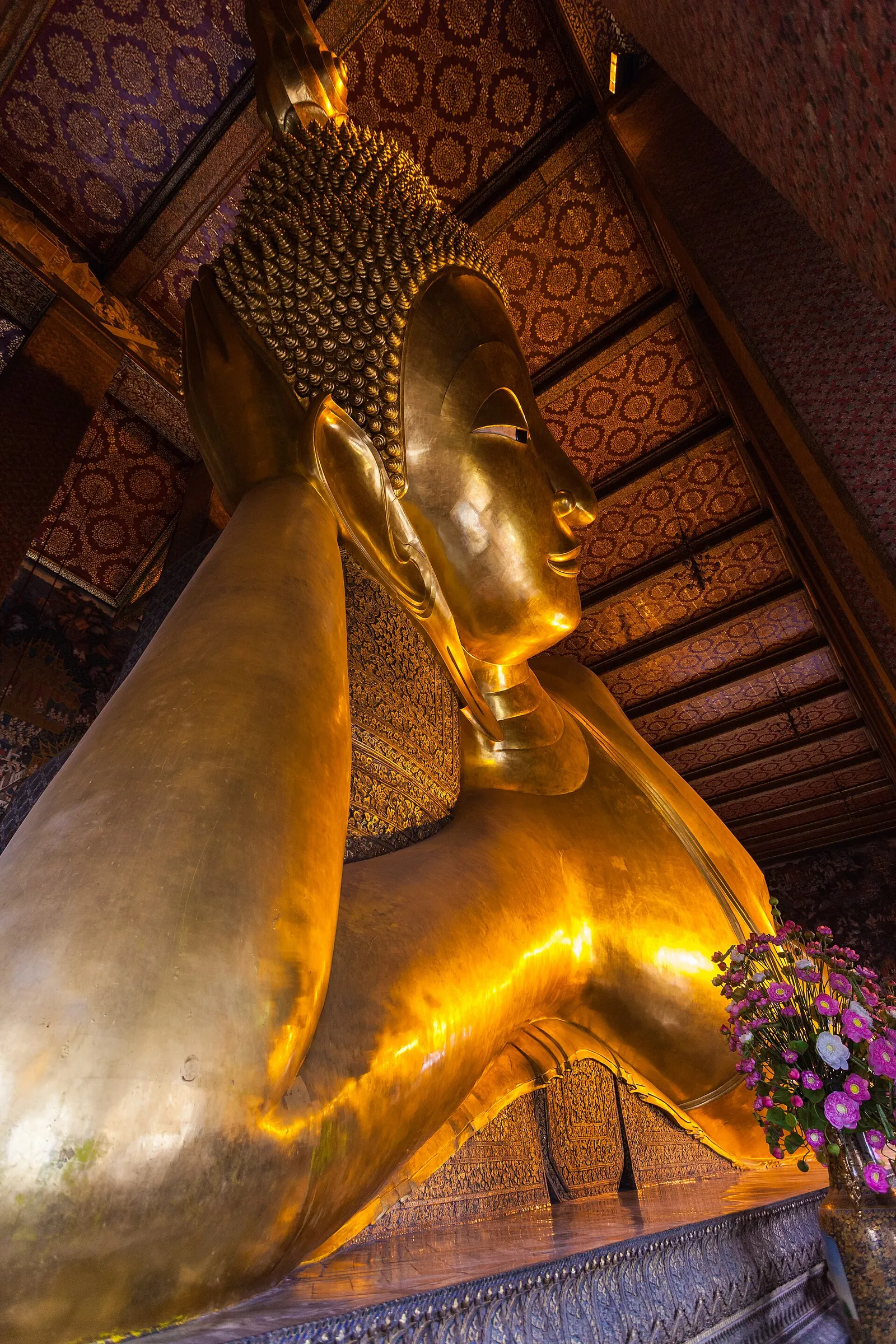
A ten-minute walk south, Wat Pho is older than the palace, cheaper by a wide margin and the favourite of a great many visitors.
The headline is the reclining Buddha, a gilded figure so large that the hall was effectively built around it and you cannot photograph the whole thing from any single position. Walk its length to the soles of the feet, which are inlaid with mother of pearl in a hundred and eight auspicious symbols. Have coins ready for the row of bronze bowls along the back wall: dropping one in each is a merit-making ritual and the sound is part of the memory.
Beyond the hall, Wat Pho is a complex of courtyards, stupas and quiet corners that most people skip in the rush back to the boat. It rewards half an hour of wandering, and there is far more shade here than at the palace.
It is also the birthplace of Thai massage, with a school on site that still teaches and treats. An hour there after a morning on your feet is the single best-timed decision available in old Bangkok.
Wat Arun: the one that photographs itself
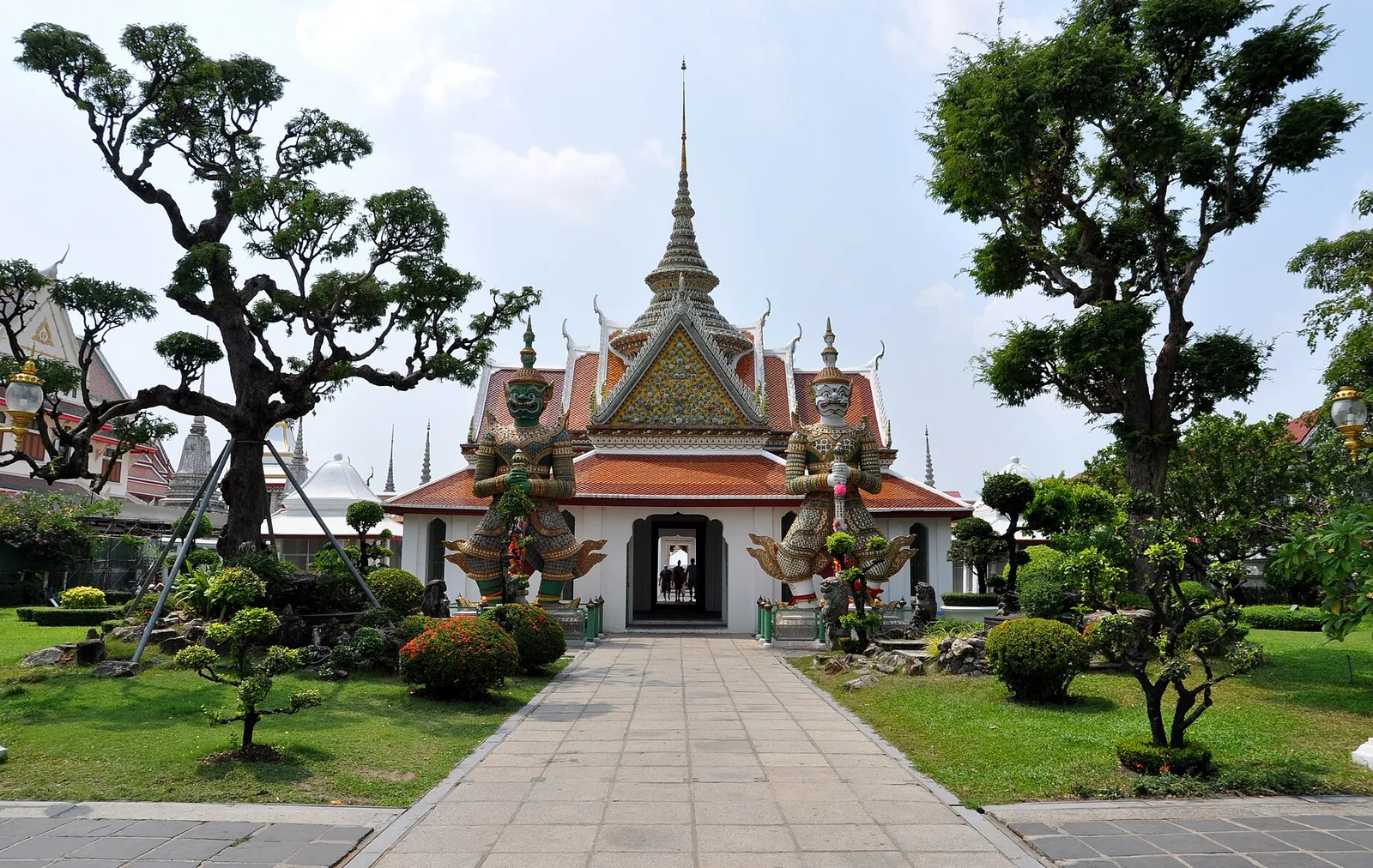
Across the river, Wat Arun, the Temple of Dawn, is the tapering spire that appears on every poster of Thailand. The crossing is a short public ferry from the pier by Wat Pho and costs almost nothing.
Its surface is the thing to see up close: the whole tower is encrusted with broken Chinese porcelain, reportedly ballast from trading ships, pressed into the stucco as flowers and patterns. From a distance it reads as pale stone. From two metres away it is a mosaic.
You can climb part way up the steep central steps for a view over the river, and the steps are genuinely steep, so it is not for everyone.
The name promises dawn and the truth is the opposite: Wat Arun is at its best in the late afternoon and at sunset, lit by the low sun from the Bangkok side of the river. Many visitors do the palace and Wat Pho in the morning, rest through the worst heat, and cross the river at four.
The order that works
The three sights are close together and the sequence matters more than the distance.
Early morning: the Grand Palace. At the gate for opening, around two hours inside, out before the heat and the coaches peak.
Late morning: Wat Pho. A short walk, shadier, cheaper, and the reclining Buddha is at its calmest before lunch.
Middle of the day: stop. This is not weakness, it is the local schedule. Eat, sit somewhere air-conditioned, take a massage at Wat Pho, come back to life at four.
Late afternoon: Wat Arun. Cross by ferry, climb if you fancy it, and stay for the light.
Doing all three back to back in one continuous push is the most common mistake here, and it is why so many people remember old Bangkok as exhausting rather than beautiful.
Temple etiquette, briefly
None of it is difficult and all of it is noticed.
Shoes off before entering any temple building, onto the racks provided.
Feet are the rude part of the body. Do not point them at a Buddha image, and sit with them tucked behind you rather than out in front.
Do not turn your back on a Buddha image for a photograph, which is the most common visitor mistake and the one locals find genuinely jarring.
Women should not touch or hand anything directly to a monk. Place it down for him to pick up.
Keep your voice low, and never climb on a Buddha image for a picture. This last one carries real legal consequences in Thailand, not just social ones.
These are working places of worship where people are praying a metre from your camera, which is the whole reason the rules exist.
Beyond the big three
If the old city grabs you, three more are worth the detour.
Wat Saket, the Golden Mount, is a short climb up a spiral staircase to the best free view over the old city, and it is blissfully uncrowded compared with the river temples.
Wat Benchamabophit, the marble temple, is the one on the coin: Italian marble, European stained glass and a courtyard of bronze Buddha images from across Asia.
Wat Traimit in Chinatown holds a five-tonne solid gold Buddha that spent decades hidden under plaster and was only discovered when it was dropped during a move.
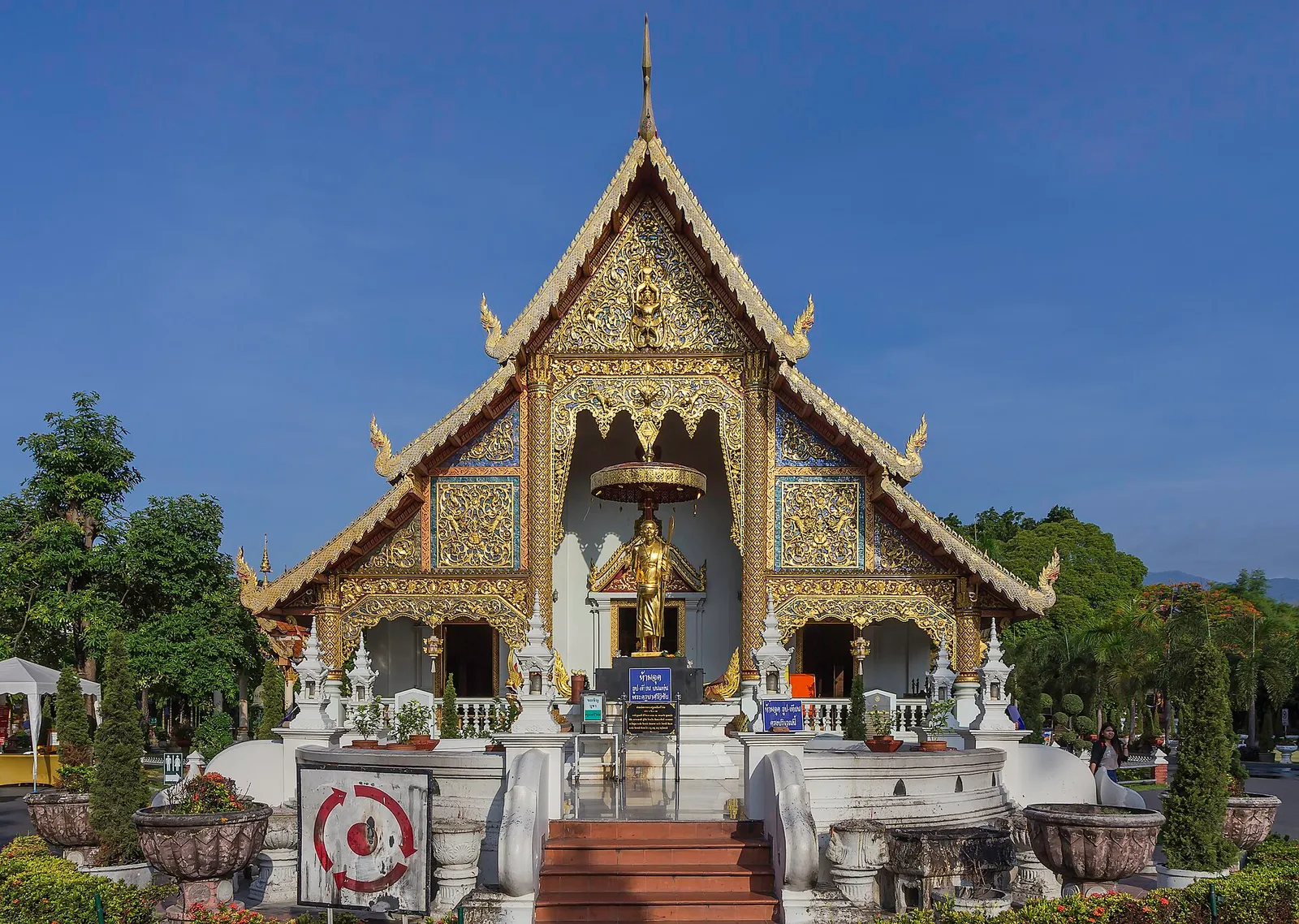
And if the temples become the thing you came for, the north is where they get better, with hundreds of them in and around the old walled city and a mountain temple above it; our Chiang Mai guide covers that half of the country.
Fitting the temples into a Thailand trip
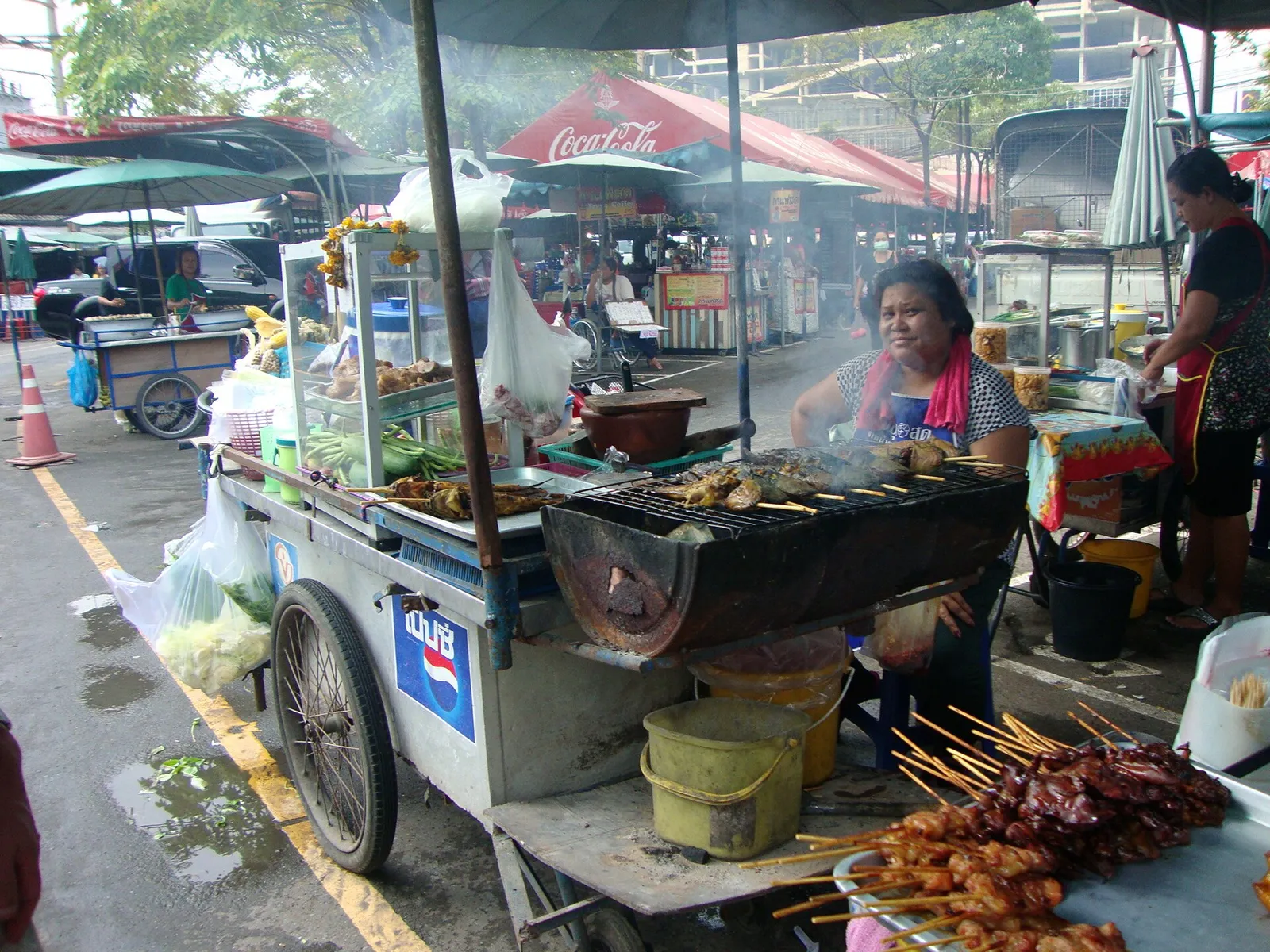
For most visitors this is a single, brilliant morning rather than a theme, and it sits naturally at the start of a trip, when the culture shock is still novel and before the beaches slow you down. Pair it with lunch rather than a second sight: the lanes around the old city hold some of the best eating in Bangkok, and our Thai food guide covers what to order and why the stall with the queue is always the right one.
The one decision worth making honestly is how much of your trip belongs to the city at all. If you are choosing between temple mornings and beach days on a short visit, our comparison of Bangkok and Phuket sets out what each actually delivers, and the answer for a first trip is usually a few days of both rather than one at the expense of the other.
The short version
Dress for the gate before you leave the hotel, be at the Grand Palace when it opens, and ignore anyone outside who tells you it is closed. Walk to Wat Pho for the reclining Buddha, the coin bowls and a massage at the source. Rest through the middle of the day like everyone who lives here, then cross the river to Wat Arun for the late light. Shoes off, feet tucked, voices down, and old Bangkok gives you the best morning of the trip.