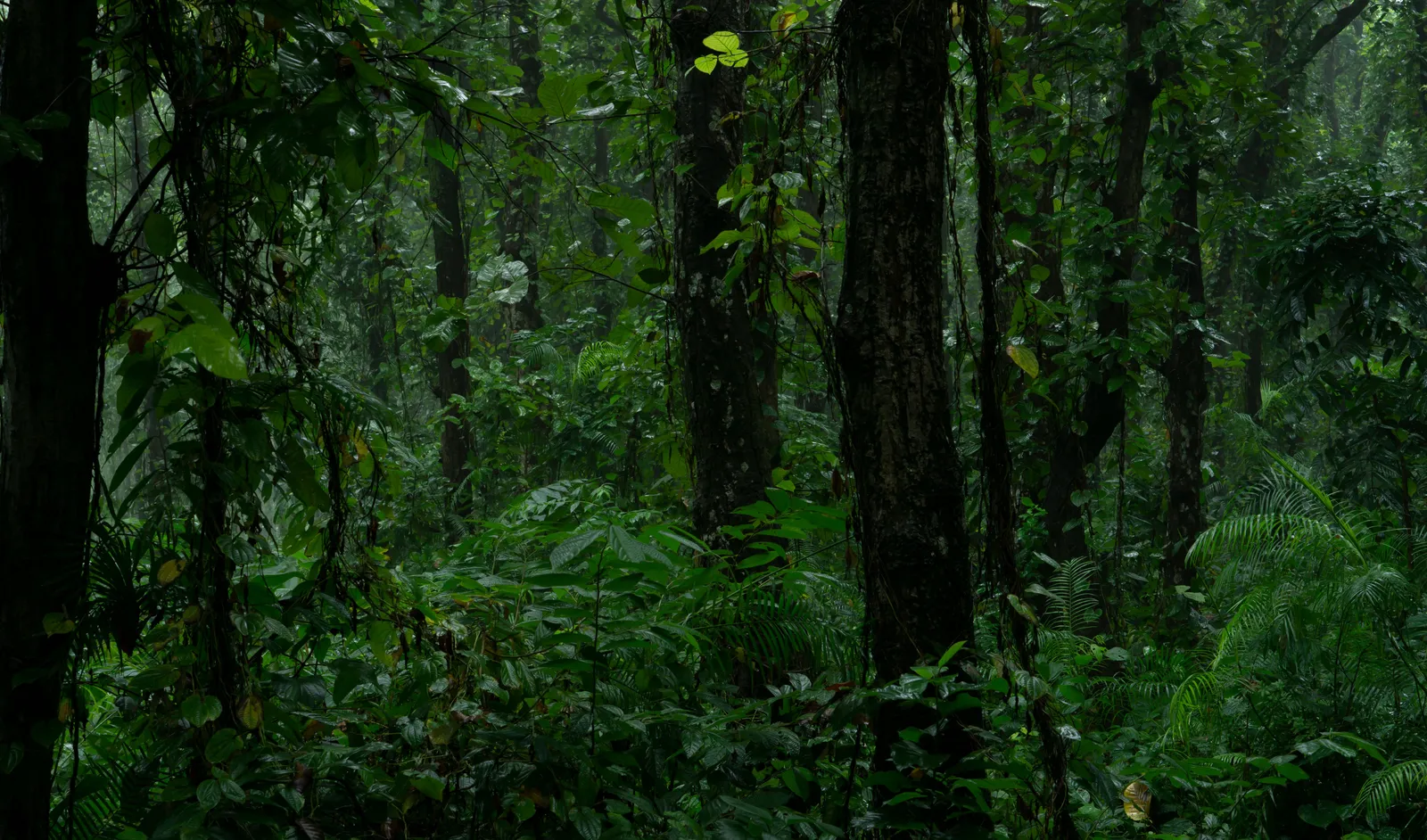
Khao Yai is the wild forest people forget sits so close to Bangkok. Part of a UNESCO World Heritage forest complex, it covers a large stretch of the Khorat Plateau’s edge with rainforest, grassland and waterfalls, and it holds a genuine population of wild elephants, gibbons, hornbills and gaur within two to three hours of the capital’s traffic. Around its edges, the hills near Pak Chong have become one of the country’s more established wine regions, which makes for an unusually varied trip: forest and wildlife in the morning, a vineyard lunch in the afternoon. Our Bangkok guide covers the city most visitors are travelling out from.
What makes Khao Yai different
Proximity. Most of Thailand’s best wildlife-watching sits far south or deep north. Khao Yai is a two to three hour drive from Bangkok, which makes a genuine forest experience possible without giving up several days of a trip to it.
Scale. The park covers a large protected area, part of the Dong Phayayen to Khao Yai forest complex, one of the largest intact monsoon forest areas left in mainland Southeast Asia.
A real elephant population. Wild elephants live in the park and are seen with some regularity, particularly around dawn and dusk near certain roads and clearings, though sightings are never guaranteed with wild animals in dense forest.
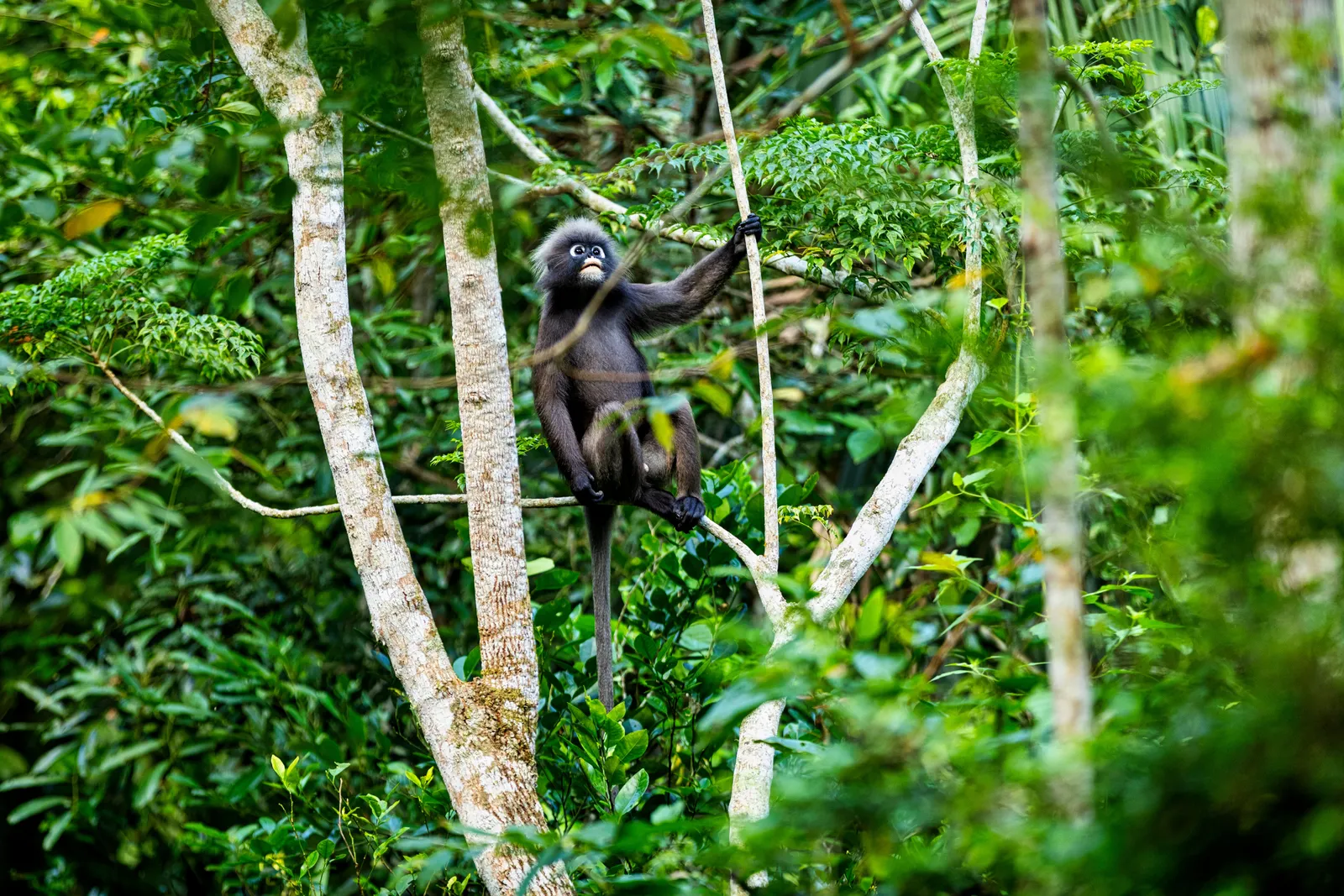
Gibbons overhead. Their calls are one of the defining sounds of a Khao Yai morning, carrying across the canopy well before most visitors spot the animals themselves.
Waterfalls. Several fall within the park, reachable by short walks from parking areas, and they are a natural focus for a shorter visit.
Wildlife: what to actually expect
Gibbons are heard reliably and seen often enough, usually high in the canopy near forest edges and viewpoints in the early morning.
Hornbills, macaques and deer turn up regularly along roads and trails, and are the sightings most day visitors come away with.
Elephants and gaur are present and do get seen, but they are wild animals in a large forest rather than a managed reserve, and no operator can honestly promise a sighting.
The night safari is the best chance at the more elusive species. An open-sided truck moves slowly through the park after dark with a spotlight, and civets, deer and occasionally elephants at a distance are commonly reported.
The waterfalls and trails
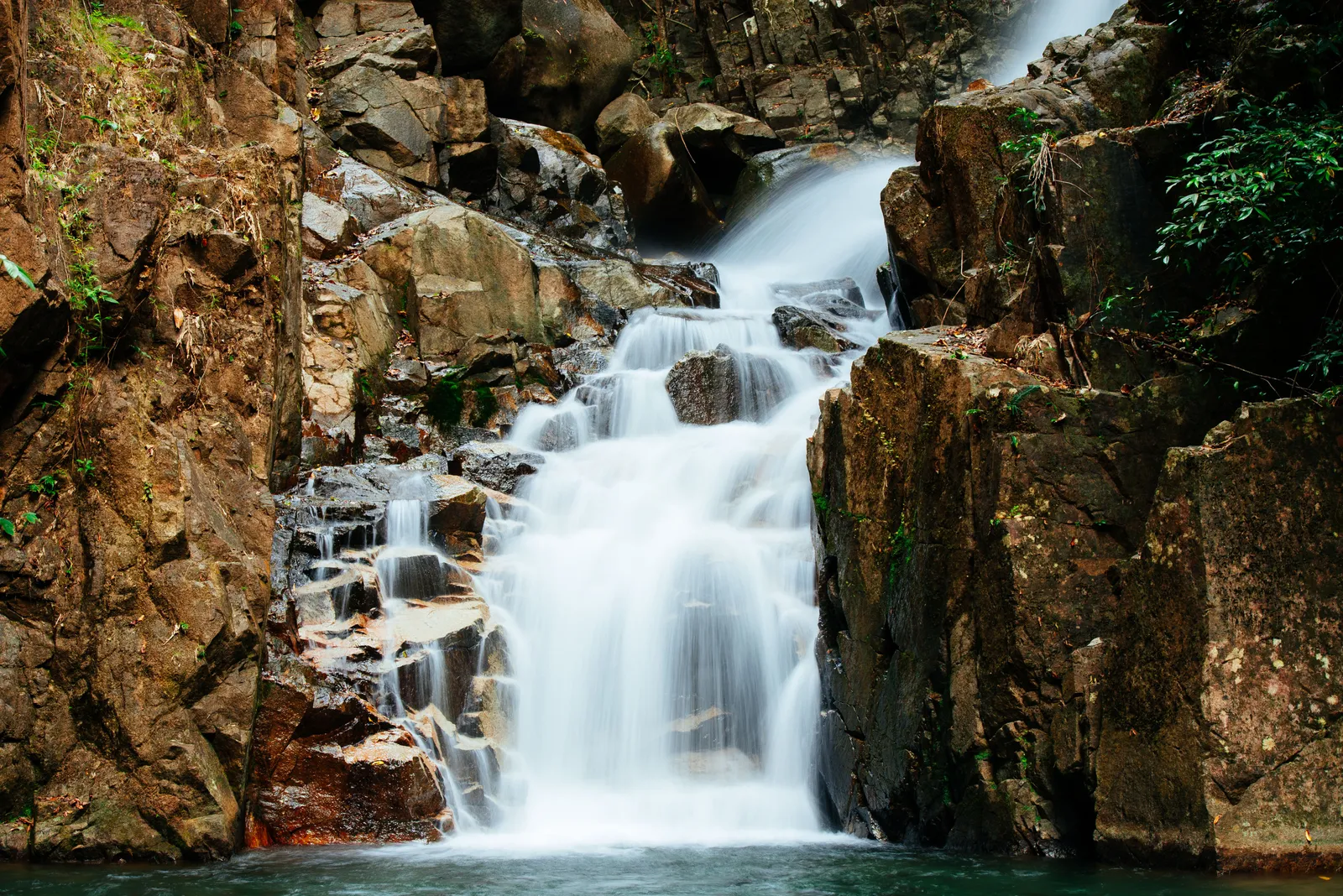
Haew Narok, a multi-tiered waterfall reached by a short walk, is one of the taller and more dramatic falls in the park and a common stop on a shorter visit.
Haew Suwat, a single-drop waterfall closer to the main road, is smaller but easily reached and popular for that reason.
Trails of varying length cross the park, from short interpretive walks near visitor centres to longer routes better suited to a guide, given the terrain and the genuine presence of wildlife.
Water levels vary with the season, and a waterfall visited at the end of a long dry spell will show considerably less water than the same spot after the rains.
The wine region
Pak Chong and the surrounding hills, at a higher altitude than the tropical lowlands, have become home to several of Thailand’s established vineyards over the past couple of decades.
Tastings and tours are offered at the larger estates, often paired with a restaurant or view over the vines, and make an easy, relaxed contrast to a morning in the forest.
It is not a wine region in the European sense, and visitors expecting a Bordeaux-scale operation should adjust expectations, but as a curiosity and a pleasant afternoon it works well, particularly combined with a Khao Yai visit rather than as a standalone trip.
Day trip or overnight
A day trip from Bangkok is workable: a waterfall, a viewpoint, a reasonable chance of gibbons, and a long but manageable amount of driving. It does not leave room for the night safari or for being in position at dawn, which are two of the best parts of the park.
An overnight near the park entrance solves both of those problems. Stay locally, do the night safari after dark, and be up early the next morning while animal activity is at its highest, before heading back to Bangkok or on to your next stop.
Combining it with the wine region works best as part of an overnight, giving the afternoon of the second day to a winery visit before the drive back.
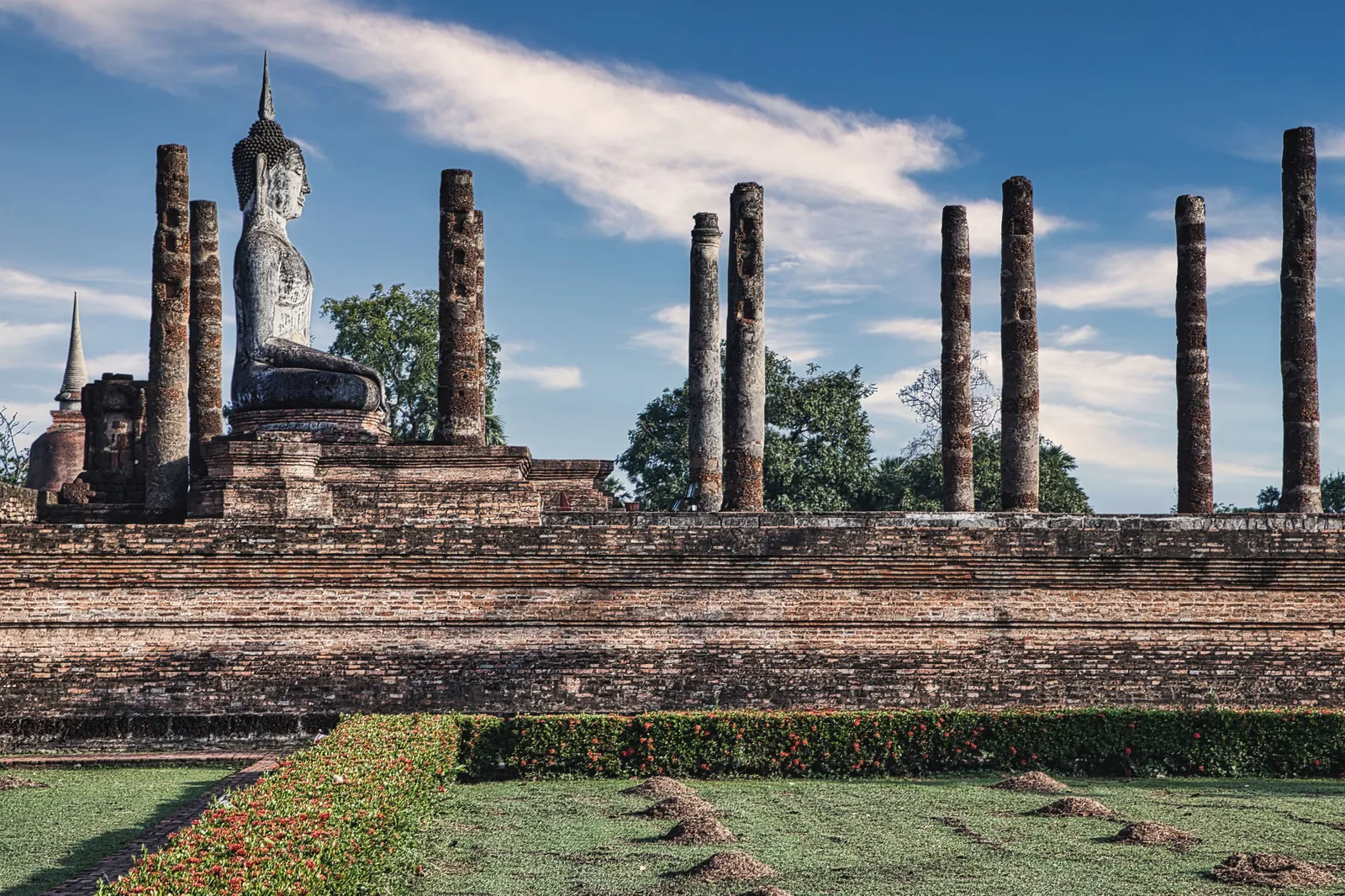
If your trip has room for history alongside nature, pairing Khao Yai with a very different park further north is worth considering; our guide to Sukhothai Historical Park covers the ruined former capital that makes the other half of that combination.
Practical notes
Entry fees for foreign visitors apply and are payable in cash at the park gate.
A private vehicle or a guided tour is the practical way to see the park, since distances between sites are significant and public transport inside the park does not really exist.
Insect repellent and long sleeves matter, particularly at dawn, dusk and on the night safari.
Book the night safari ahead, especially for weekend visits, since vehicles run from a fixed departure point and demand regularly outstrips supply.
Weather and road conditions shift with the season, and checking current conditions before a visit in the wetter months is worth the few minutes it takes.
Getting there
By private car or transfer is the most direct route from Bangkok and the option most visitors use, particularly for an overnight trip with a hotel arranged near the park.
By bus to Pak Chong, followed by a local taxi or arranged transfer into the park, is the budget route and takes longer.
Organised day tours and overnight packages from Bangkok handle the driving, the park logistics and often the night safari booking in one arrangement, which removes most of the planning for a first visit. Our guide to getting around Thailand covers the wider transport picture if Khao Yai is one stop among several.
The short version
Khao Yai is proof that a genuinely wild forest, with elephants, gibbons and waterfalls, sits within reach of Bangkok’s traffic rather than requiring days of travel to find one. Structure the visit around dawn and dusk rather than the middle of the day, book the night safari ahead if you want the best chance at the park’s more elusive residents, and consider an overnight over a rushed day trip if the schedule allows it. Add an afternoon at one of the nearby vineyards for a change of pace that nothing else in this part of the country quite offers.