Thailand is bigger than it looks on a map, but getting around is one of the great joys of travelling here: cheap, frequent, and full of character, from sleeper trains to longtail boats. The key is picking the right mode for each leg, so you spend your holiday on beaches and in temples rather than stuck in traffic or on the wrong bus. Here is how the country moves.
Domestic flights: the great time-saver
For the long hauls, fly. Thailand has a busy, competitive network of budget airlines, and routes like Bangkok to Chiang Mai or Bangkok to Phuket can be startlingly cheap when booked a few weeks ahead, often turning an overnight journey into a one-hour hop. This is the single best way to stitch together distant regions on a short trip. Book early for the best fares, travel with hand luggage where you can, and double-check which of Bangkok’s two airports you are flying from.
Trains: slow, scenic and characterful
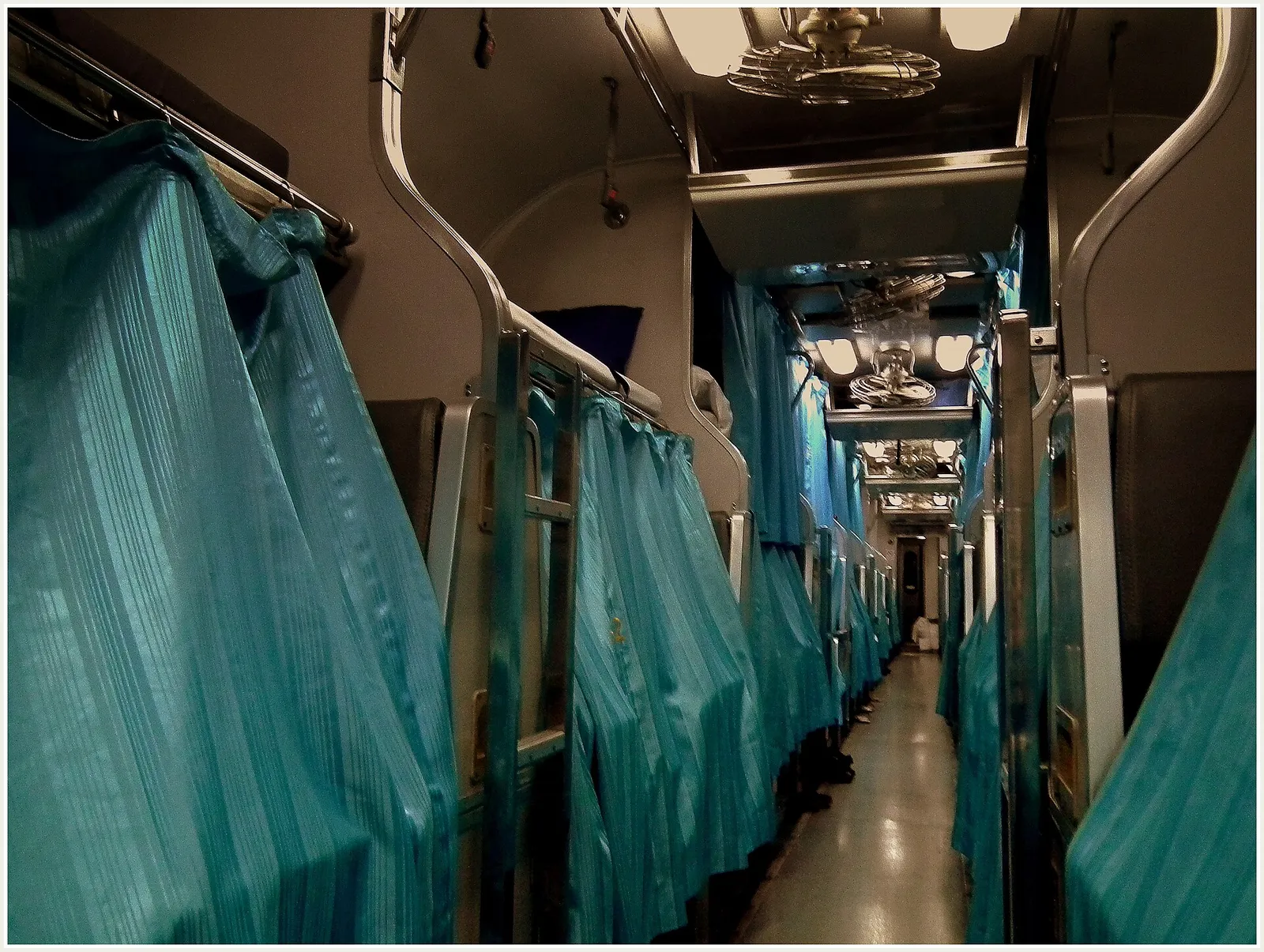
Thailand’s railways are a pleasure if you have the time. The overnight sleeper from Bangkok to Chiang Mai is a classic, a comfortable, sociable way to travel that saves a night’s accommodation and delivers you rested at dawn. Day trains south trundle past rice fields, coconut groves and coastline. Trains are cheap, safe and a genuine part of the adventure, just not the fastest option, so use them when the journey is part of the point.
Buses and minivans: everywhere, cheaply
Where trains do not reach, buses and minivans do, connecting virtually every town in the country. Long-distance VIP coaches are surprisingly plush, with reclining seats and air-con, while local minivans are the workhorses for shorter hops between towns and to ferry piers. They are inexpensive and frequent. Buy tickets at bus stations or through your guesthouse, keep your bag close, and bring a layer, as the air-con can be arctic.
Ferries: your key to the islands
Every island trip involves the water. Ferries and speedboats link the mainland piers to the islands and connect the islands to each other, so hopping around a coast is easy once you arrive. Journeys are often bundled as a combined bus-plus-boat ticket from your hotel. Book a little ahead in high season, note the last-boat times so you do not get stranded, and expect the odd short wade onto the sand. Combined tickets are usually worth the small premium for the coordination alone.
Let a day tour handle the logisticsSome island and mountain days are simply easier with the transport sortedCity transport: Grab, BTS and tuk-tuks
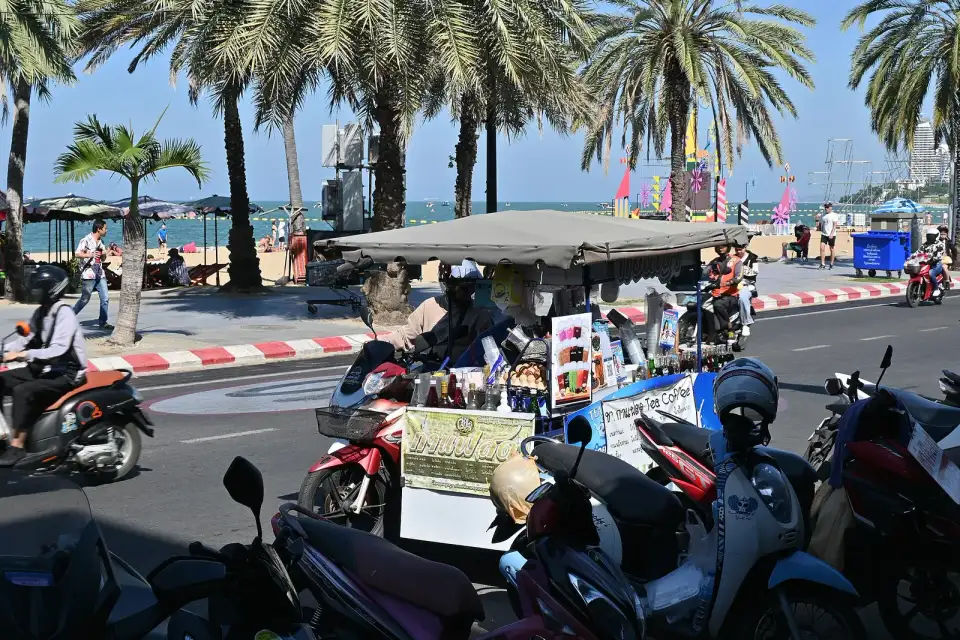
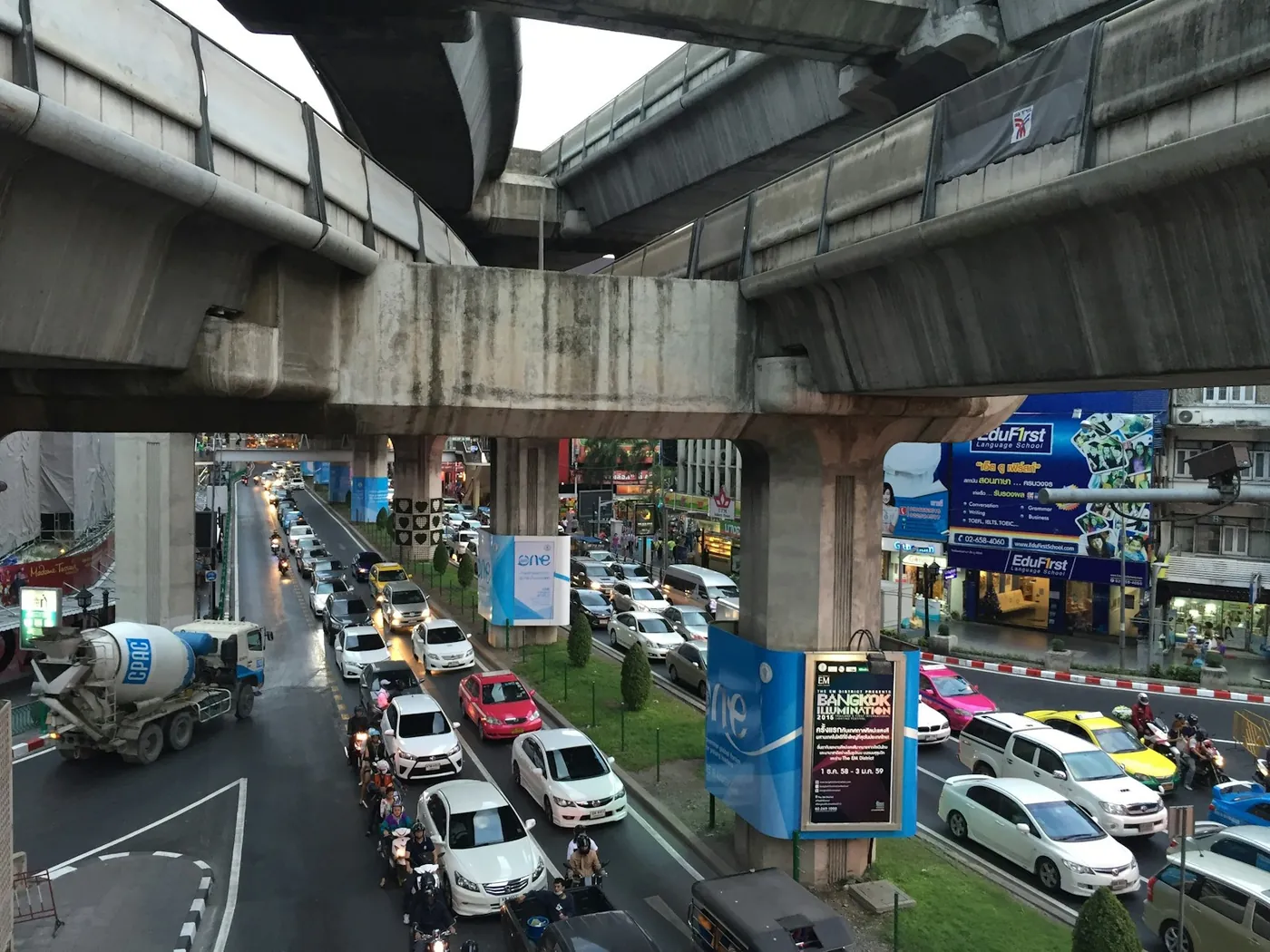
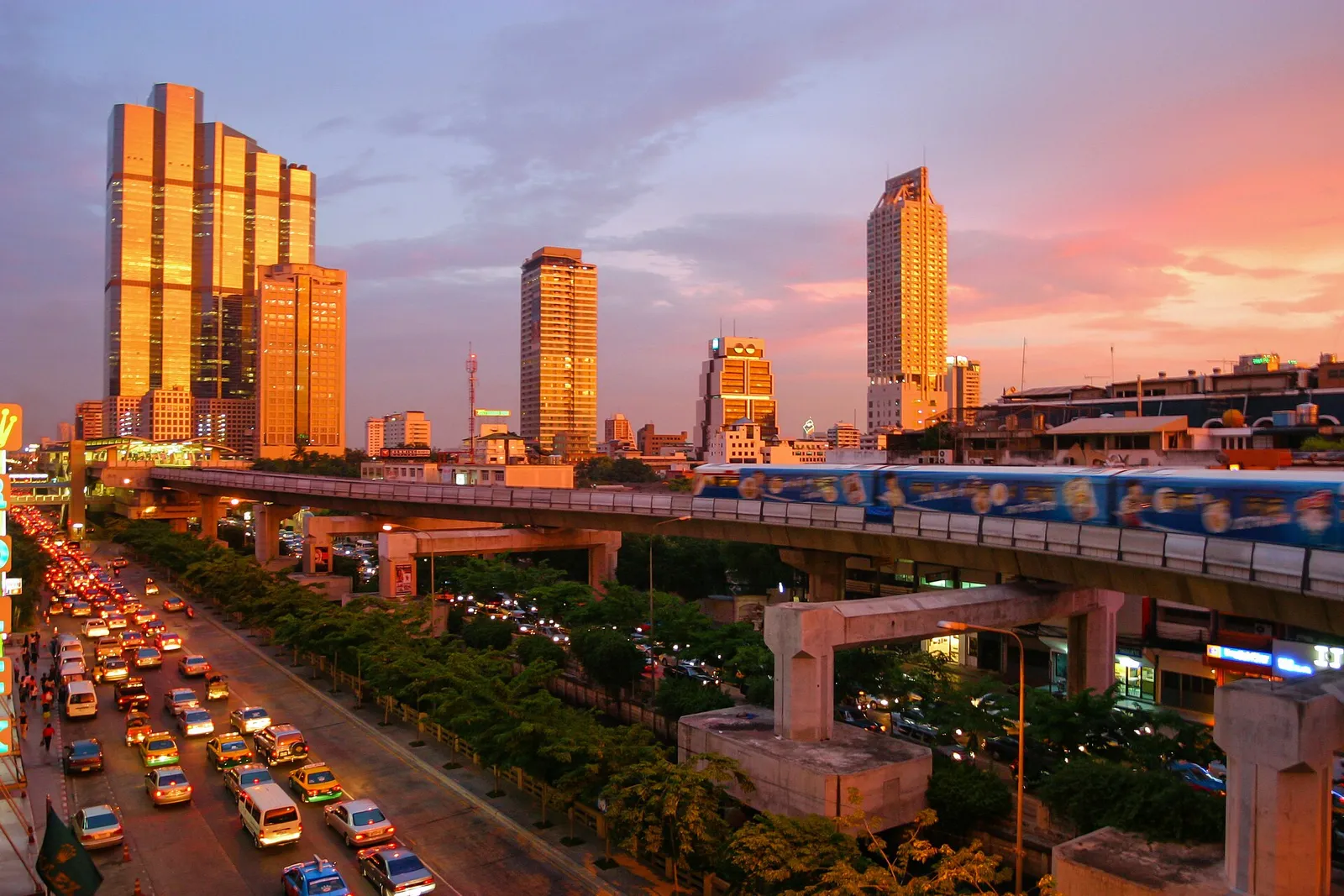
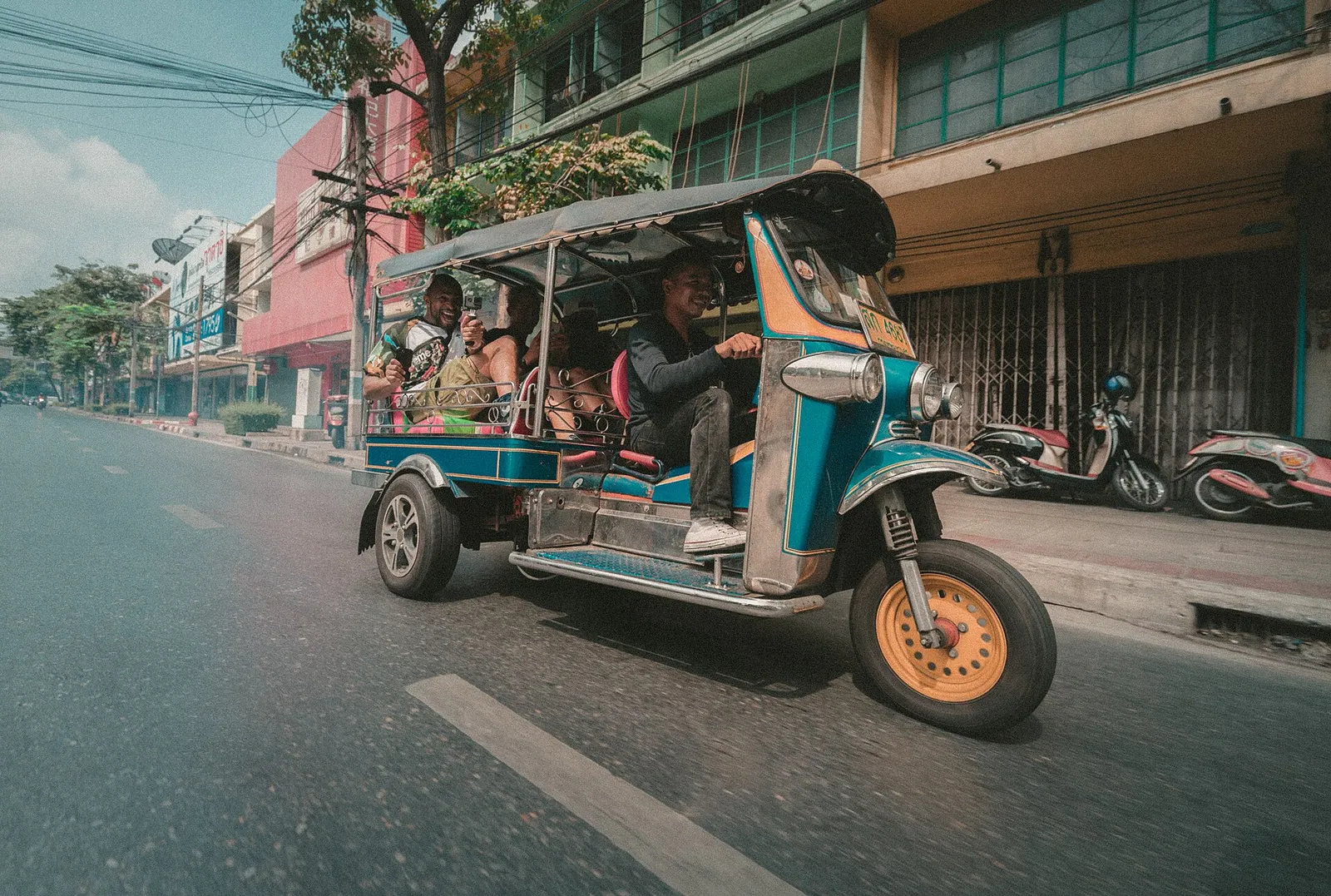
In the cities, skip the haggling. The Grab app gives you metered, upfront pricing for cars across Bangkok, Chiang Mai, Phuket and beyond, and it is the easiest, least stressful way to get around. In Bangkok, the BTS Skytrain and MRT metro are fast, cheap and cut straight through the traffic, so base yourself near a station. Keep the tuk-tuk for one short, fun ride, agreeing the fare before you climb in, and enjoy the river boats in Bangkok for a scenic, cheap commute.
Scooters and self-drive
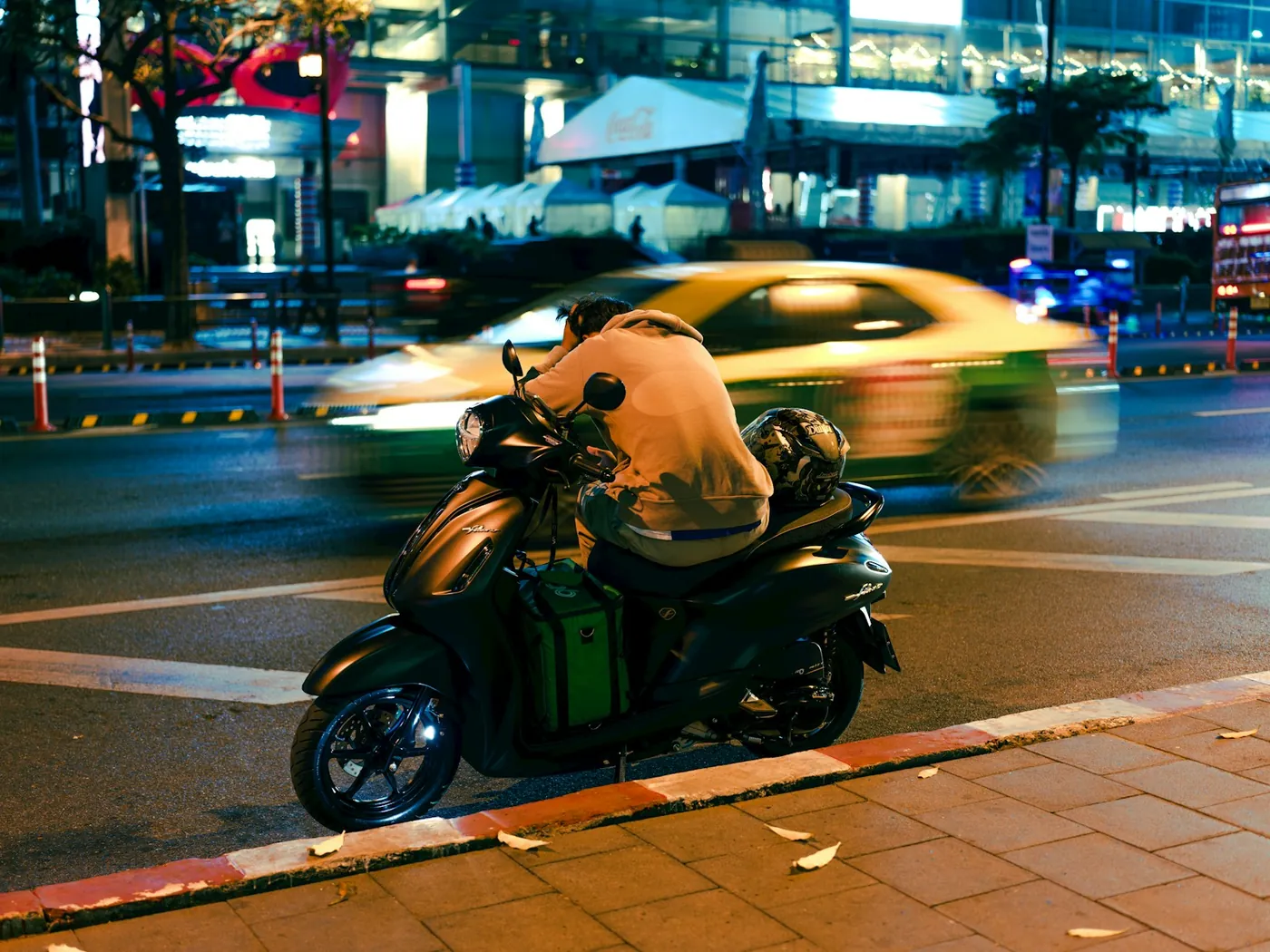
A scooter is cheap freedom on quiet islands and in the northern hills, and for many travellers it is a highlight. It is also the biggest cause of tourist injuries in Thailand, so ride only if you are experienced, always wear a helmet, and confirm your insurance covers two wheels.
Get the licence question right before you rent anything, because it decides whether an accident is an inconvenience or a catastrophe. Thai law requires foreign drivers and riders to carry an International Driving Permit together with their own national licence. Thailand is a party to both the 1949 Geneva and the 1968 Vienna conventions on road traffic, but which version your own country issues, and what it is recognised for, depends on where your licence comes from, so confirm the current requirement for your own document with an official source before you travel rather than assuming. Two things trip people up whichever version you hold: an IDP has to be obtained at home before you travel, and it only carries across the categories already on your licence, so a car-only licence does not become a motorcycle licence just because you bought an IDP. Renting a 125cc scooter without a motorcycle entitlement is the single most common reason insurers refuse claims here.
Car rental is worth it for exploring the north or Isan at your own pace, with driving on the left and generally decent roads, and the same IDP rule applies. In cities, though, leave the driving to Grab.
Bangkok has two airports, and it matters
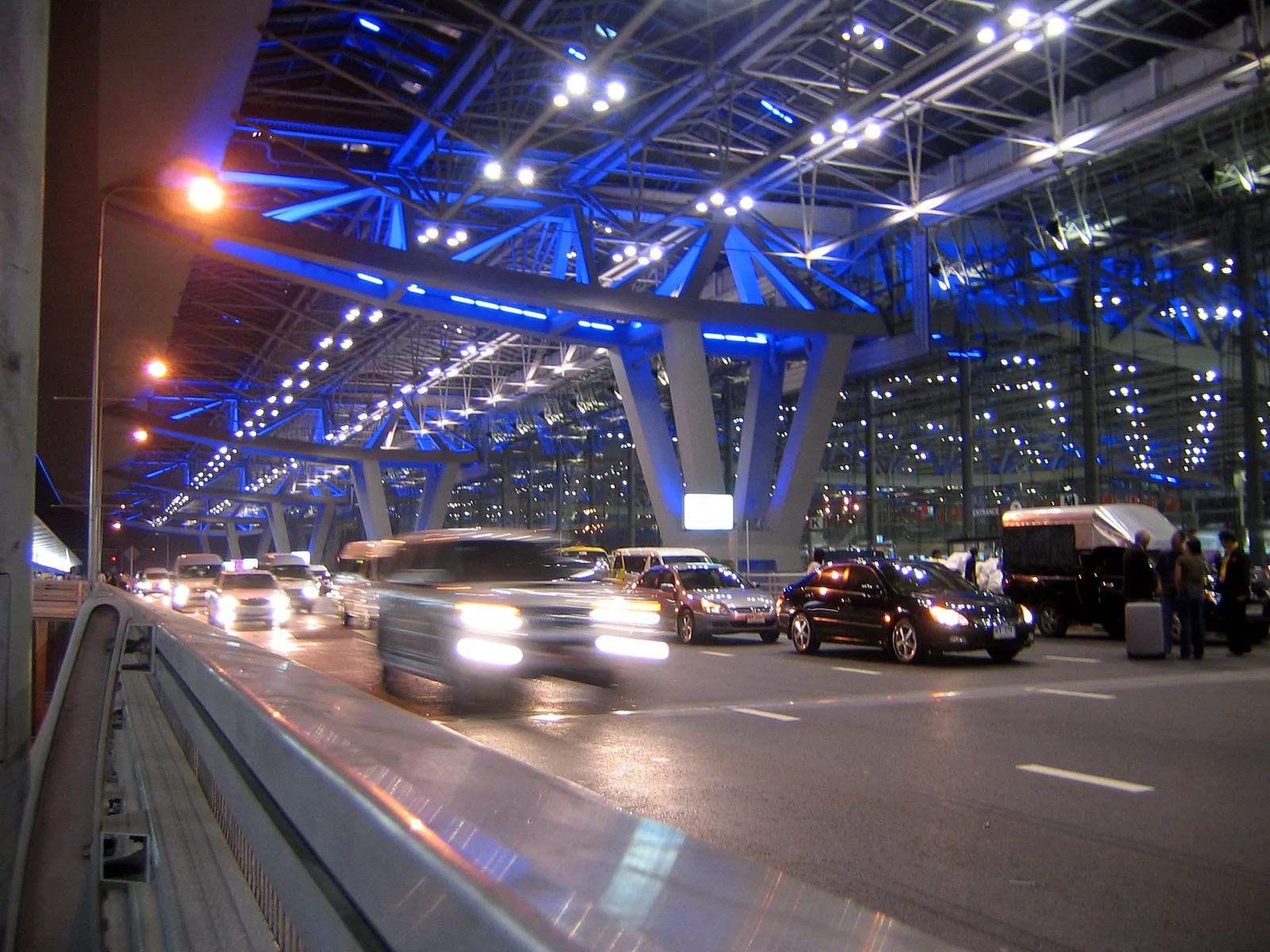
The most expensive transport mistake in Thailand has nothing to do with taxis. Bangkok is served by two airports on opposite sides of the city, and the budget domestic carriers do not all use the same one as the international flight that brought you in.
The pattern is broadly that Suvarnabhumi handles most full-service and long-haul traffic while Don Mueang is the low-cost domestic hub, but airlines move routes and the only reliable check is the three-letter code on your own booking. Crossing between them means going through the city, which in Bangkok traffic is not a quick errand.
Two rules keep it harmless. Read the airport code on every domestic ticket before you buy it, not after. And when two flights are on separate bookings, leave hours rather than minutes, because no airline owes you anything if the first one is late and the second one leaves. Our guide to Bangkok’s airports and transfers covers the routes into town from each and what they cost.
How long the main legs actually take
Planning is much easier once you stop thinking in kilometres, because Thailand’s distances are long and its domestic flights are short.
| Leg | Fastest sensible option | Realistic alternative |
|---|---|---|
| Bangkok to Chiang Mai | Domestic flight, around an hour in the air | Overnight sleeper train, a full night |
| Bangkok to the southern islands | Flight plus ferry, most of a day door to door | Overnight bus or train plus boat |
| Between islands on one coast | Ferry or speedboat, an hour or a few | Combined bus and boat ticket |
| Andaman coast to Gulf coast | Short domestic flight | Ferry plus a cross-peninsula bus, a long day |
| Around a city | Grab, or rail in Bangkok | Tuk-tuk for short hops |
Add the hidden time to everything above. Airport transfers, pier waits, pickups that collect other passengers first and check-in all sit outside the headline number, and together they are what turn a two-hour journey into a day.
Tickets, apps and paying for it all
Thailand is unusually easy to book on the move, and a few practical habits remove most of the friction.
Cash still runs the small stuff. Piers, minivans, tuk-tuks and neighbourhood ticket desks want notes, and rarely have change for large ones, so break big bills at supermarkets and keep a stock of small denominations for transport days. Cards are fine for airlines, larger ferry operators and hotel-arranged transfers.
Apps beat haggling in the cities. Ride-hailing gives an upfront price and a map the driver follows, which removes the two classic annoyances at once: the meter that is mysteriously broken and the scenic route. In Bangkok, the rail systems sell single tickets and stored-value cards at the station, and using rail for the long axis of a journey with a short car ride at the end is almost always faster than a car for the whole thing.
Be sceptical of the free ride. A driver or tout who offers to take you somewhere for almost nothing is usually being paid by a shop, a gem showroom or a tailor to deliver you there, and the detour is the price. Politely decline and book the ride yourself.
Routing a trip so you are not always moving
The commonest first-trip error is a route that looks efficient on a map and is exhausting in practice. Thailand is long, and its highlights sit at opposite ends of it.
The reliable shape is three bases, not six. A week suits Bangkok plus one island or one northern stay. Two weeks comfortably covers Bangkok, the north and one coast, with a domestic flight doing the heavy lifting between them. Anything more ambitious in the same time mostly buys you airports.
Two small habits protect the trip. Fly the long legs and travel slowly within a region, since local minivans and ferries are cheap and frequent once you are in one place. And book the moves, then leave the days loose, because the fixed points are what create the stress and everything between them can be decided over breakfast. Our first-time guide to Thailand sets out what a sensible first route looks like, and the Chiang Mai guide covers the northern half of it.
The short version
Fly the long legs to save days, take a sleeper train once for the romance of it, and lean on cheap buses and minivans in between. Reach the islands by ferry, booking ahead in high season, and in the cities use Grab and the Bangkok Skytrain to dodge the traffic. Ride a scooter only if you truly know how, with a helmet and the right insurance. Get the modes right and Thailand becomes an easy, affordable country to roam.