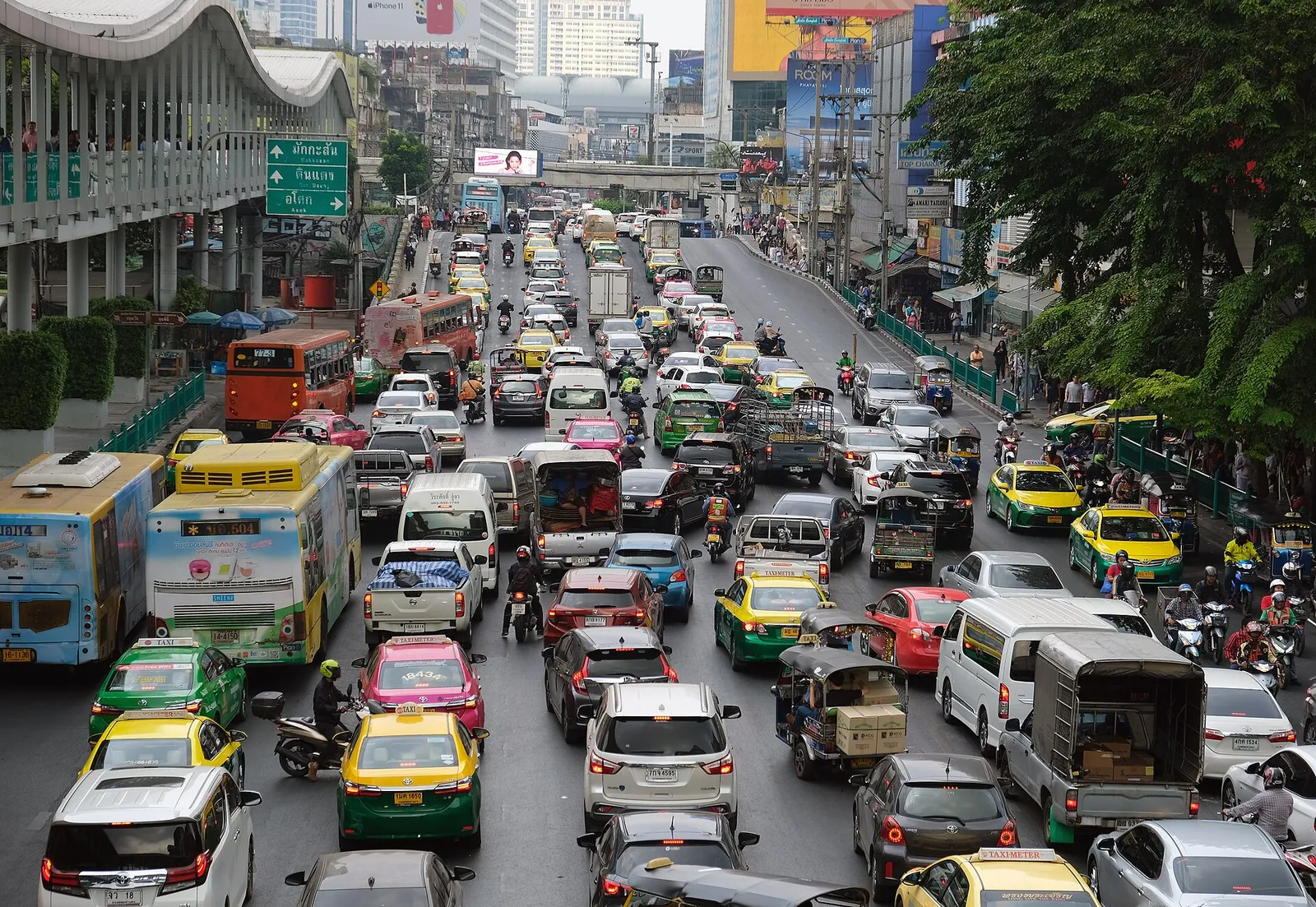
Bangkok’s traffic is genuinely as bad as its reputation, and the city’s answer is to have built an excellent rail network above and below it. Once you understand which journeys belong on rails, which belong on the river and which belong in a car, the city becomes easy to move around, and the horror stories stop happening to you. Here is the whole system.
The four ways to move
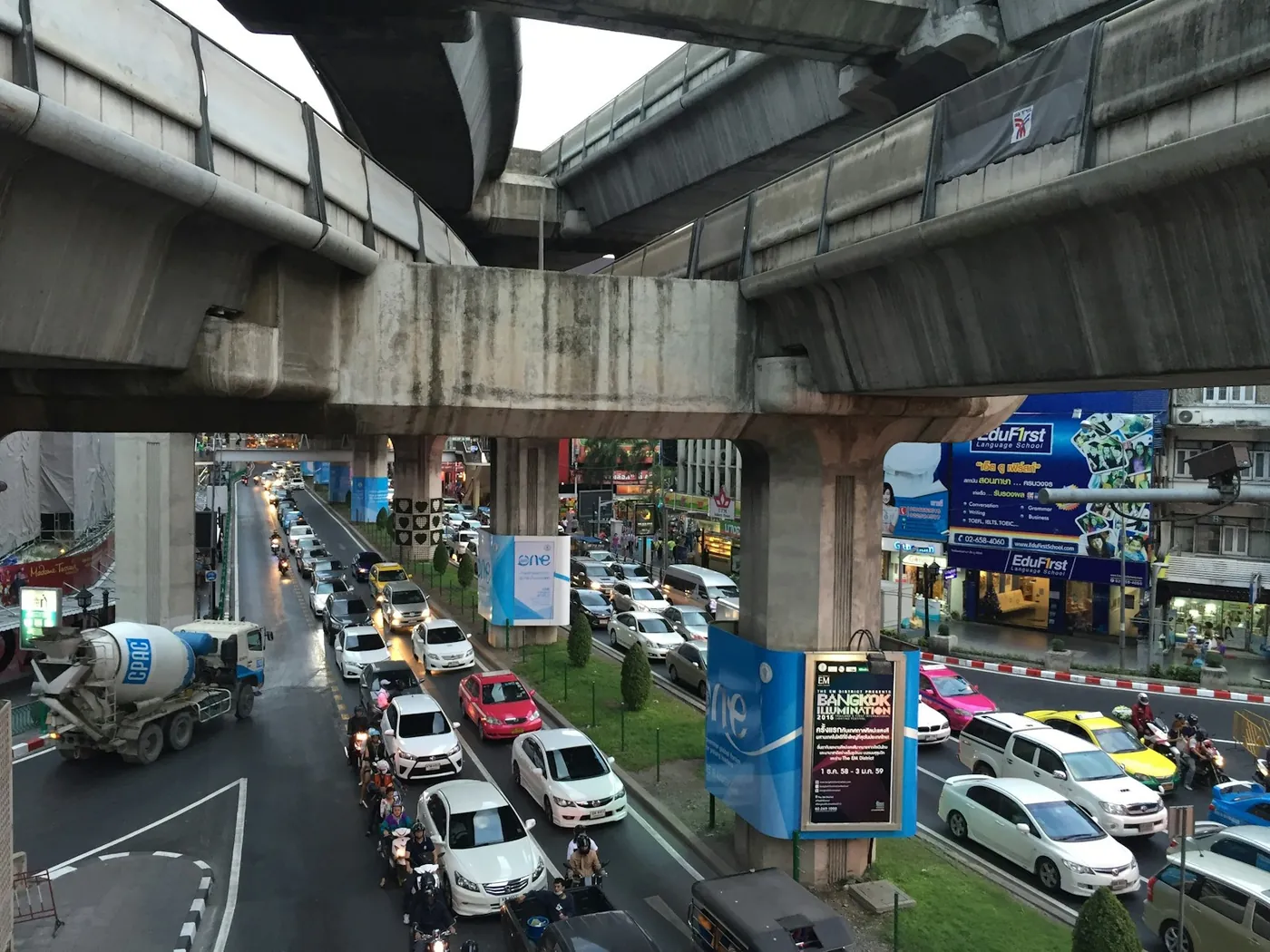
The skytrain, elevated above the main roads, covering the modern commercial city.
The metro, underground, covering a different set of districts and interchanging with the skytrain at several points.
The river boats, which are ordinary public transport running up and down the Chao Phraya and reaching the old town.
Cars, meaning ride apps and taxis, for everything the above do not cover and for late at night.
The rule that holds almost always: if the trains go there, take the trains, regardless of how short the distance looks.
The trains
The two rail systems are separate companies with separate tickets, and that is the only complication.
Buy single tickets from the machines or counters at each station, or a stored-value card if you will be making a lot of journeys. Machines have historically preferred coins, so the counter is the reliable option.
They are fast, clean, air conditioned and cheap, and they run above and below the traffic rather than in it.
Interchange stations require leaving one system and entering the other, which is signposted and takes a couple of minutes.
They stop running before the night does, which matters if the evening runs late.
Coverage is the limitation. The old town, with the palace and the famous temples, is less directly served than the modern city, which catches out visitors who assumed the trains go everywhere.
Cars, and the meter conversation
Bangkok taxis are metered by law, plentiful and cheap. A minority of drivers decline the meter for foreign passengers and propose a fixed price instead, which is where most visitor frustration in this city comes from.
The ride app removes the argument by fixing the fare before the car arrives, and the vehicles are frequently the same taxis.
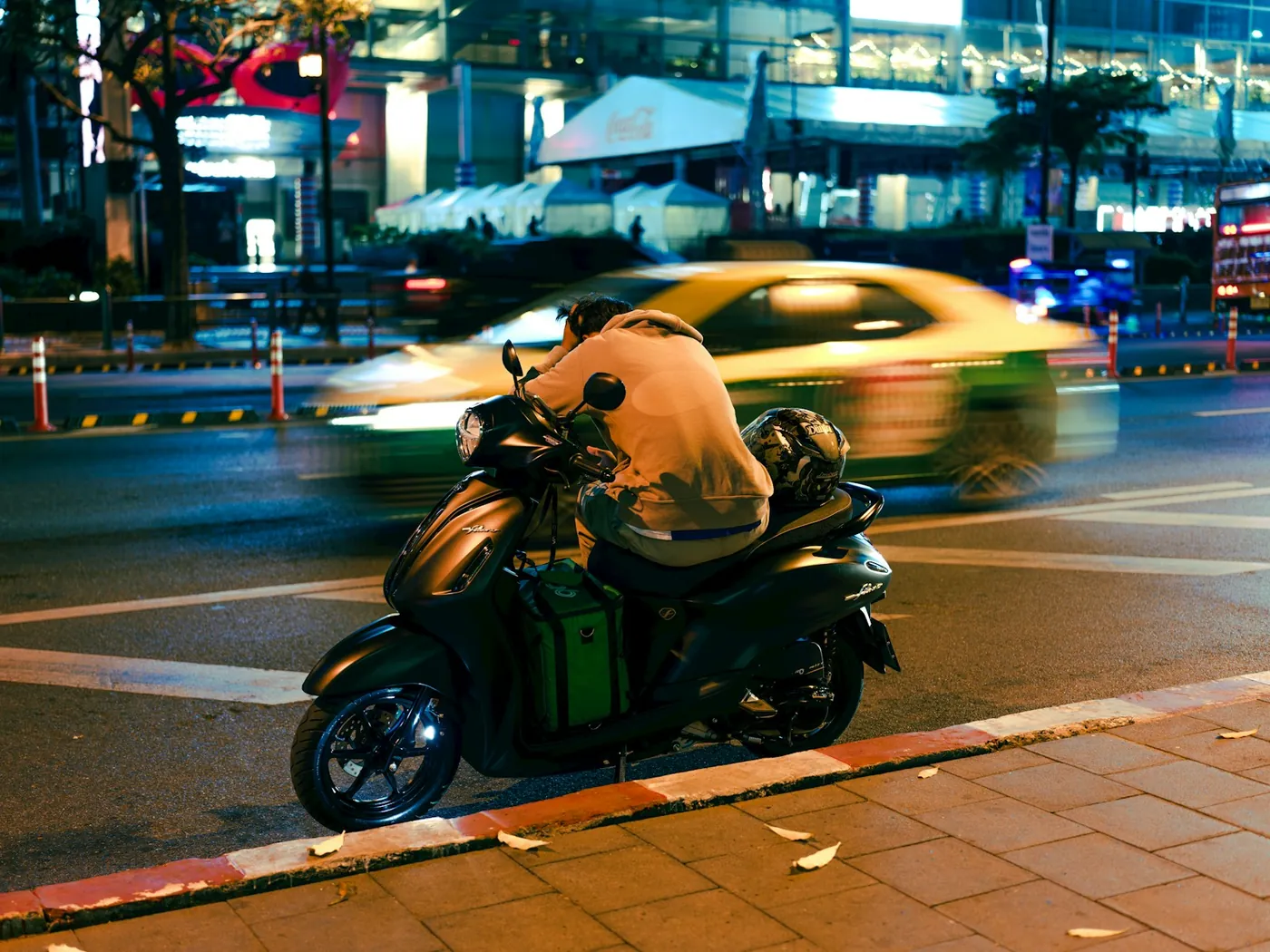
Motorbike taxis, identified by coloured vests, are the fastest way through stationary traffic for a single passenger and are exactly as exposed as they sound.
Tuk-tuks are a fun ride, are negotiated rather than metered, and are almost always more expensive than a metered taxi for the same journey.
The river
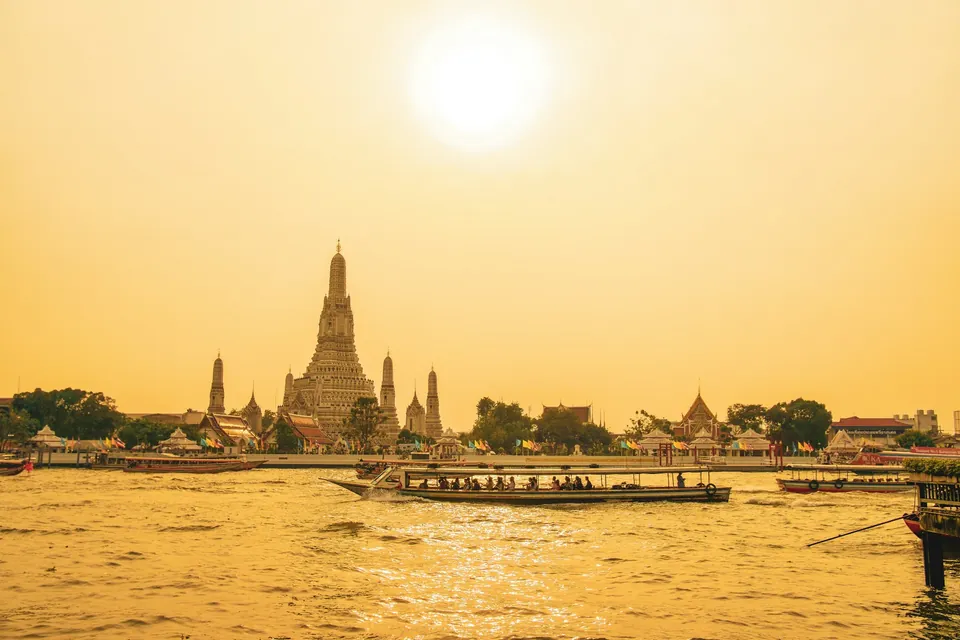
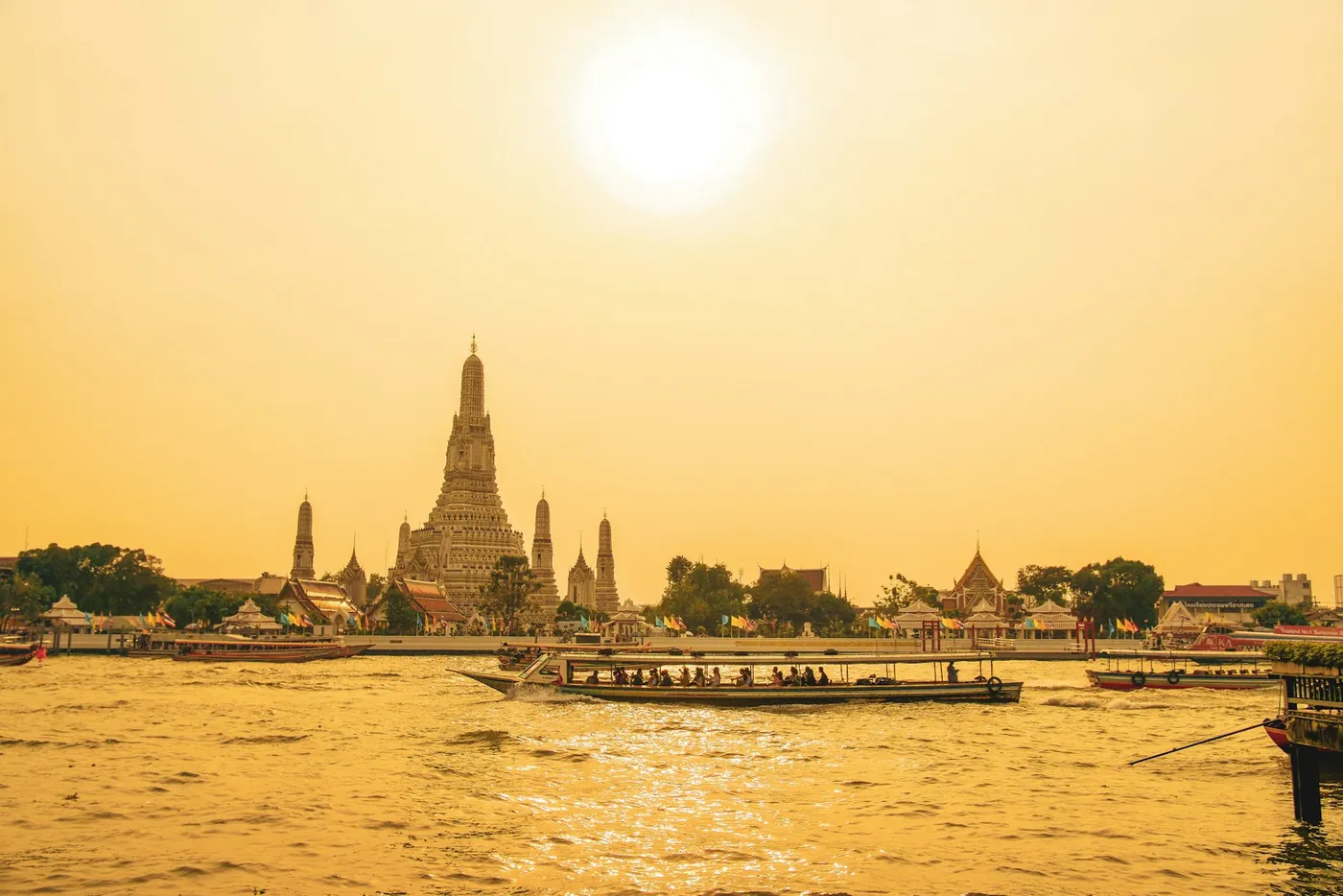
The express boats are the most underrated transport in the city and the most enjoyable.
They are public transport, used by commuters, with flags on the boats indicating which stops they make.
They reach the old town, which is exactly where the trains are weakest, and they land you at piers within walking distance of the major temples.
They connect to the skytrain at a major pier, which is the combination that makes the old town easy.
There is a tourist boat covering similar water at a considerably higher price with commentary, which is a reasonable choice if you want the commentary.
Cross-river ferries cost almost nothing and are the way to reach the temple on the far bank.
Journey by journey
To the Grand Palace and the old temples: train to a river pier, then the express boat. This is the single most useful routing in Bangkok.
Between shopping and business districts: skytrain, always.
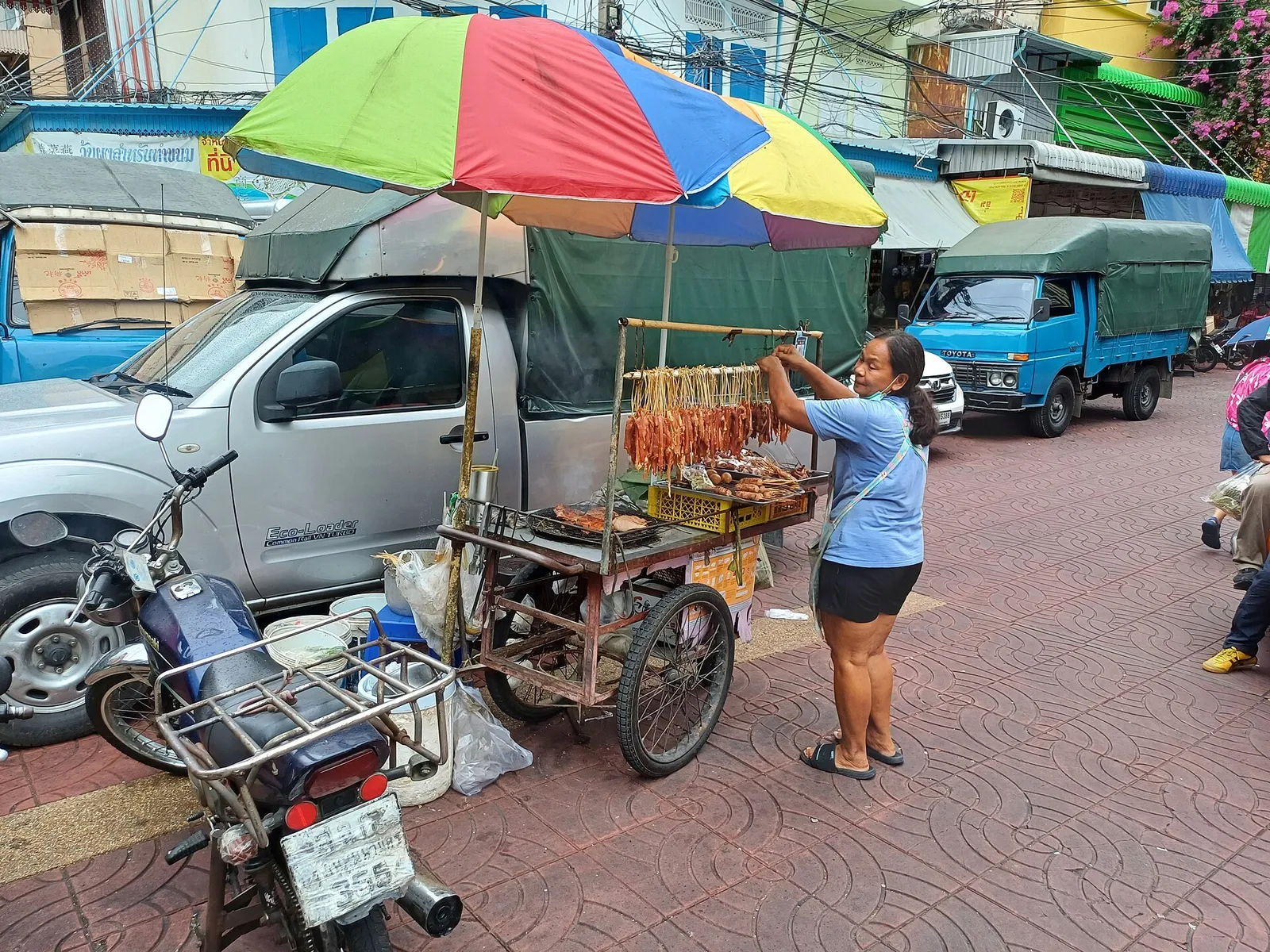
To Chinatown for the evening: metro, which now reaches it, and then walk. Our guide to Bangkok street food covers what to do once you are there.
Late at night: ride app, since the trains have stopped.
To the airports: a dedicated rail link serves one of them and both are reachable by road with a large time buffer.
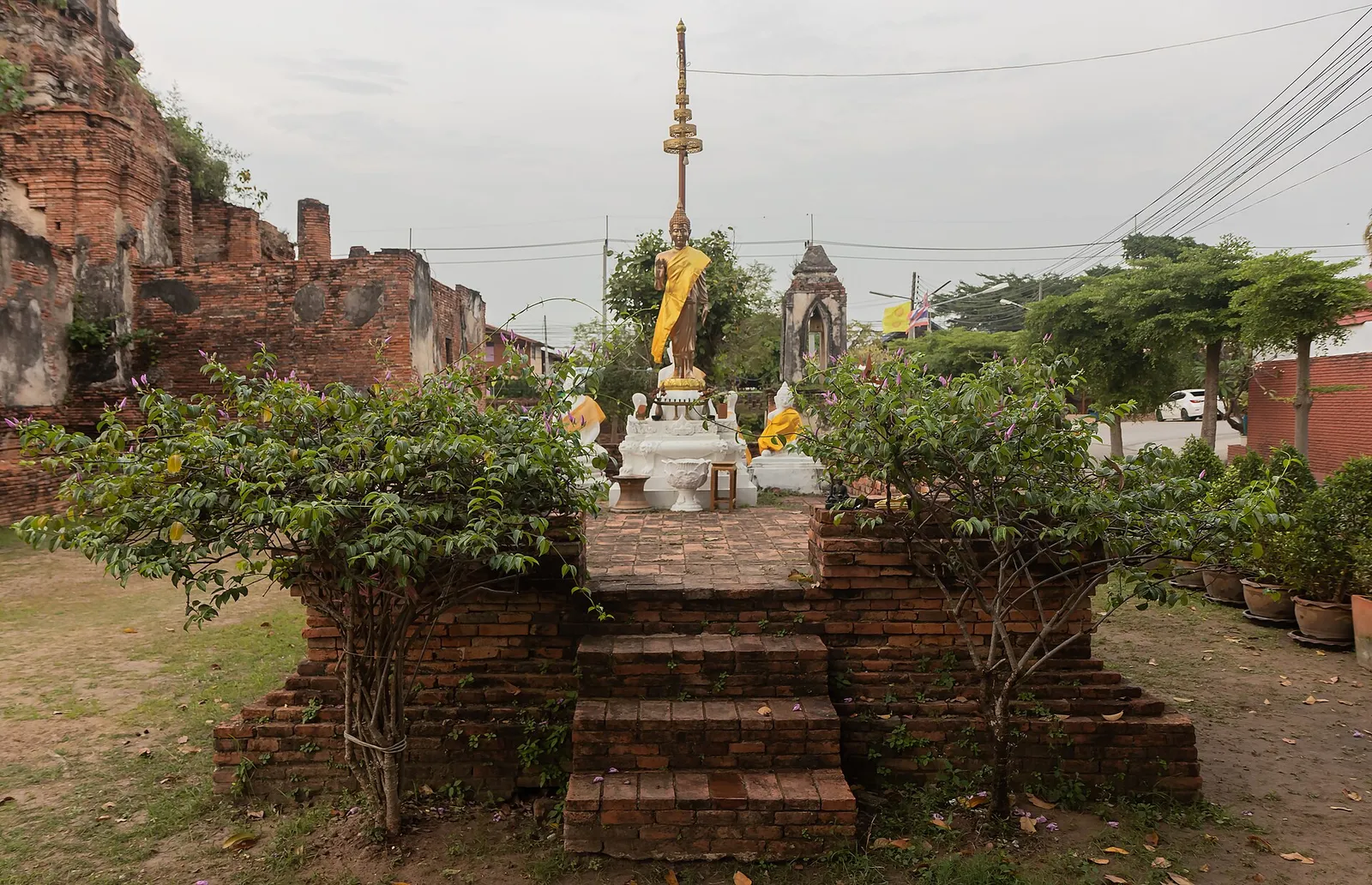
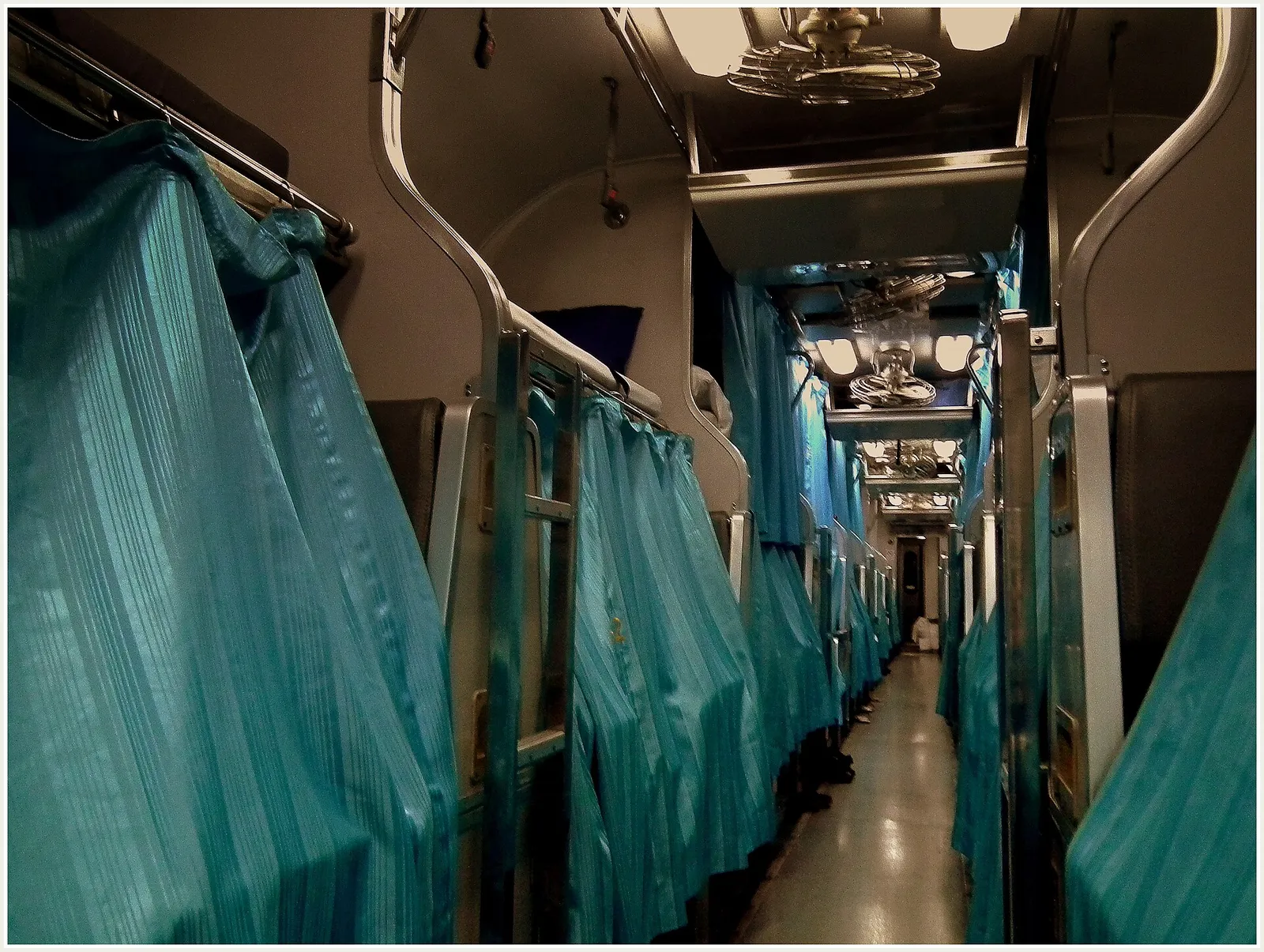
Out of the city for a day: the train stations, which is a different system again and covered in our guide to a day trip to Ayutthaya.
Practical notes
Station exits matter. Large stations have several and the wrong one means a long walk in the heat beside a road with no crossing.
Walkways connect many skytrain stations to malls and to each other, which is the air-conditioned way to cross the centre.
Pavements are difficult in places, with obstacles, missing sections and motorbikes, so walking is less practical than the distances suggest.
Rush hours are pronounced and the trains are genuinely full at them.
Small notes and coins for the ticket machines and the boats.
For the national picture, including the trains, buses and flights between cities, our guide to getting around Thailand covers what happens once you leave Bangkok.
The short version
Use the skytrain and metro for everything they reach, which is most of the modern city, and stop thinking about the traffic. Use the express boats to reach the old town and the temples, connecting from the train at the river pier, because that is the one area the rails serve poorly. Use a ride app rather than flagging a taxi, which removes the meter conversation entirely. And when it starts raining, abandon any plan that involves a car.