Thailand’s islands are connected by a network of ferries, speedboats and longtail boats that works remarkably well and follows almost none of the conventions you might expect from a transport system. Departures are approximate, boarding is a scrum, luggage goes on the roof, and the whole thing is cheap, frequent and reliable enough that people island hop for weeks on it. The two things worth understanding before you buy a ticket are what kind of boat you are getting and what happens when the weather says no.
The kinds of boat
Large ferries carry hundreds of people, take longer, cost less, have deck space and a cabin area, and handle a swell far better. On a rough day this is the one you want.
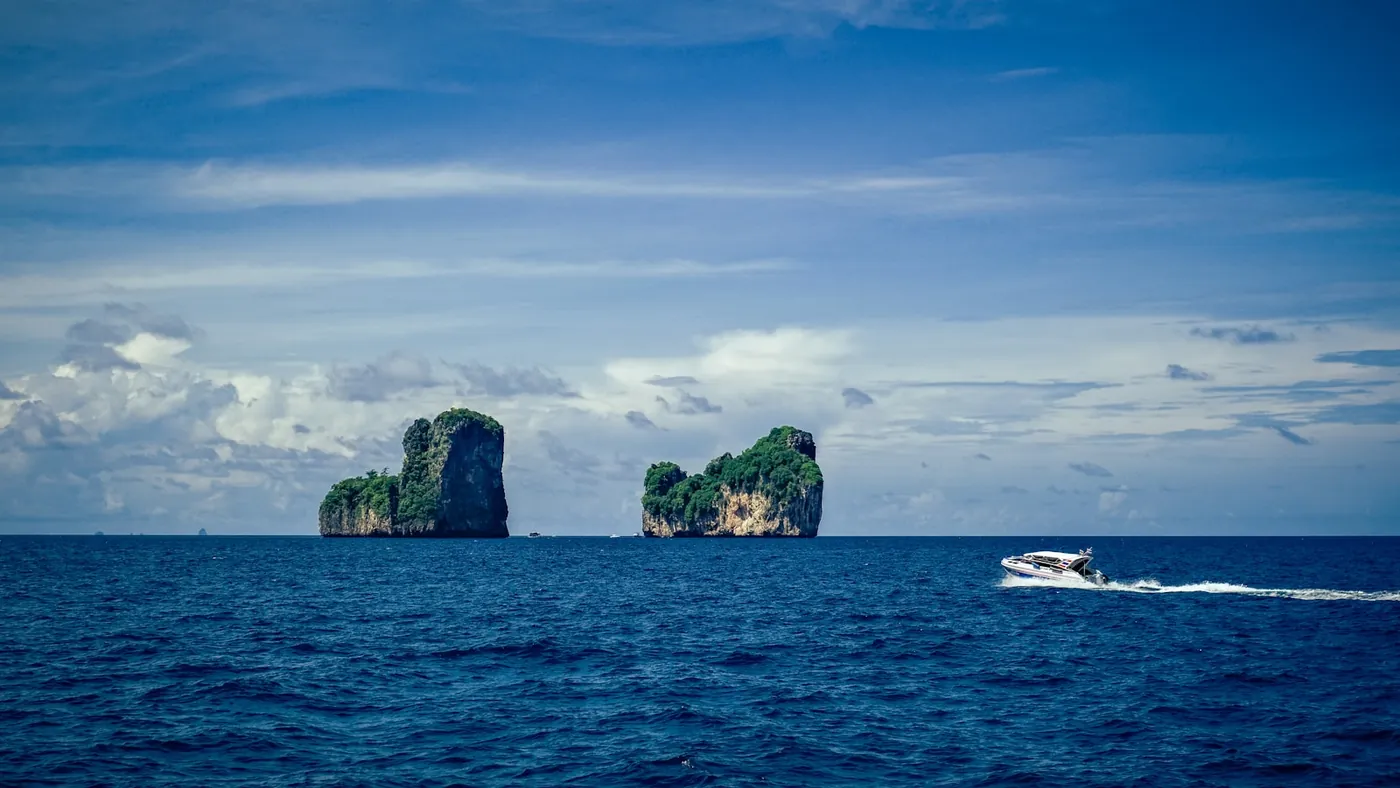
Speedboats roughly halve the journey time, cost more, are used by most tour operators, and are genuinely uncomfortable in choppy water, particularly at the back where the slamming is worst. Sit forward if you have the choice.
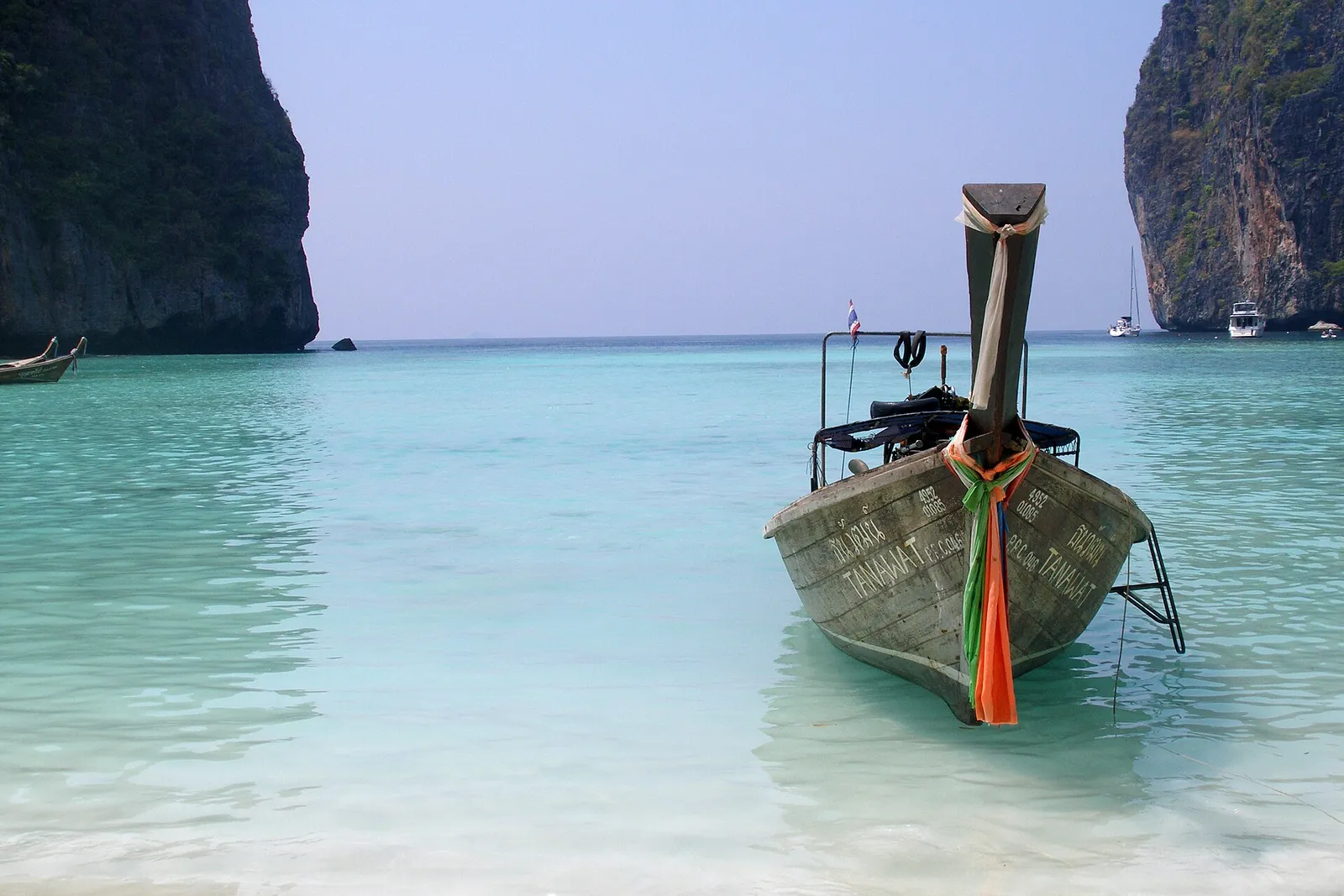
Longtail boats are the short-hop local transport for places like Railay, leaving when full, landing in the shallows.
Vehicle ferries serve the islands with road connections, which is what keeps them reachable year round.
Combination tickets
What they are. One ticket covering several legs: minibus to the pier, ferry, onward transfer at the far end, sold by agencies everywhere.
The advantage. One company is responsible for the chain, somebody meets you, and you do not have to work out the connection yourself.
The trade-off. You wait for the slowest link, the minibus collects other passengers first, and changing plans is awkward.
Buy from your accommodation or a visible shopfront rather than a stall on a beach, and keep the paper you are given.
They are the standard way most travellers move between islands, and they work.
The seasons
The two coasts are opposite. The Andaman side on the west runs its dry season roughly November to April; the Gulf side on the east is drier through much of the middle of the year and wettest late in the year.
Boat services follow that, reducing sharply or stopping on whichever coast is in its monsoon.
Islands with a road connection, such as Koh Lanta and Phuket, stay reachable year round.
Islands without one do not, and that is worth knowing before booking a stay on a small one out of season.
Cancellations happen in any season when the sea is rough, so a buffer is not only a monsoon precaution.
Practical notes
Arrive thirty to forty-five minutes early for a straightforward crossing.
Piers are informal. There is no gate, no announcement system you can rely on, and boarding is a crowd. Everyone gets on.
Luggage goes forward or on the roof, and gets wet on a speedboat. Keep valuables and electronics in a bag with you and use a dry liner in unsettled weather.
Motion sickness is common on speedboats in a swell. Tablets an hour before, sit forward, look at the horizon.
Cash for the pier, since small charges and last-minute tickets are frequently cash only.
Take the rubbish with you, because small islands have a real waste problem and limited capacity.
Building an island route
Two islands in a two-week trip is comfortable; four is a lot of pier time.
Stay three nights minimum anywhere you go, since a one-night island stop is two boats and a bed.
Group islands by coast rather than crossing the peninsula twice, which is a full day of transport each time.
Check the season for the coast, since the wrong coast in the wrong month is rain and cancelled boats, and the two sides of the peninsula are on opposite cycles.
Where this fits
For the wider transport picture, from the overnight trains and domestic flights to the minibus network that feeds the piers, our guide to getting around Thailand covers how it all connects.
For the biggest Andaman gateway and its own ferry piers, our Phuket guide covers the western hub.
And for the Gulf equivalent with an airport and onward boats to the smaller islands, our Koh Samui guide covers the eastern one.
The short version
Take the big ferry when the sea is up and the speedboat when it is calm and time matters, sitting forward either way. Buy combination tickets from your accommodation or a real shopfront and keep the paper. Group your islands by coast and match the coast to the month, since the two sides of the country have opposite wet seasons. Allow three nights per island and thirty to forty-five minutes at the pier. And put a mainland night between your last boat and your flight home, every time.