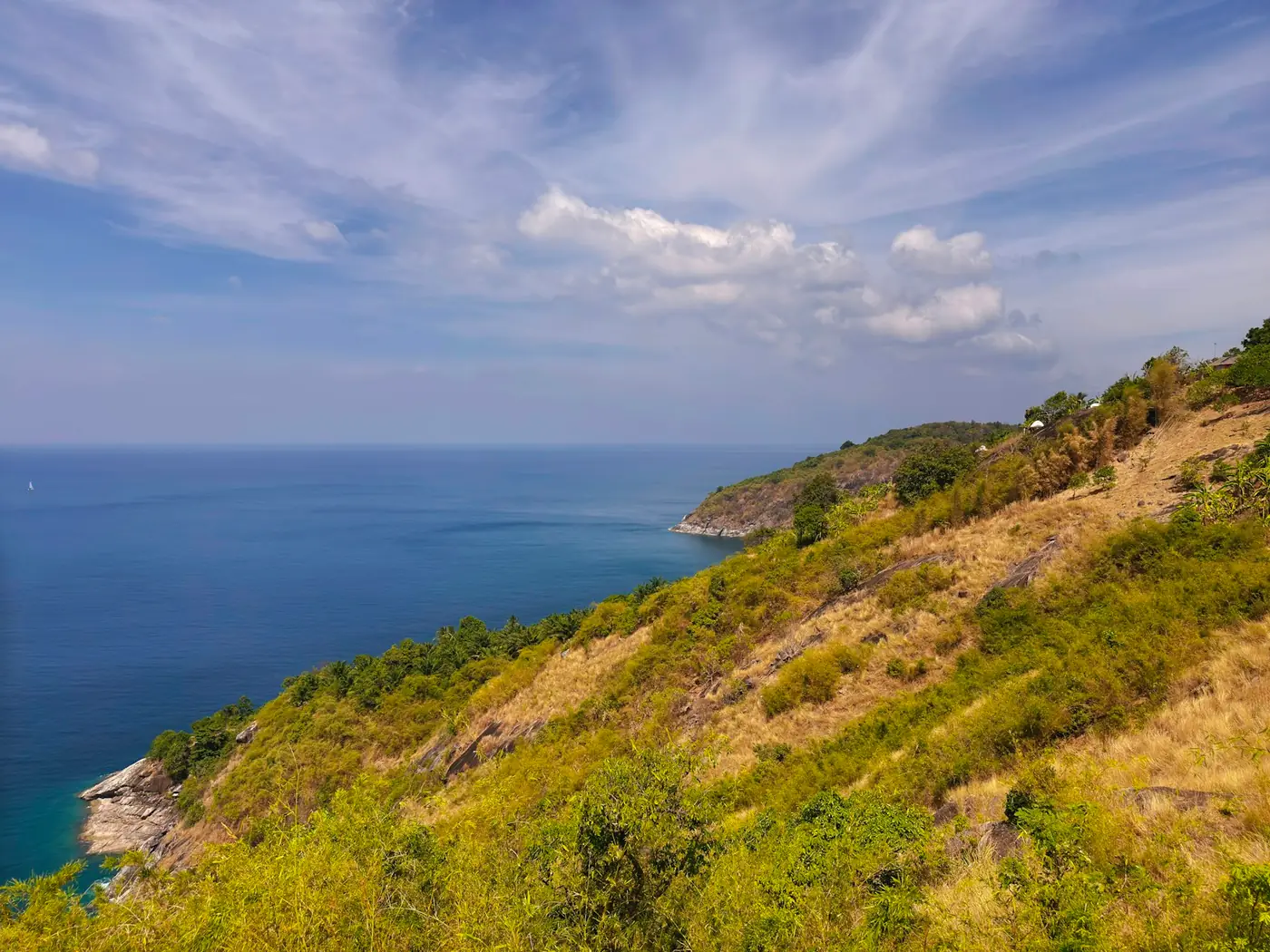
Phuket has a reputation, and the reputation describes about three kilometres of a fifty-kilometre island. The central west coast strip is exactly what people picture: dense, loud, built up and busy. Twenty minutes north there are quiet family bays, twenty minutes south there are calm coves, inland there is a national park and a rubber-growing interior, and in the southeast there is an old merchant town of pastel shophouses that looks like nowhere else in Thailand. The island is big enough to get badly wrong and easy to get right.
The coasts
The central west strip is the famous one: a long beach with a full resort town behind it, nightlife, water sports, and everything available at any hour.
North of it the bays get progressively quieter, with family resorts, calmer water and a slower pace.
The far north, inside a national park, is largely undeveloped with a long empty beach and very little around it.
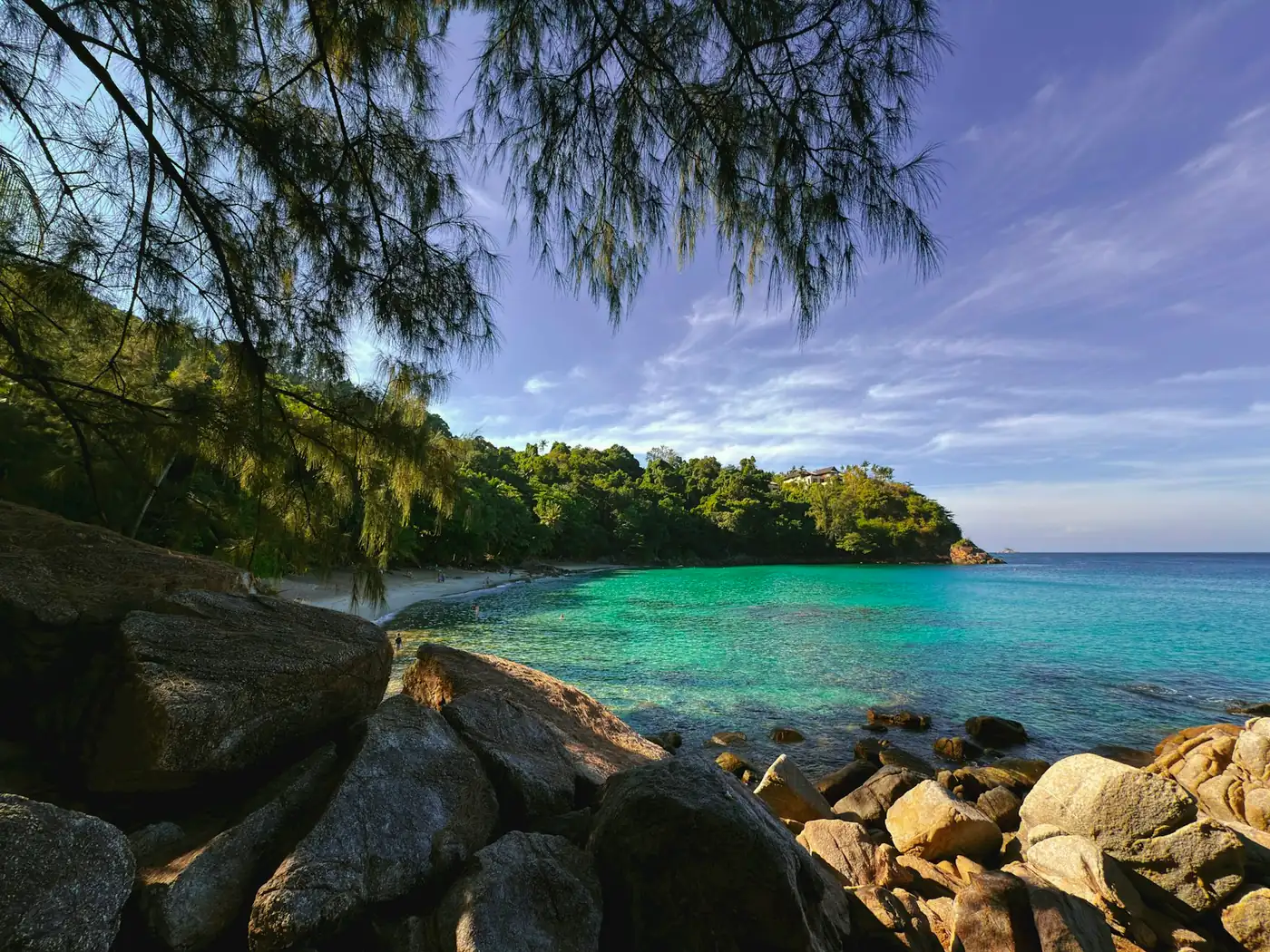
The south has smaller coves, calmer swimming and the best sunsets, plus the busiest viewpoint on the island.
The east coast is not for swimming, being mangrove and pier country, and it is where the boats leave from.
The old town
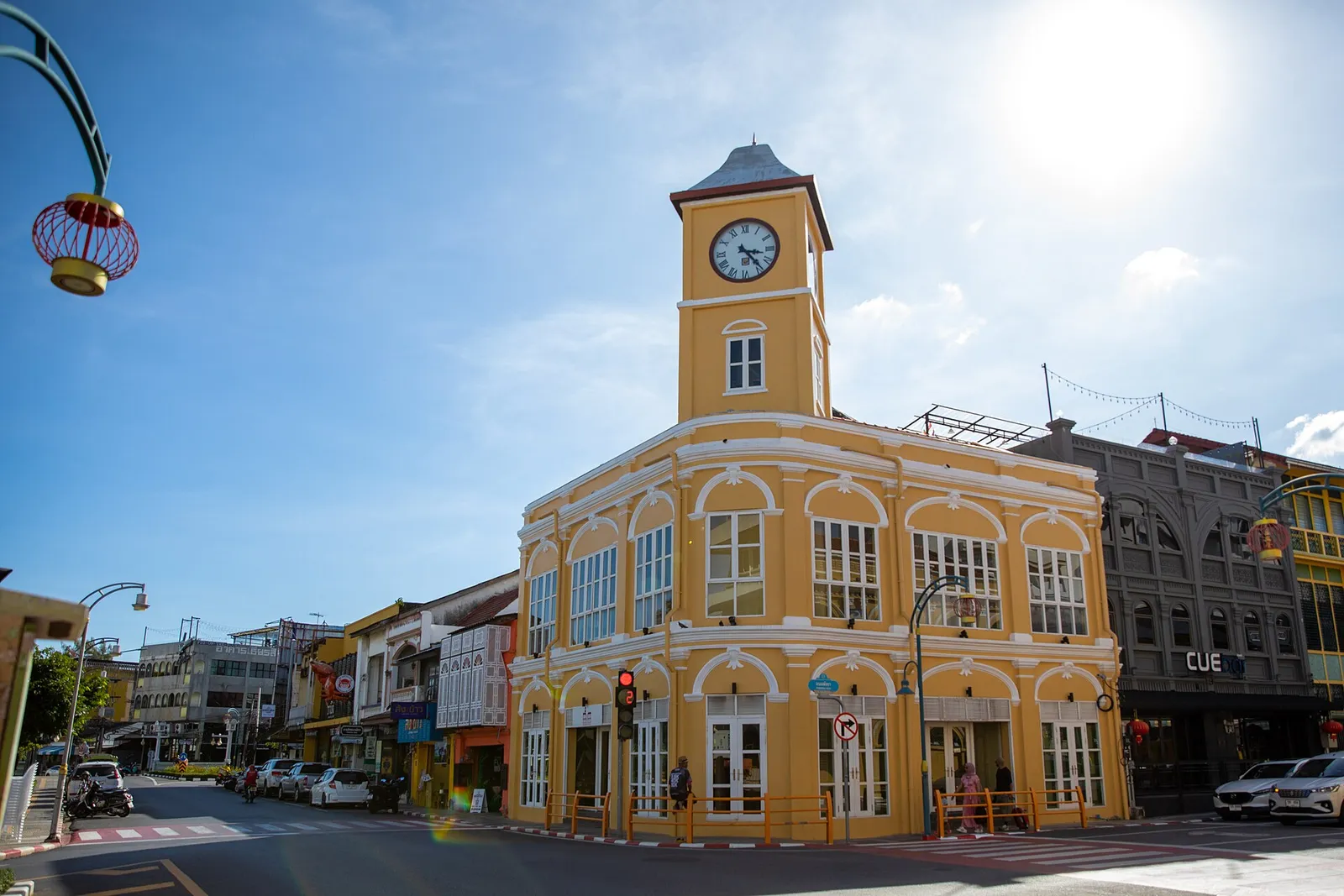
What it is. A compact quarter of Sino-Portuguese shophouses in faded pink, yellow and green, built by the tin-mining merchant families a century ago.
What to do. Walk it, look at the shutters and the arcades, drink coffee, eat, and find the street art.
The Sunday walking street fills the main road with food and stalls and is the best evening on the island for anybody not in a beach club.
Half a day is enough, and it deserves one.
It is the reason Phuket is more than a beach.
Days out
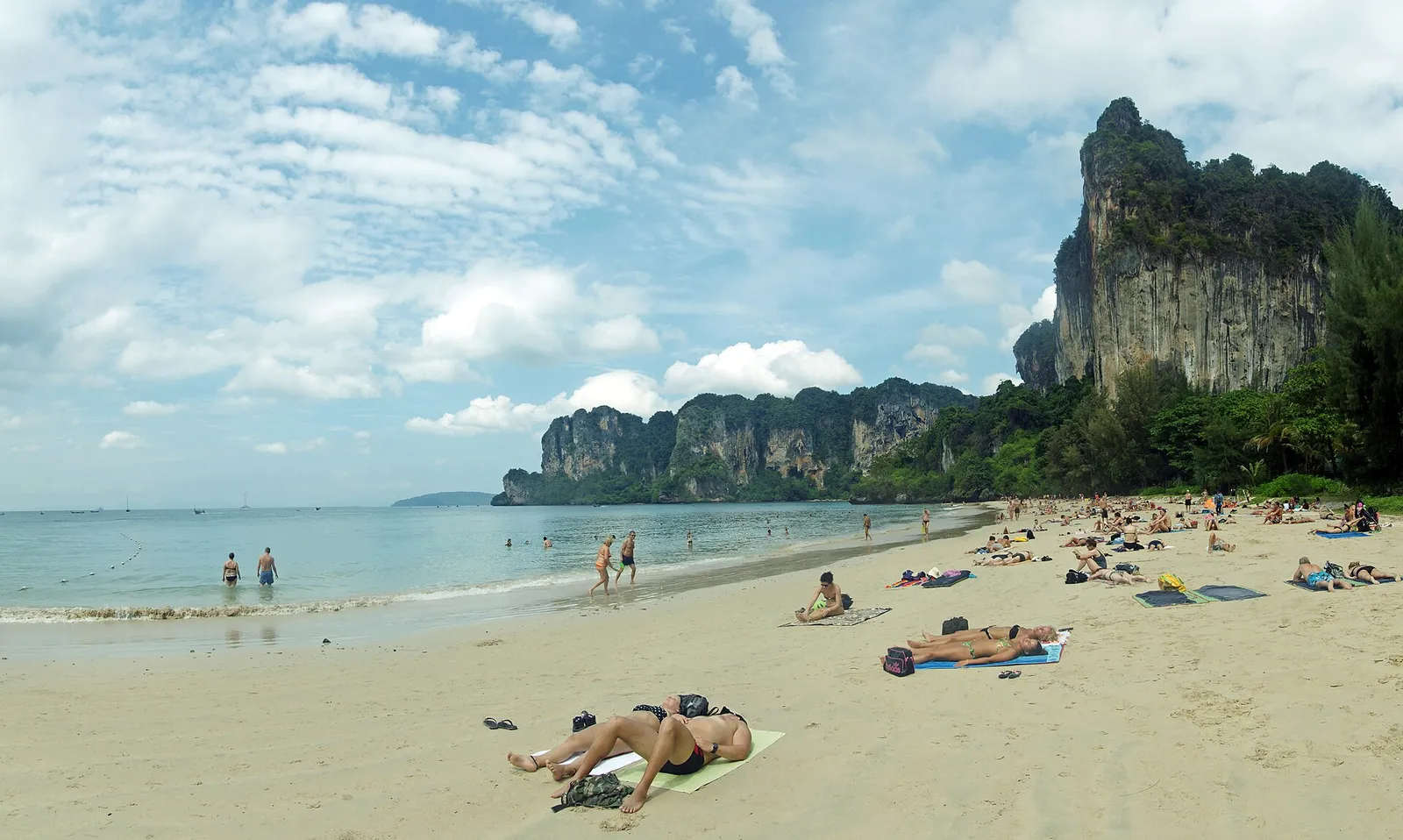
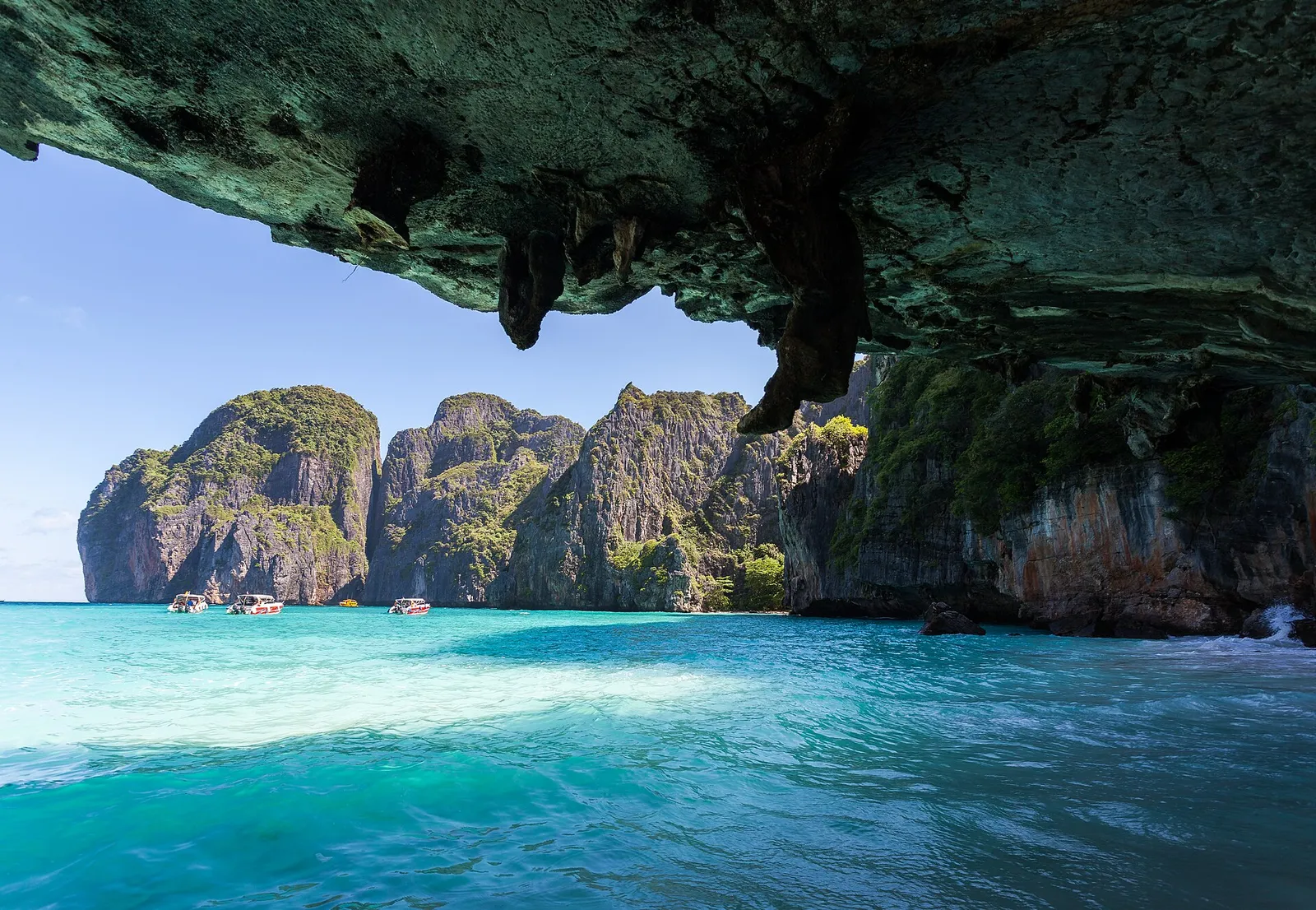
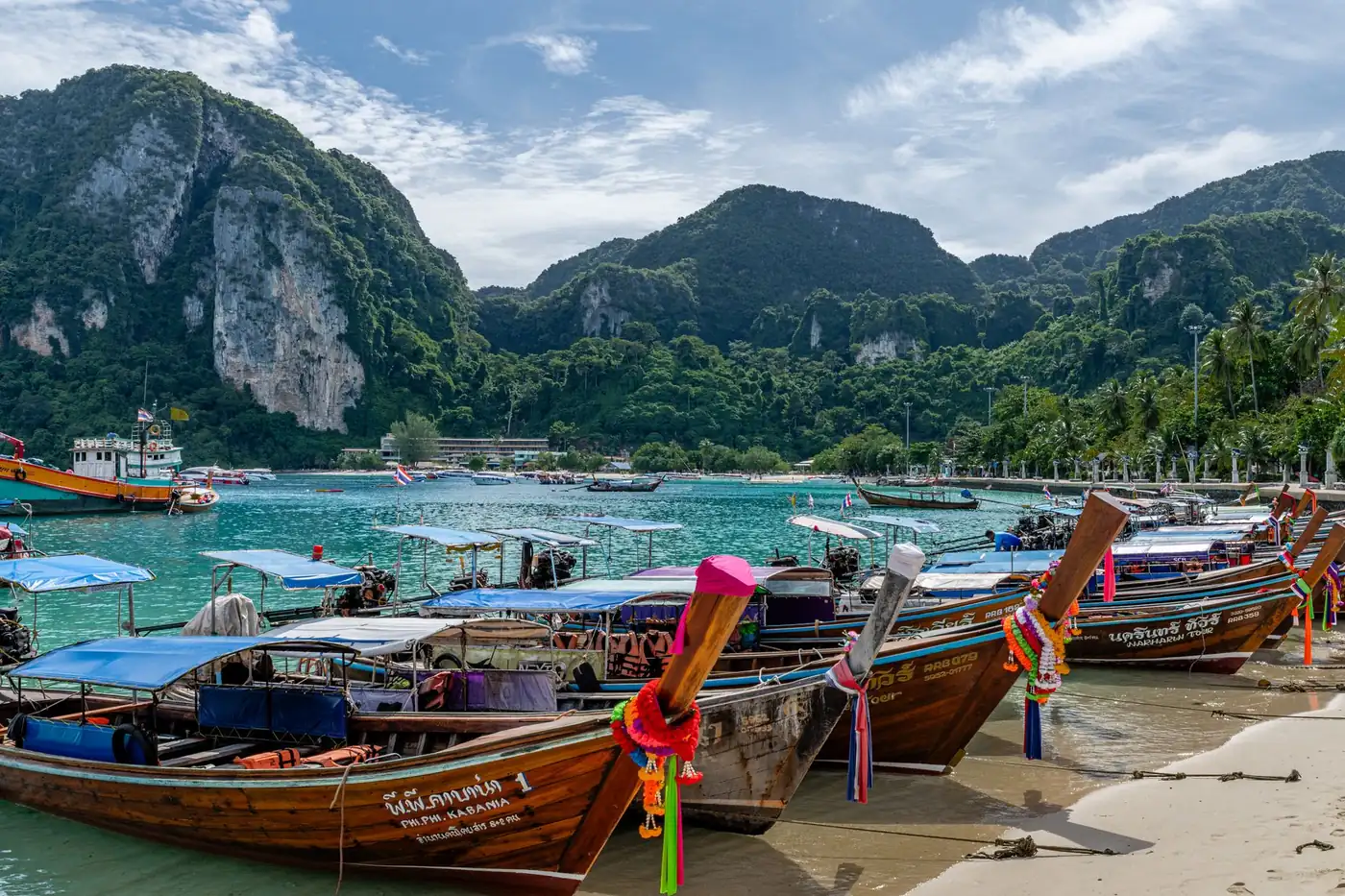
The limestone bays to the east and north are the classic boat day, with karst islands rising vertically from shallow green water.
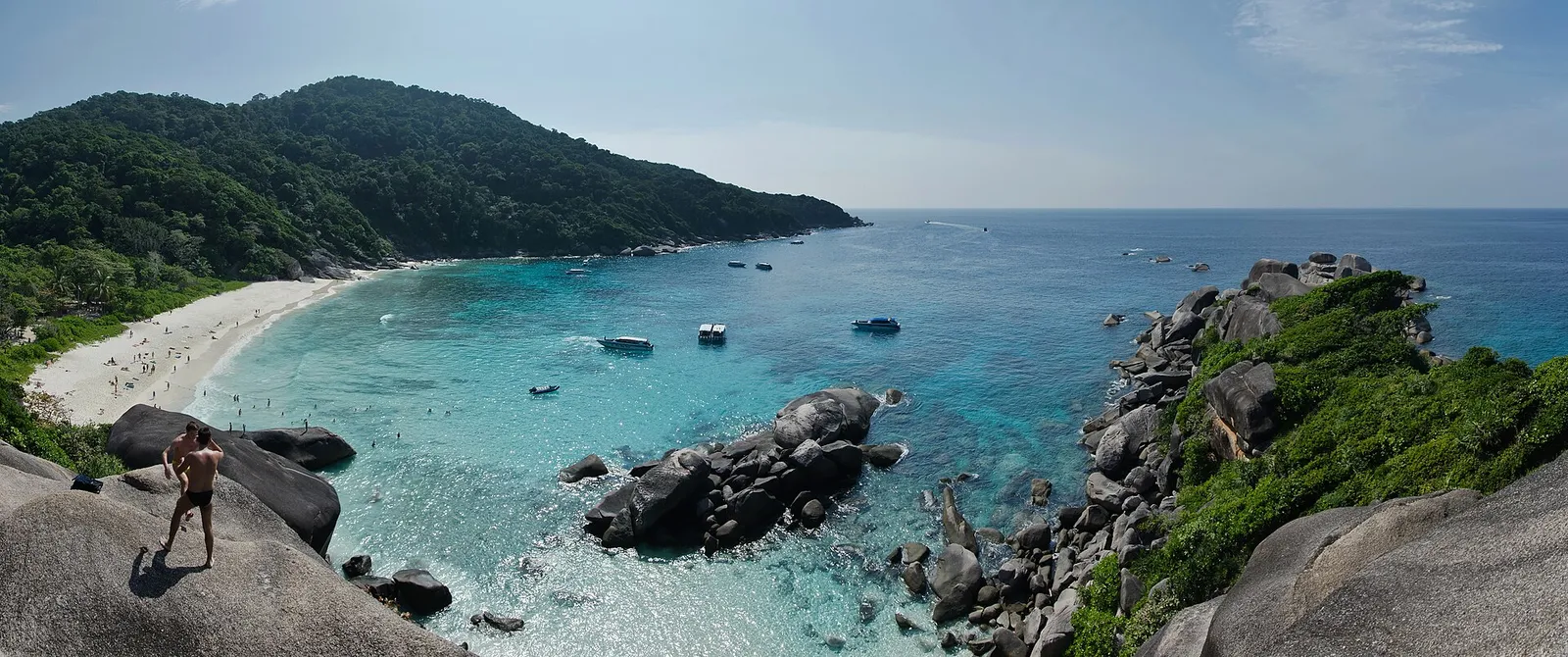
The southern islands, including the famous cluster to the southeast, are a longer boat day and the most oversubscribed trip on this coast.
Viewpoints on the southern headland and the big Buddha on the ridge above the island.
The interior, with waterfalls, a rubber-growing landscape and a wildlife rehabilitation centre.
Cooking classes and markets, which are better here than the resort strip suggests.
Practical notes
Getting there. Phuket has a large international airport with direct flights across Asia and beyond, plus buses and boats to the mainland and the neighbouring islands.
Getting around is the island’s weak point: distances are real, public transport is thin, and taxi and app pricing has historically been contested. Budget for transport or rent something.
Scooters are everywhere and the road here is busier and faster than on the smaller islands, so the usual cautions apply doubly.
Season matters enormously, both for the sea and for the price.
It is a gateway as much as a destination, and there is no shame in using it as one.
Where this fits
For where exactly to base yourself along all that coast, our guide to where to stay in Phuket covers the beaches one by one.
For the wider question of which Thai coast to choose at all, since the two sides of the peninsula have opposite seasons, our comparison of the Andaman and Gulf islands is the place to start.
And if you are deciding between city and island for a short trip, our comparison of Bangkok and Phuket sets out which suits which holiday.
The short version
Choose your coast before your hotel, because the party strip, the family bays, the quiet south and the empty national park beach are four different holidays on the same island. Give the old town half a day and a Sunday evening if the timing works. Take one boat day out to the limestone bays. Budget for transport, since getting around is the island’s weakest point. Come in the dry season if you can, and whenever you come, treat a red flag on the beach as a closure rather than a warning. If you have the days for it, our five-day Phuket and Andaman itinerary lays the same coast out day by day and adds Phang Nga Bay and the old town.