The Andaman coast runs on its own season, the opposite of the Gulf side, and Phuket is the easiest way into it: an international airport, a proper old town most beach visitors skip entirely, and a fan of islands, bays and limestone cliffs within reach by boat. Five days here mixes a slow town day with three that are largely spent on the water, finishing at Railay, a peninsula you can only reach by longtail. For the wider picture of how this coast compares to the other side of the country, our Andaman versus Gulf guide is a useful place to start, and Phuket guide covers the island itself in more depth.
Itinerary at a glance
| Day | Base | The signature experience |
|---|---|---|
| 1 | Phuket old town | Wandering Thalang Road’s Sino-Portuguese shophouses |
| 2 | Phuket beaches and coast | Sunset from Promthep cape |
| 3 | Phang Nga Bay | Paddling into a hidden hong lagoon |
| 4 | Phi Phi or Krabi | The viewpoint climb, or a four-island longtail day |
| 5 | Railay | Watching climbers work the overhangs from the sand |
Day 1: Phuket old town
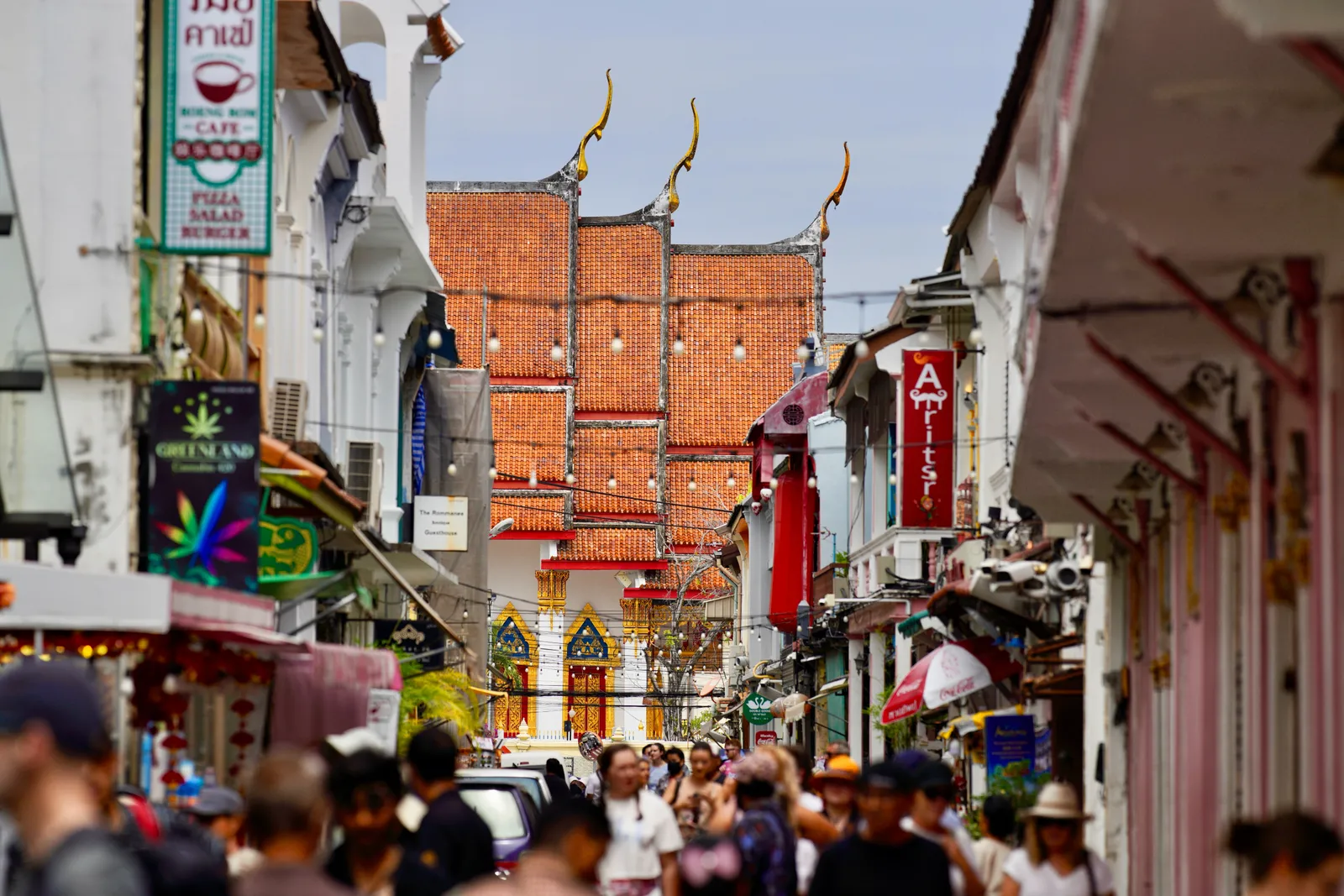
Almost nobody staying on the beach strips ever makes it into Phuket old town, and that is exactly why it is worth the detour. Thalang Road and the streets around it are lined with Sino-Portuguese shophouses, tall, narrow, colourfully painted buildings that reflect the island’s history as a tin-mining port worked by Chinese and Peranakan merchants. Street art has filled in some of the gaps between buildings over the last decade, and the whole quarter rewards an unhurried walk with no fixed plan.
Food here is its own reason to come. The old town has a distinct Peranakan food tradition, part Chinese and part Malay, alongside Hokkien noodle dishes brought over by the same trading families generations ago. A morning dim sum session, if you can find one running, is a good way to start the day before the heat sets in properly. In the afternoon, climb one of the hill viewpoints above the town for a first look at the coastline you will spend the rest of the trip exploring.
Food: Hokkien noodles and Peranakan dishes unique to the old town, plus a morning dim sum session if the timing works.
The signature experience: wandering Thalang Road’s shophouses and side streets, a slower, older Phuket that the beach crowds never see.
Optional tour: a walking or cycling tour of the old town, if you would rather have context for the buildings than wander without one.
Day 2: Beaches and the coast
Today is about picking your beach and sticking with it (our where to stay in Phuket guide breaks down which strip suits which kind of day). The busier strips have the most facilities and the most energy; the quieter southern bays trade some of that convenience for calmer water and fewer people. Neither is wrong, and it depends entirely on what kind of day you want. Spend the middle of the day in the water or under an umbrella, then move for the golden hour.
Promthep cape, at the island’s southern tip, is the classic sunset spot for good reason: a headland view with the sun dropping straight into the Andaman Sea, busy but rarely disappointing. On the way there or back, the Big Buddha sits on a hilltop with its own sweeping view across the south of the island, worth a stop even if you are not there for sunset. Finish with dinner at a beach shack that grills the day’s catch over charcoal, simple and usually excellent.
Food: a beach shack grill, fresh seafood cooked simply over charcoal.
The signature experience: sunset at Promthep cape, the headland silhouetted against the colour over the sea.
Optional tour: the Big Buddha and a viewpoint loop can be combined into one scooter or taxi circuit if you want to see both without doubling back.
Day 3: Phang Nga Bay
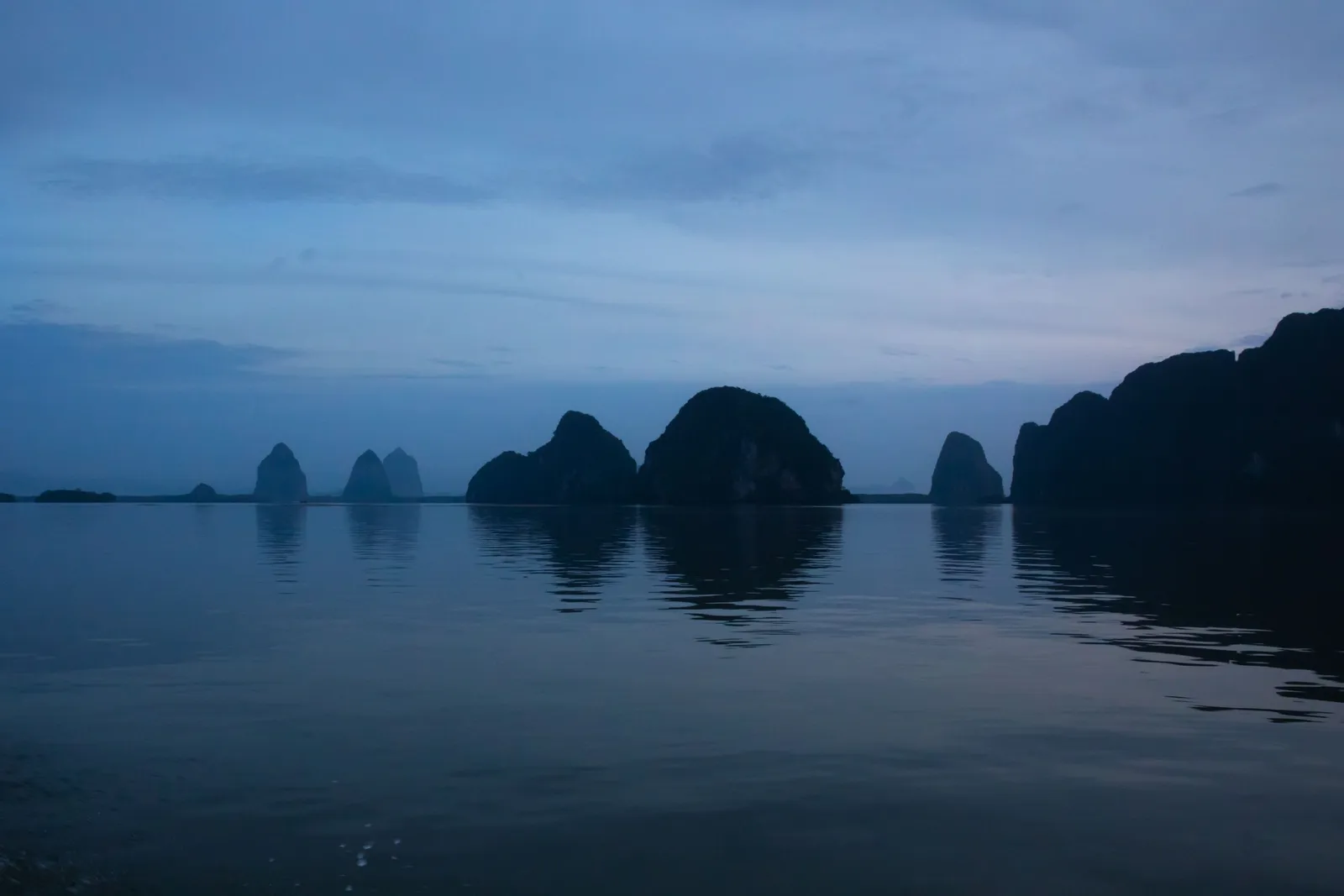
Phang Nga Bay is where the Andaman’s limestone geology puts on its best show, sheer karst islands rising straight out of flat green water, some split by sea caves that a small canoe can slip into at the right tide. A guided longtail or canoe trip through the bay is the standard way to see it, gliding beneath overhangs and between islands that look painted rather than real.
The real prize is a hong, a lagoon enclosed inside a collapsed limestone island and open only to the sky above, reachable by paddling through a low cave mouth that only clears at certain points in the tide. Inside, the water is often perfectly still and the noise of the open bay disappears completely. Combine the paddling with a quiet island lunch stop and, tide permitting, some snorkelling off the boat before heading back to Phuket in the late afternoon.
Food: a packed or boat-served lunch on a quiet island beach, away from the main bay traffic.
The signature experience: paddling into a hong, a hidden lagoon inside a limestone island that closes off entirely once the tide rises.
Optional tour: sea canoe trips and speedboat day tours both run this route; the canoe version gets you into the smaller caves that a bigger boat cannot reach.
Day 4: Phi Phi or Krabi
Two strong options, and either makes a full day. Phi Phi’s viewpoint, a steep climb above the pier, gives the famous view over the two curved bays that made the island a household name, and Maya Bay, the beach from the film that put it on the map, is worth visiting under whatever current access rules are in place at the time, since both the crowd limits and the boat rules there change. Alternatively, a four-island tour from Ao Nang near Krabi covers a looser cluster of beaches and snorkel stops at a gentler pace, with fewer crowds than Phi Phi at the height of the season.
Both routes are entirely weather and sea condition dependent, and boats can be delayed or rerouted if the swell picks up, so keep the rest of the day loose rather than booking anything tight around the return time.
Food: a beach lunch included on most boat tours, usually a set spread rather than a menu.
The signature experience: the climb to Phi Phi’s viewpoint for the view over both bays, or a slow four-island day out of Ao Nang.
Optional tour: confirm Maya Bay’s current visiting rules before booking, since access, timing and crowd caps there are reviewed and changed periodically.
Day 5: Railay
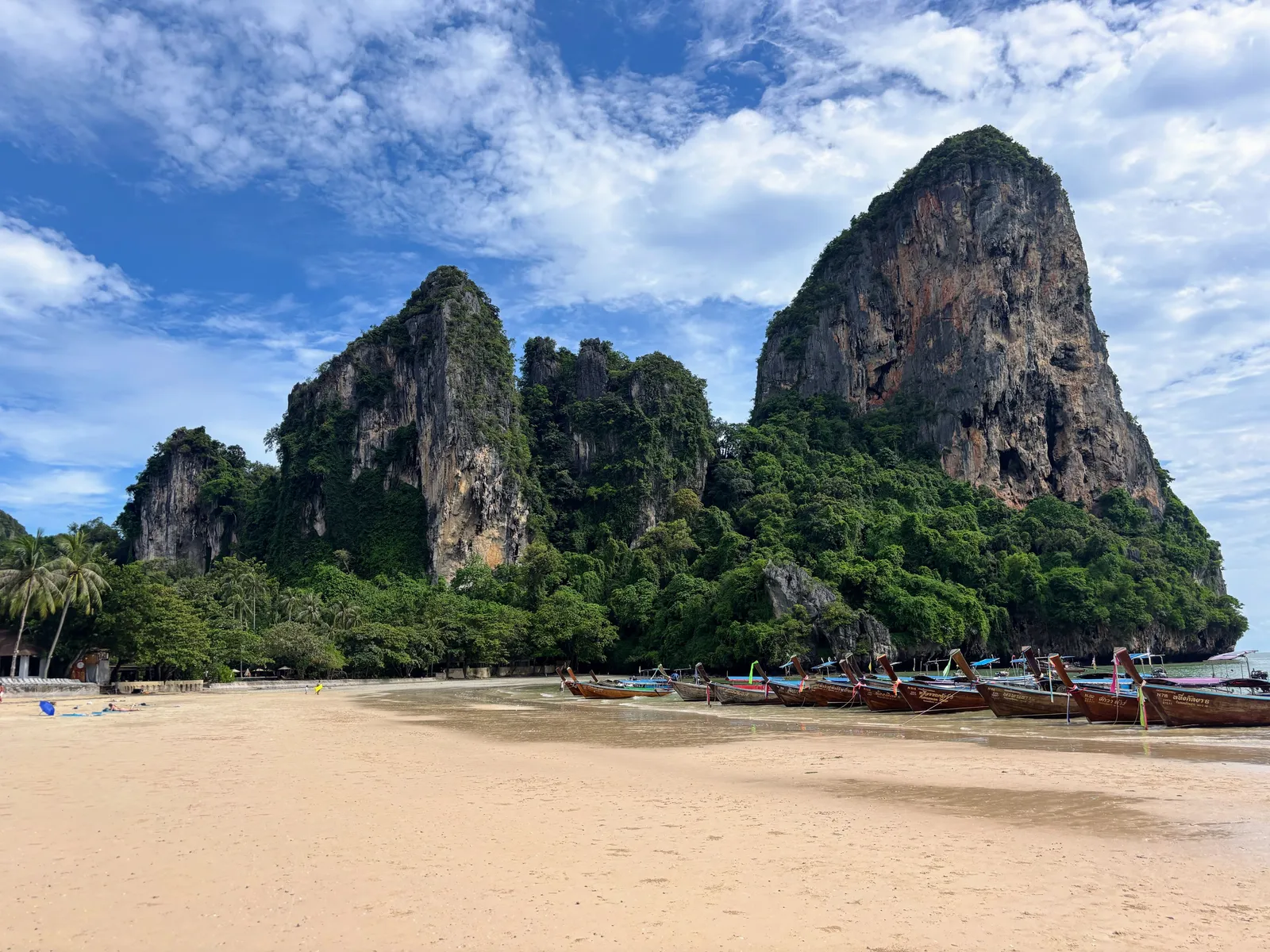
Railay is a peninsula, not an island, but the cliffs behind it are so sheer that no road reaches it; a longtail boat from Ao Nang or Krabi town is the only way in. The result is a strange, self-contained pocket of beach backed by towering limestone walls, known internationally as one of the sport’s best rock climbing spots. Even if you have never climbed, it is worth watching from the sand as climbers work their way across the overhangs above Phra Nang beach.
Phra Nang cave beach itself, tucked around the point, has a small shrine at its base left by local fishermen, offerings placed there over generations. Spend the day moving between Railay’s two main beaches, take a short walk or a longtail hop to the quieter western side for sunset, and let the last day be genuinely unhurried after four days of moving between bays.
Food: a beachfront restaurant on Railay West, one of the better places on this coast to watch the sunset with dinner.
The signature experience: watching climbers work the limestone overhangs above the beach, ropes and chalk bags against sheer white rock.
Optional tour: a half-day introductory rock climbing session is available for anyone tempted to try it themselves rather than just watch.
Before you go
This coast runs on a different calendar to the Gulf side, at its calmest and clearest in the dry months and considerably rougher once the monsoon sets in, with some boat routes reduced or cancelled depending on conditions; check the best time to visit before you book and build a spare day into the plan if you can, since island and boat days here are the ones most likely to shift with the weather. Pack reef-safe sunscreen for the snorkelling days, bring cash for the smaller islands where cards are not always accepted, keep footwear you do not mind getting wet close at hand for every single day on this itinerary, and take out travel insurance that covers the water activities you have planned.