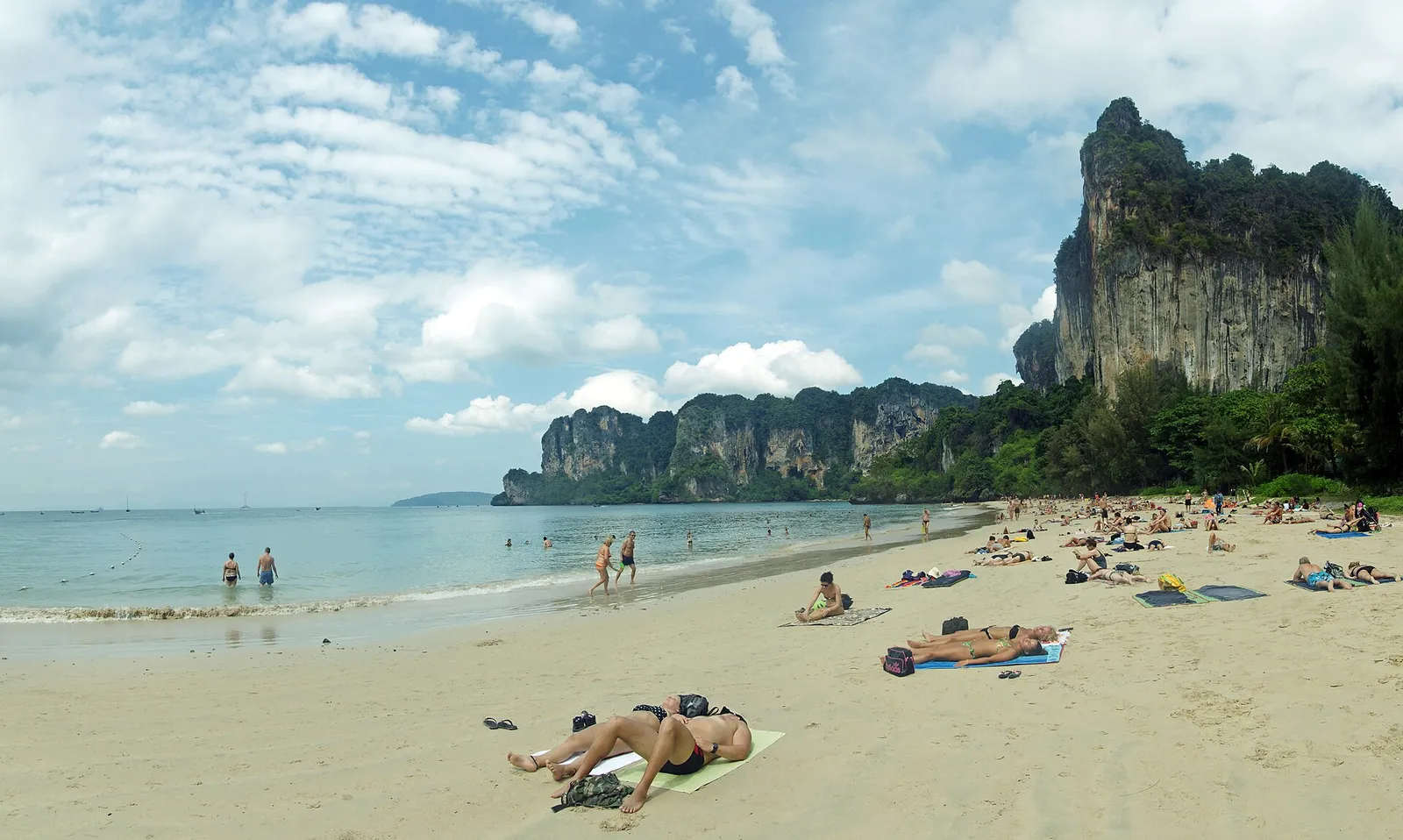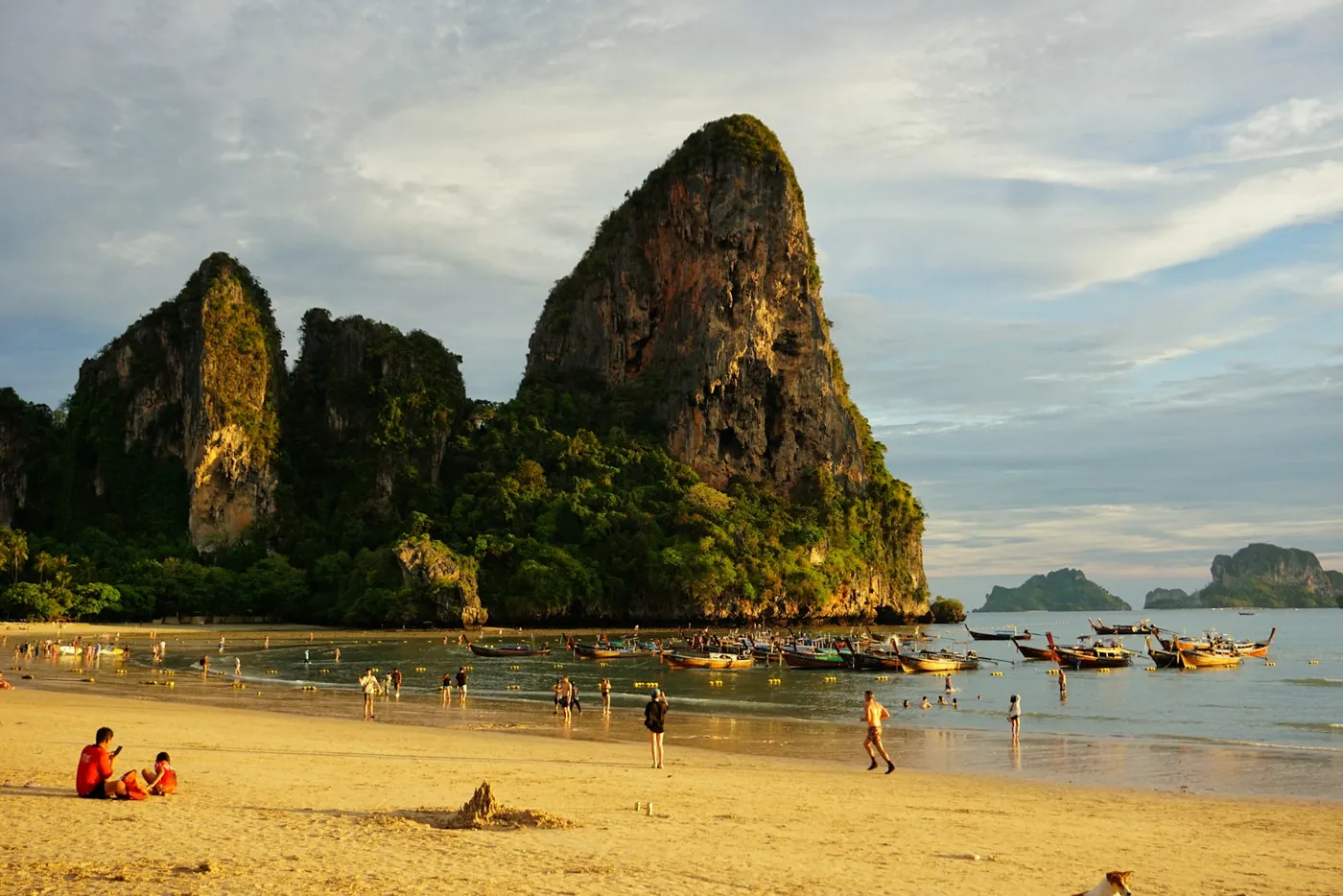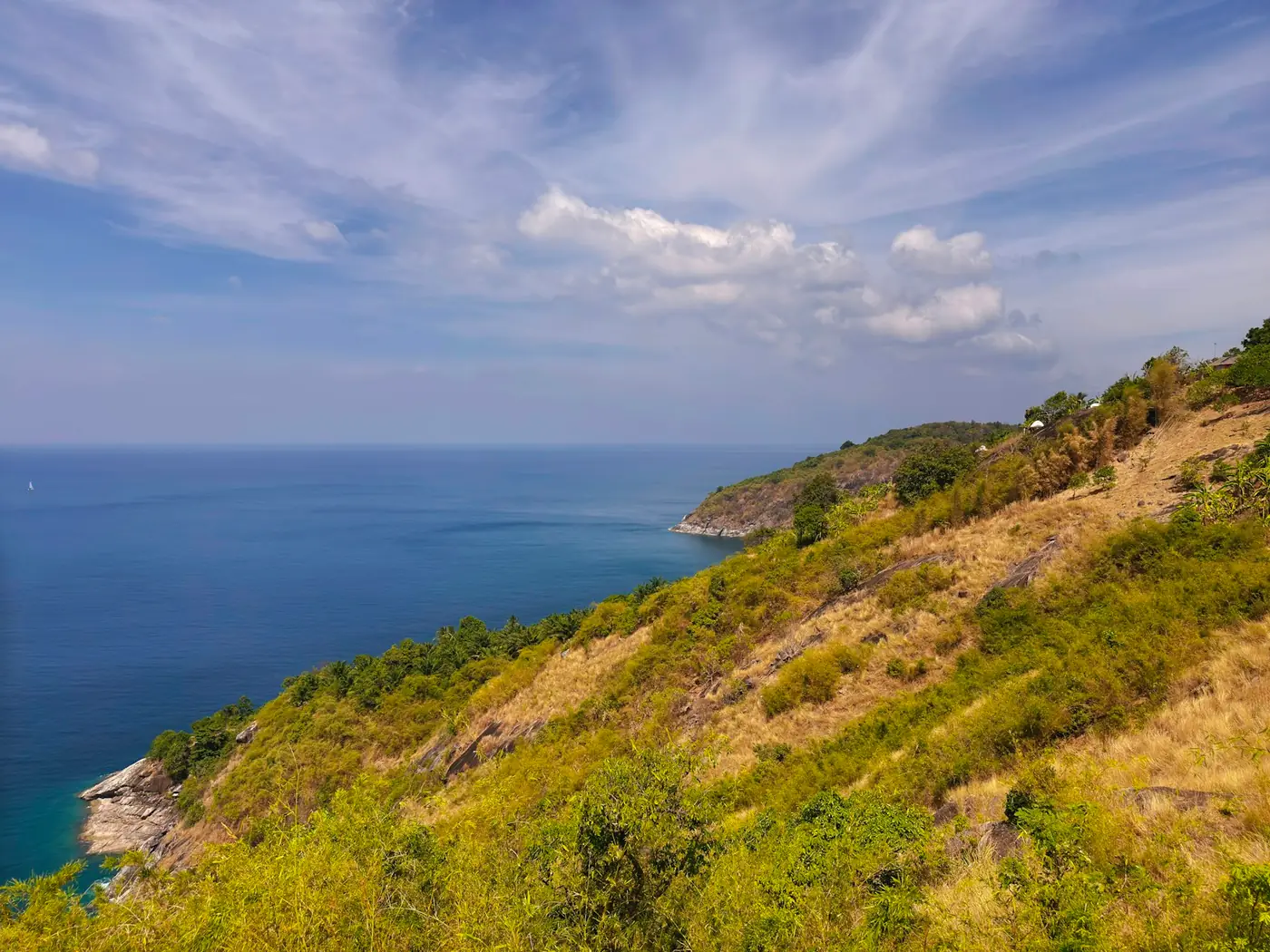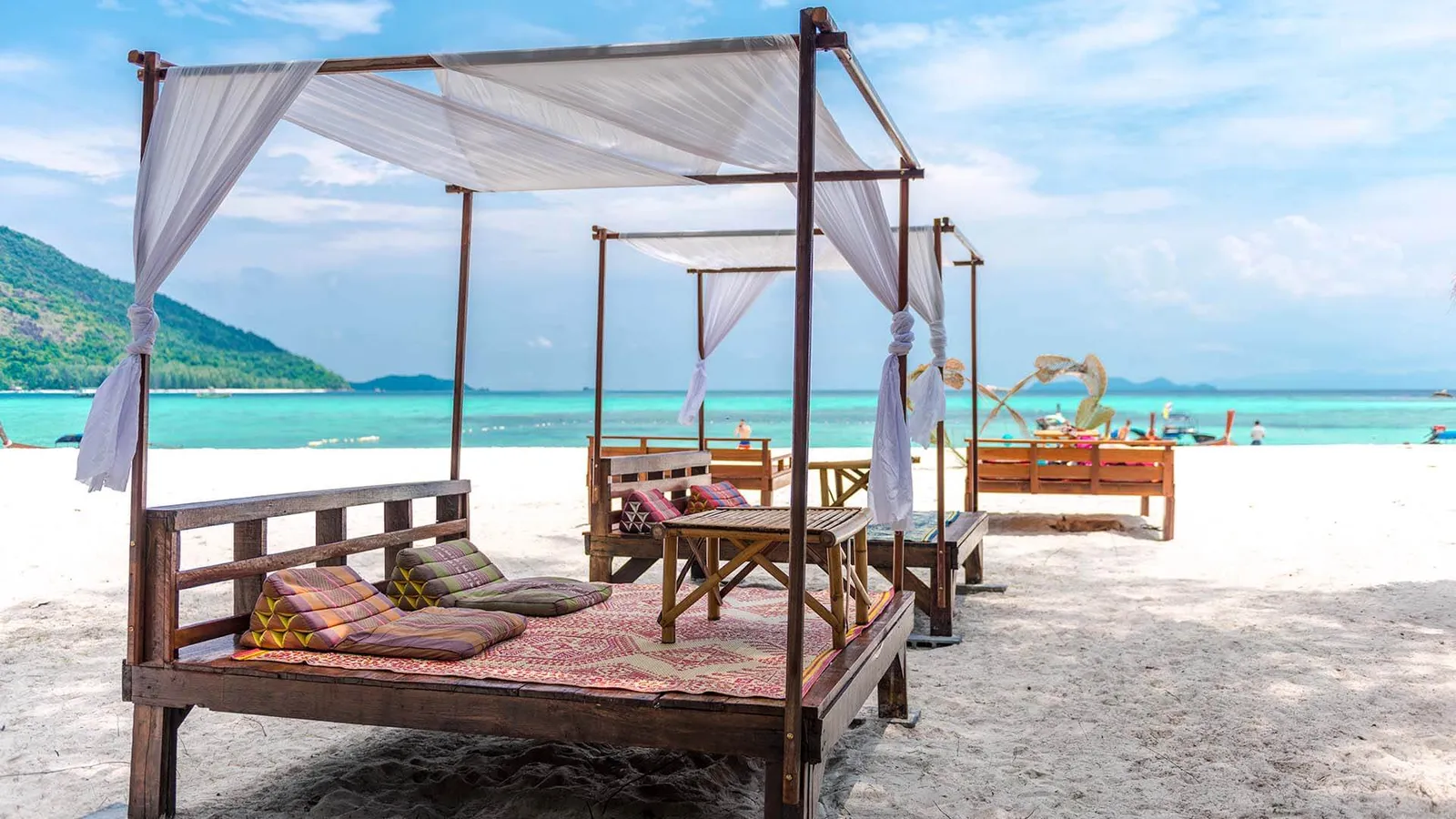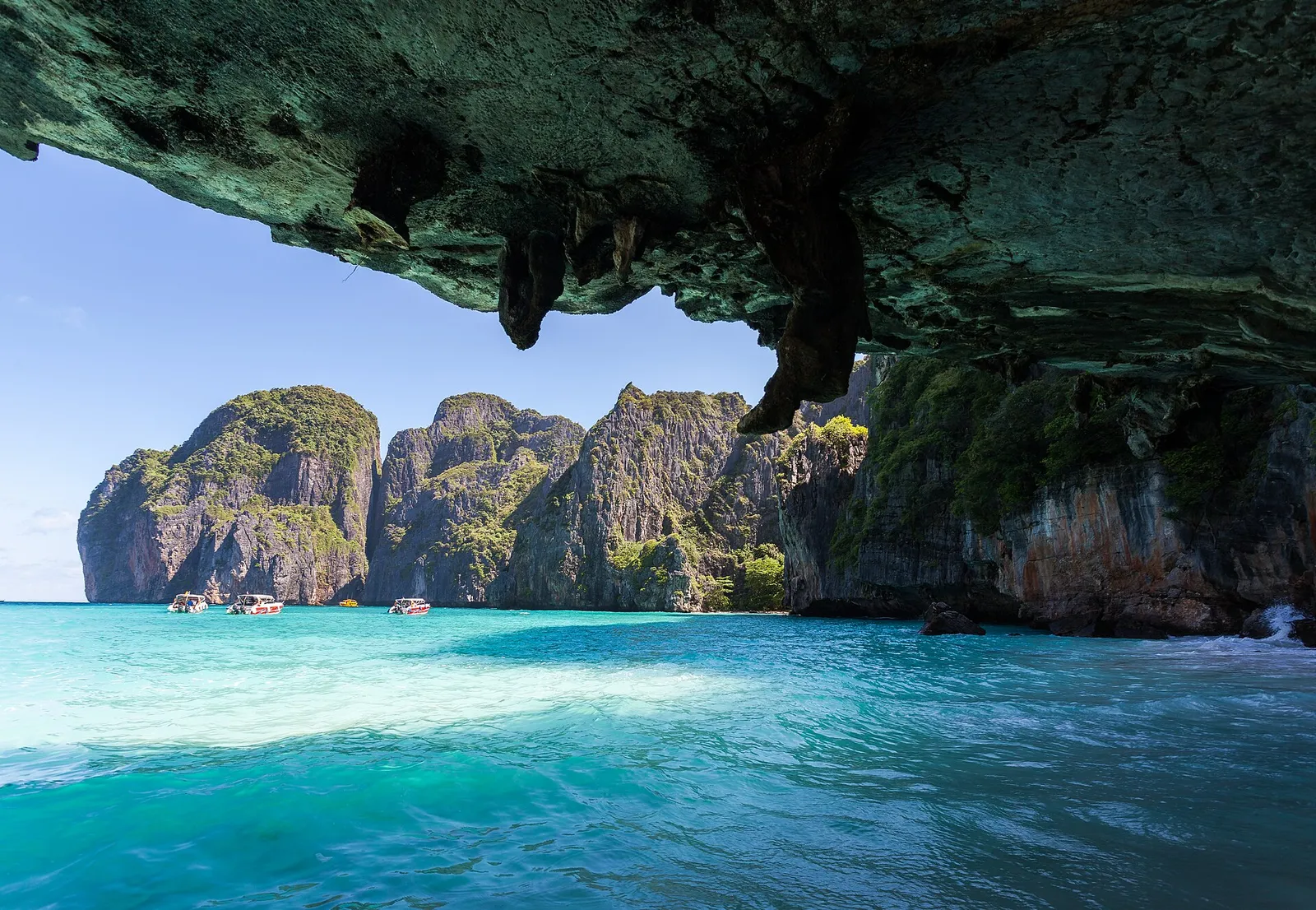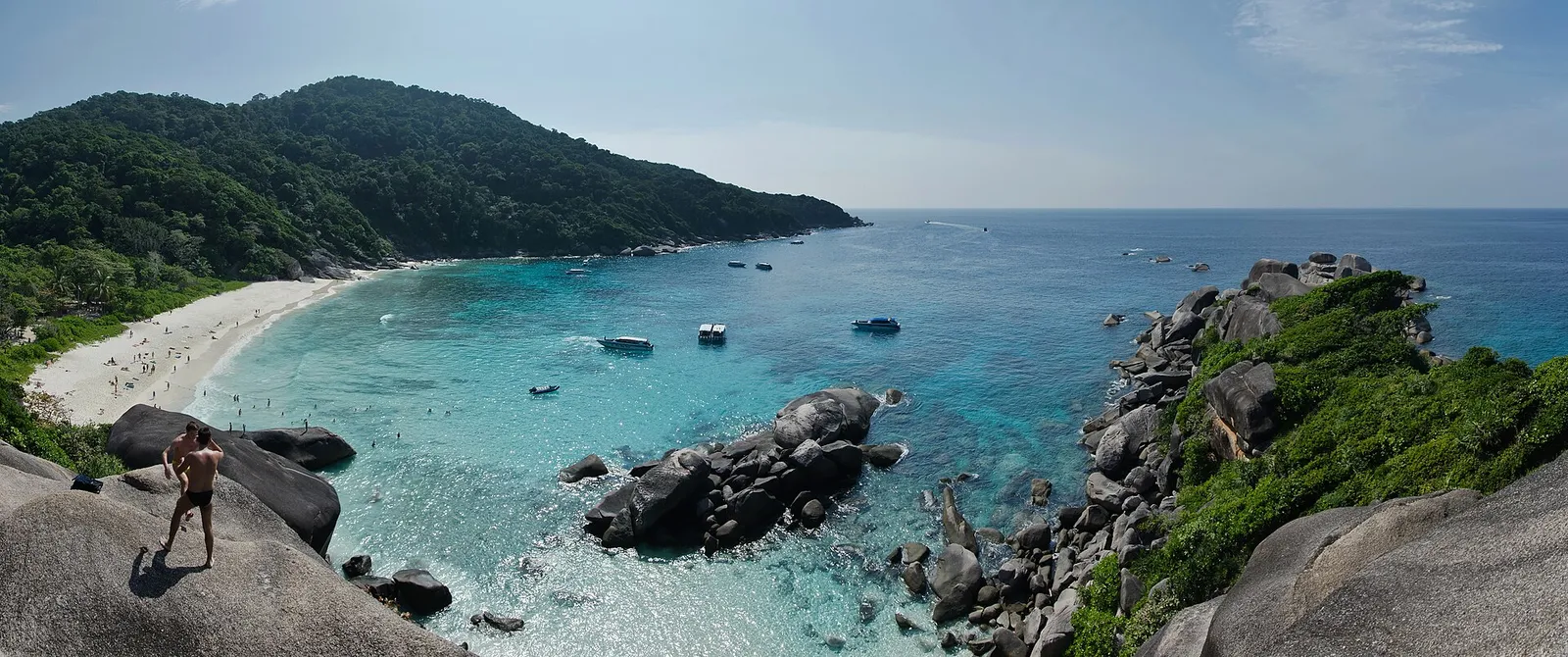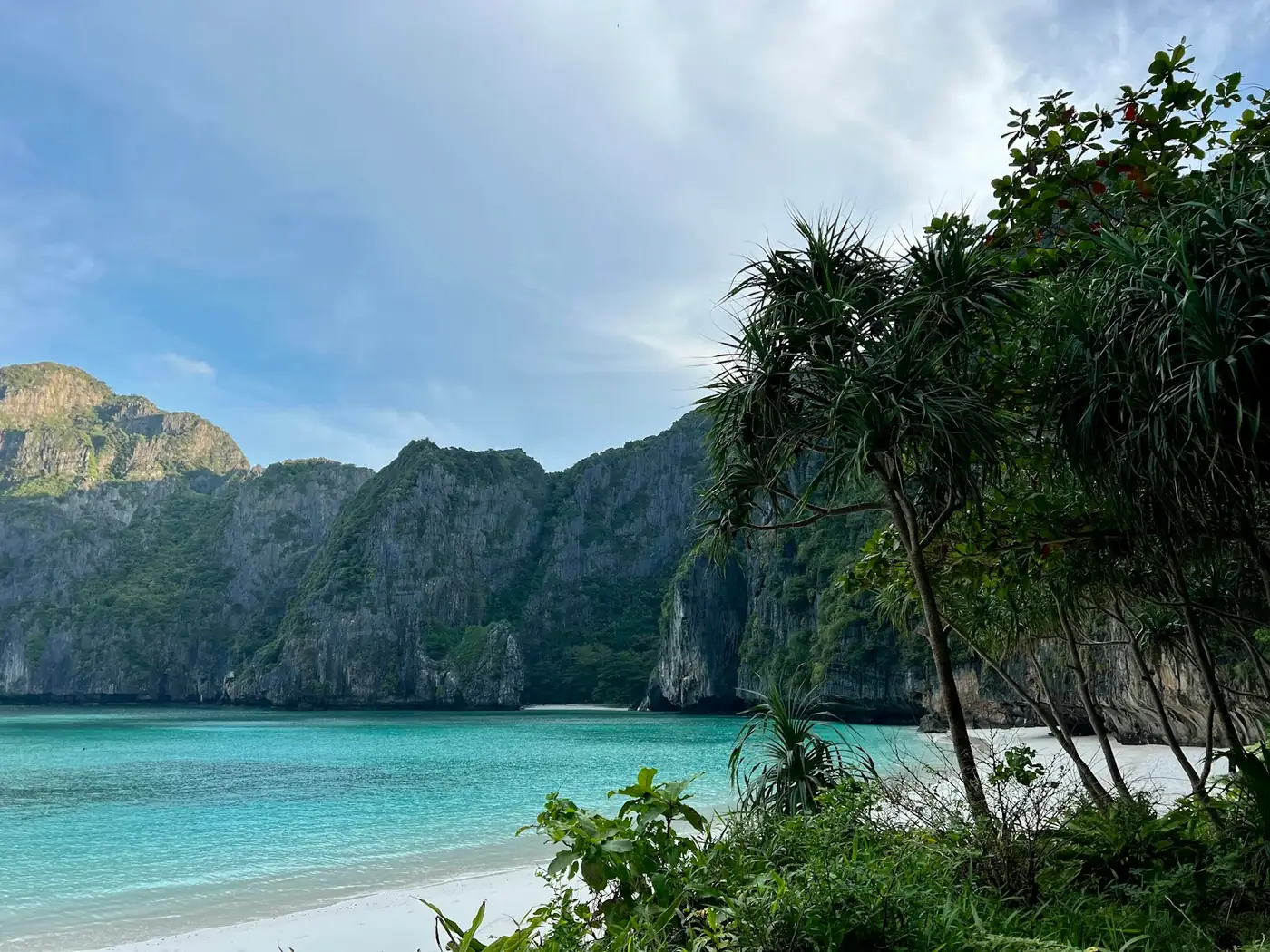
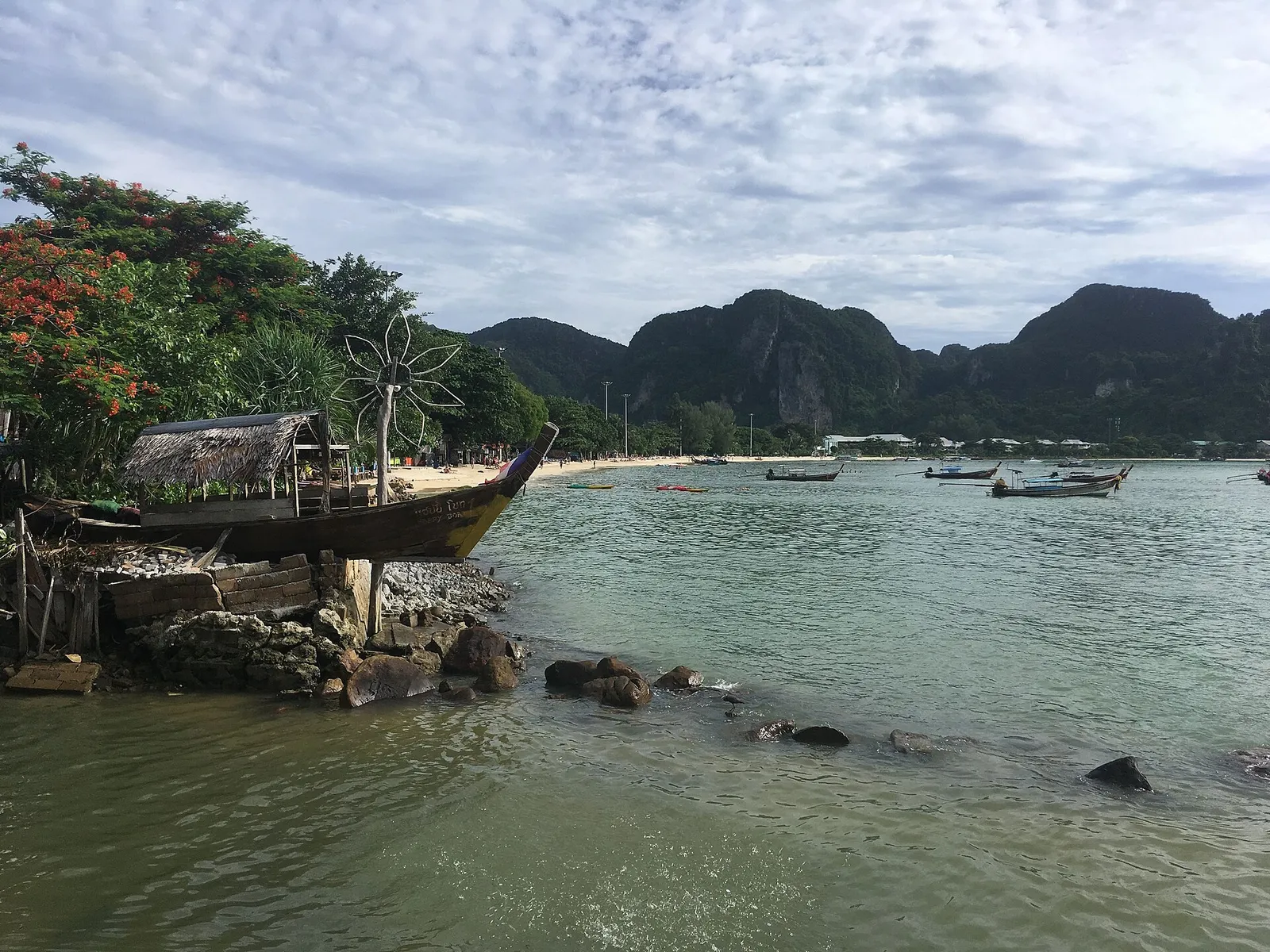
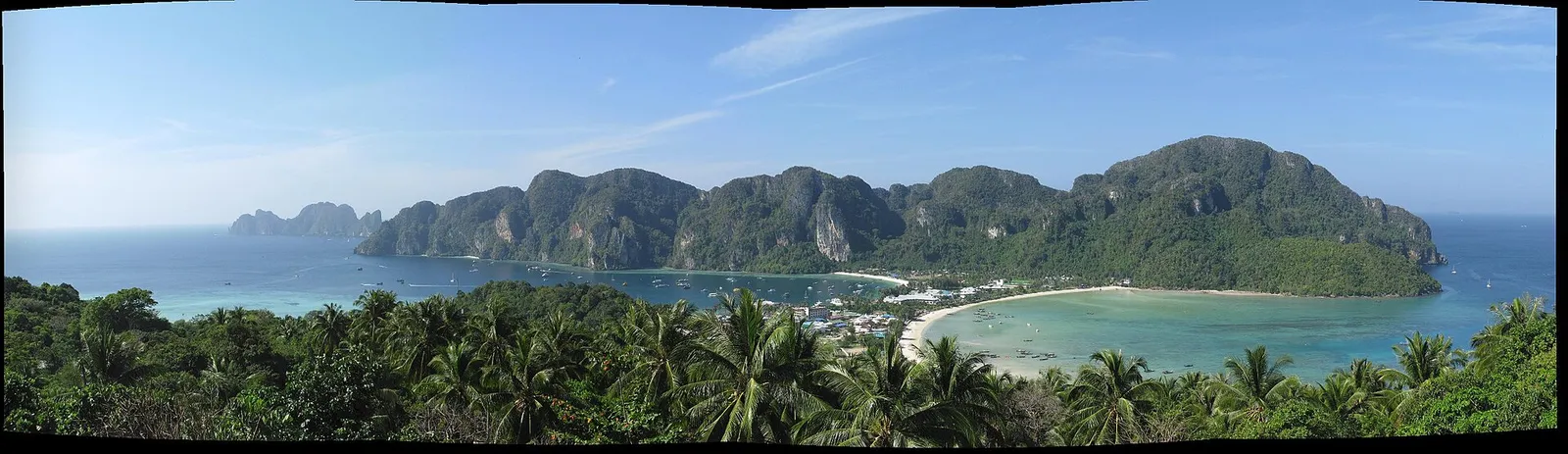
Phi Phi is two things stacked on top of each other. The first is a group of limestone islands rising vertically out of pale green water, with caves, coves and a bay so famous it had to be closed to recover from the attention. The second is a small, dense, extremely loud village occupying the flat isthmus between two bays, where most of the accommodation is and where the nightlife runs until it stops. Both are real. Which one you experience is decided by whether you come for a day or a night, and where you sleep if it is a night.
The boat day
This is the product. The route around the islands takes in karst walls, snorkelling stops, a cave, a bay or two with no land access, and the famous inlet.
Smaller boats go further into the coves, and larger ones are cheaper and busier.
It runs from Phuket, Krabi and the island itself, so you can do it as a long day from the mainland or a short one from the village.
Early departures beat the crowd at the well-known stops by a useful margin.
Sea conditions decide it, and trips are cancelled outright in rough water.
The famous bay
Access has changed repeatedly. The bay was closed for ecological recovery after years of damage from boat anchoring and visitor numbers, and it has since reopened under restrictions that have themselves been revised more than once, including seasonal closures, limits on where boats may moor and rules about entering the water.
Do not plan around an older article, including this one. Ask a local operator close to your dates what is actually permitted that week.
It remains extraordinary when you can see it, and the restrictions exist for a good reason.
Where to sleep
In the village for the nightlife, the choice of food and everything on the doorstep, at the cost of quiet.
On the hill above it for a short walk down and a real reduction in noise.
On the quieter bays around the island, reached by boat or a walk, for a genuinely peaceful stay with fewer options.
On the neighbouring island to the south, which has no village at all and a small number of resorts.
Day trip only, which is a legitimate and popular answer.
What else to do
The viewpoint above the village, several hundred steps up, for the classic image of the twin bays and the sandbar between them. Go early or late.
Diving and snorkelling, which is the reason a lot of people come and stay, with sites around the islands and shark points nearby.
Kayaking around the coast, which reaches places the boats do not.
Swimming off the eastern bays, which are calmer and clearer than the village beaches.
Practical notes
No cars. Everything moves on foot or by boat, and your luggage moves with you.
Cash is useful, and machines charge.
The village floods in heavy rain, being at sea level between two bays.
Ferries reduce significantly in the monsoon months.
Take your rubbish seriously here, since the islands have a well-documented waste problem and a small footprint.
Where this fits
For the mainland peninsula an hour away with the climbing cliffs and no road, our guide to Krabi and Railay covers the other Andaman highlight.
For the big island with the airport, the old town and every kind of beach, our Phuket guide covers the usual gateway.
And for the seasonal question that decides which Thai coast to visit at all, our comparison of the Andaman and Gulf islands is the first thing to read.
The short version
Take the boat day, because the water between the islands is what makes this place extraordinary and none of it is reachable on foot. Ask a local operator what the current access rules at the famous bay actually are, since they have been revised repeatedly. If you stay the night, decide deliberately between the village and everywhere else, because the village is loud until late and two hundred metres away is silent. Climb to the viewpoint early or late with water. And check the ferry schedule before travelling in the monsoon months.