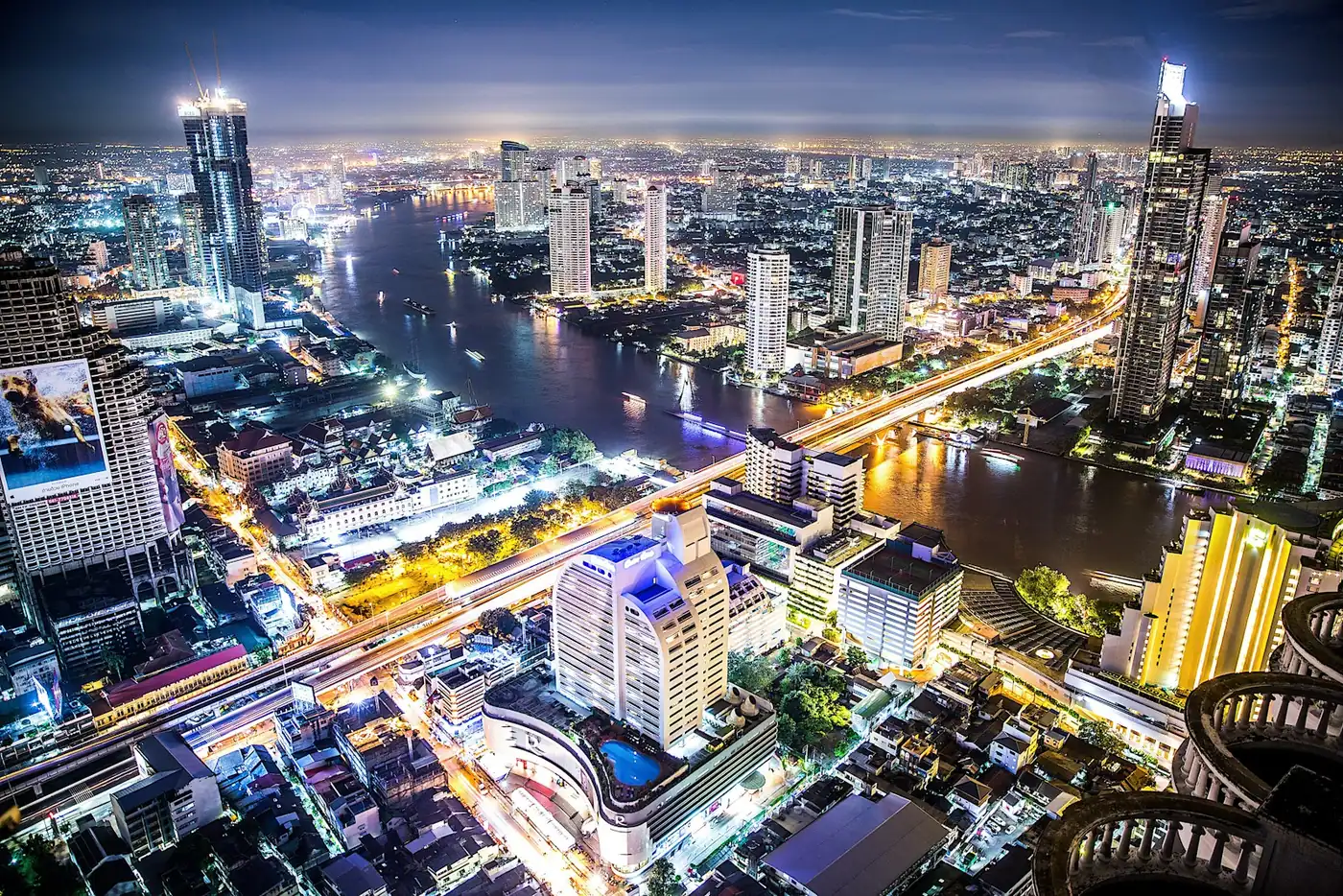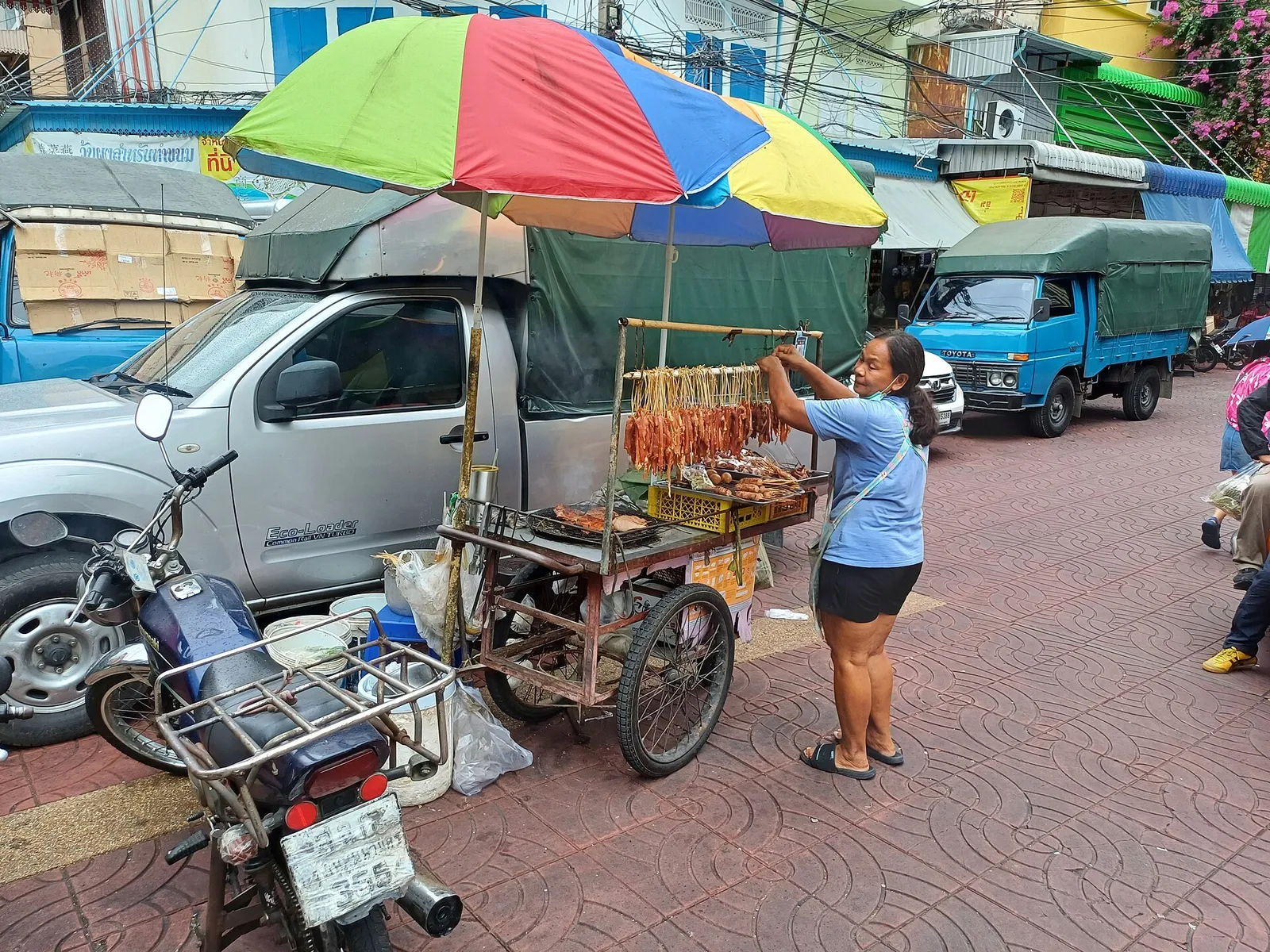
The best food in Bangkok is not in restaurants. It is on pavements, in lanes and under tarpaulins, cooked by people who have made one dish for decades on a single burner, and it costs less than a coffee at your hotel. Eating it well requires no Thai, no research and no bravery, only one rule about which stall to choose. Here is that rule and what to eat once you have applied it.
The one rule
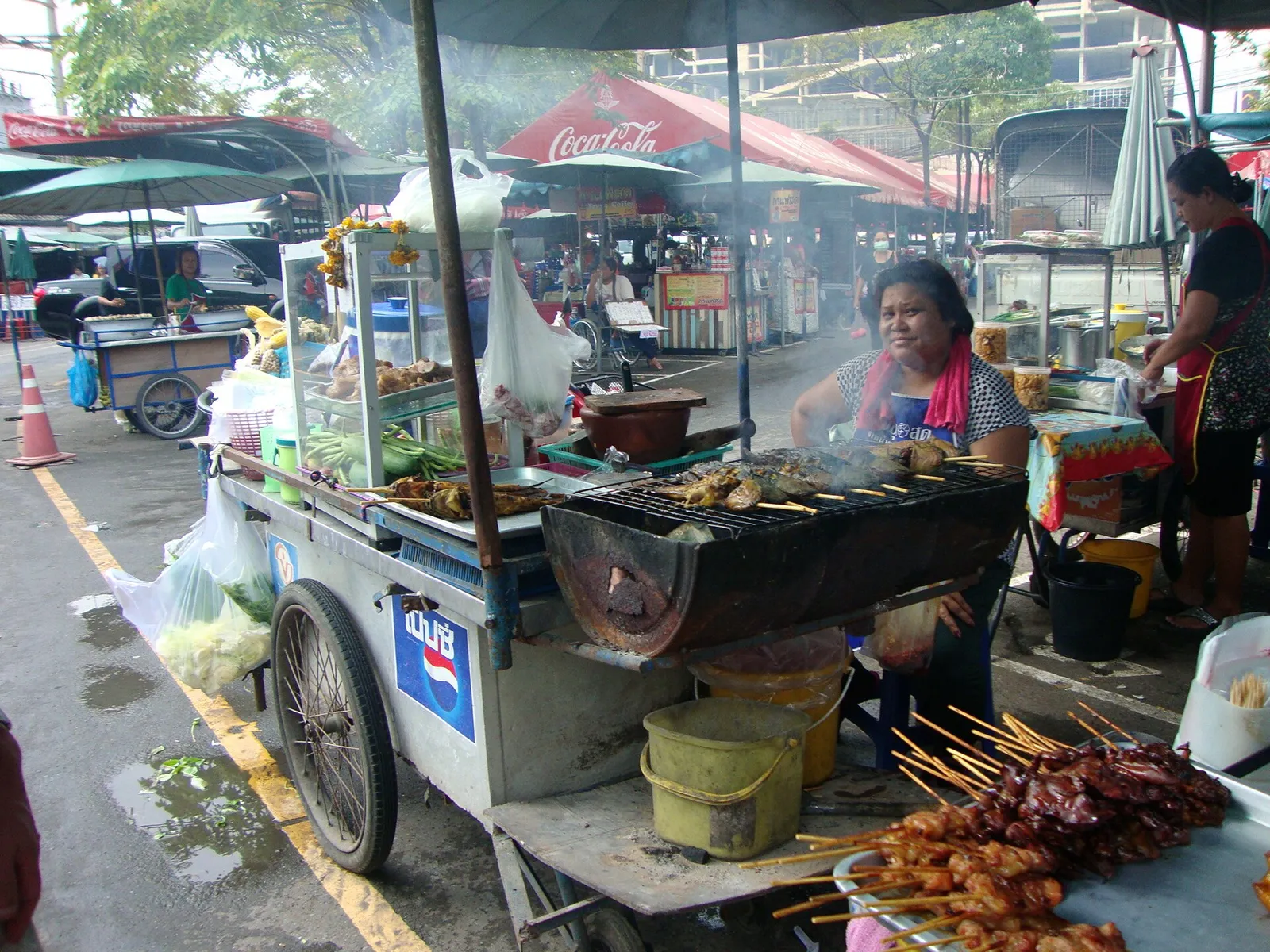
Choose the busy stall.
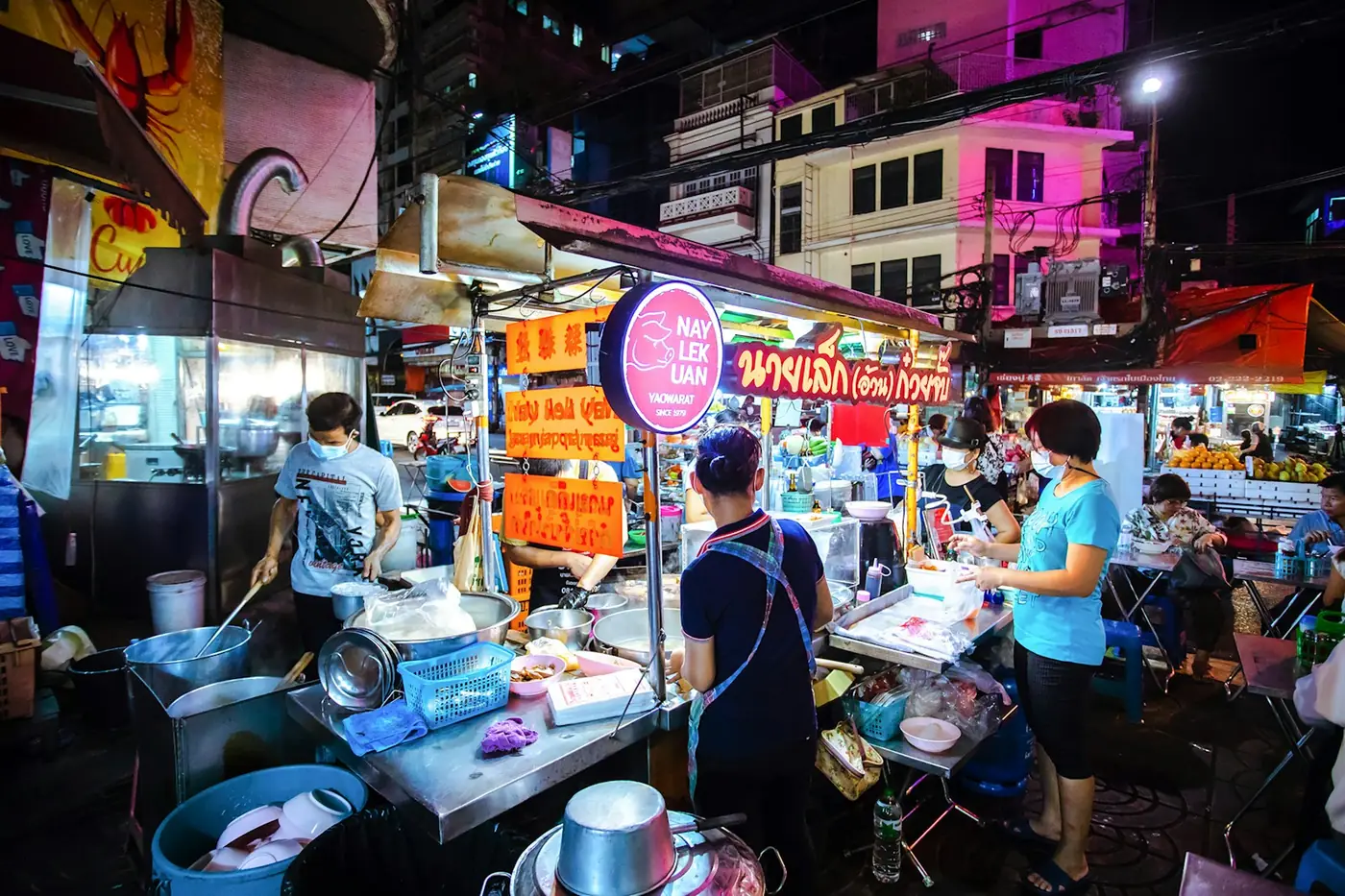
That is genuinely most of it. A queue means high turnover, which means the food is fresh, the ingredients are bought daily and the cook is good enough that people come back. An empty stall with trays of food sitting out is the opposite of all three.
The corollaries follow naturally. Cooked to order in front of you beats sitting in a tray. Hot beats room temperature. A stall that does one thing beats a stall with a laminated menu of forty.
Apply that and Bangkok street food is safer than a great many restaurants anywhere.
What to eat
Start with these and you will not go wrong.
Pad kraphao. Minced pork or chicken fried hard with holy basil, garlic and chilli, over rice, with a fried egg on top. This is the default Thai meal, it is everywhere, and it is superb.
Boat noodles. Small, intense bowls of dark, rich noodle soup, traditionally eaten several at a time.
Som tam. Green papaya salad pounded to order in a mortar, sour, salty, sweet and extremely hot unless you ask otherwise.
Moo ping and sticky rice. Grilled pork skewers with a bag of sticky rice, the standard Bangkok breakfast, sold from carts in the morning.
Guay teow. Noodle soup in endless variations, assembled to order from a cart with a boiling pot.
Mango with sticky rice, in season, which is the best dessert in Southeast Asia and not a close contest.
For the wider picture of Thai food beyond the street, including the regional differences that explain why a dish tastes different in the north, our Thai food guide covers it.
Where to go
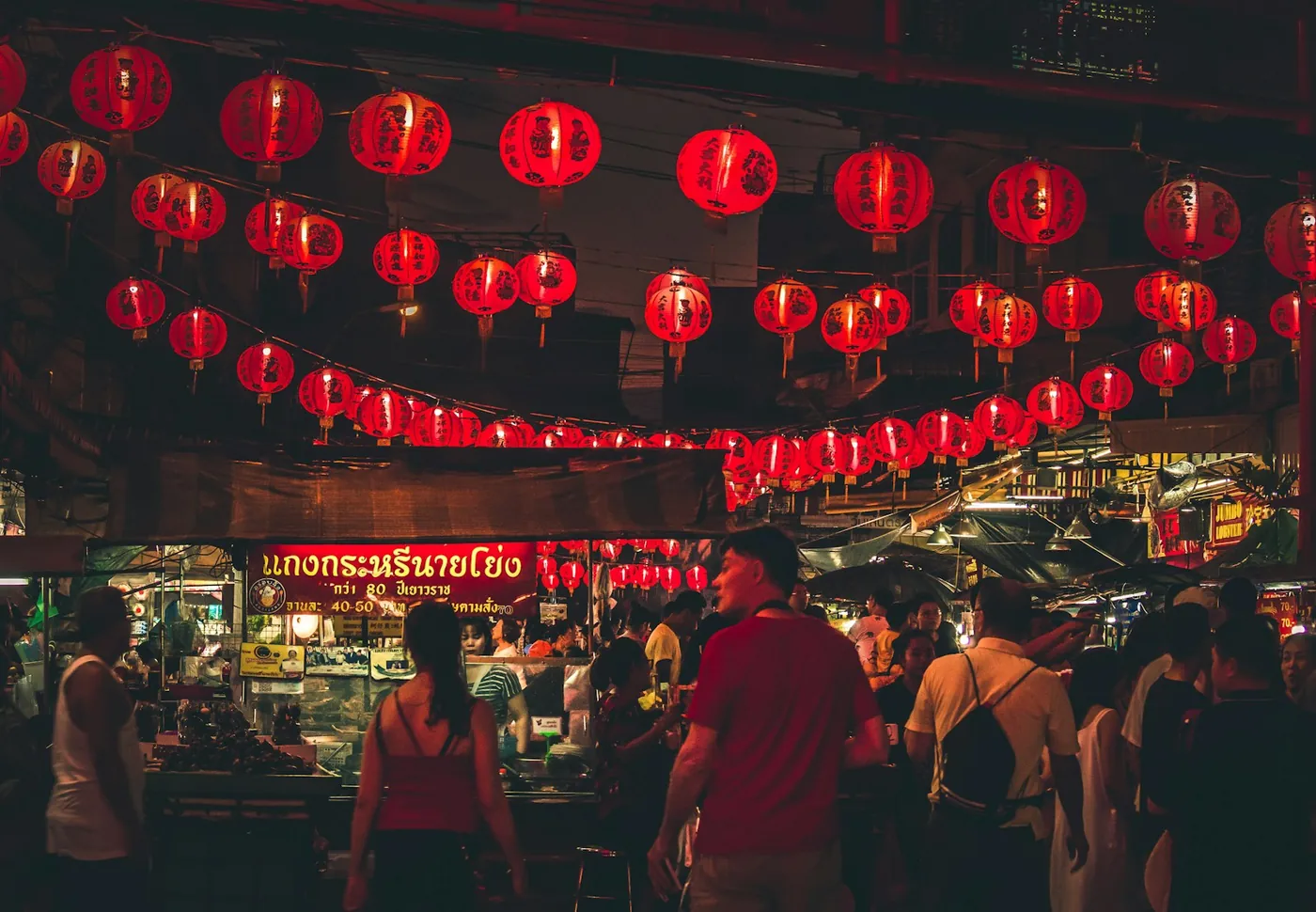
Chinatown after dark is the headline. The main road and the lanes off it fill with stalls, seafood grills set up on the pavement, and the whole area runs late. Go hungry, walk, and eat five small things.
The market streets across the old town, where the produce is sold in the morning and cooked at lunchtime.
Office districts at lunch, where the carts serve people who eat there every day and the standard is high because the customers are regulars.
Night markets, which combine food with shopping and are a different, more organised proposition.
Your own street. Almost every neighbourhood in Bangkok has stalls, and the one outside your hotel is frequently as good as the famous one across the city.
Practical notes
Carry small notes. Stalls do not take cards and do not always have change for large notes.
Sit if there are stools, since many stalls have a few plastic seats and eating there is normal.
Water and ice are generally fine from bottled and commercial sources; use judgement with ice from an unknown container.
Pre-cut fruit is the one category worth a little more care than the wok.
Eat early and often. Bangkok eating is not three meals, it is six small ones, which is also how you get to try more.
Timing varies by cart. Breakfast carts are gone by mid-morning, and the night food starts when the day heat drops.
Getting to it
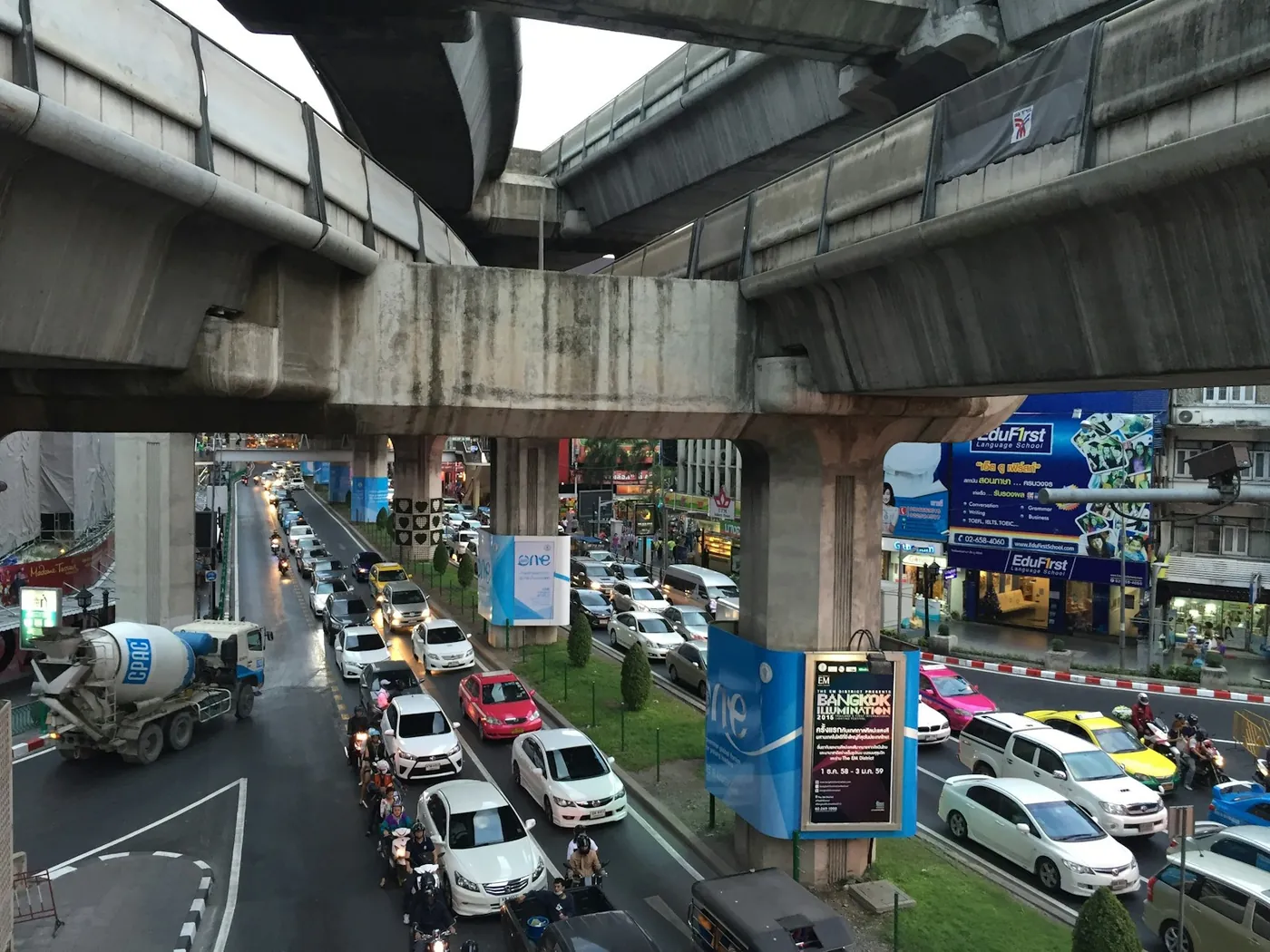
Bangkok’s traffic makes food geography a real consideration, and the answer is usually the train.
The elevated and underground lines reach the main food districts quickly and cheaply while the roads below do not move, which is the single most useful thing to understand about this city. Our guide to getting around Bangkok covers the network and when a taxi or a ride app is the better call.
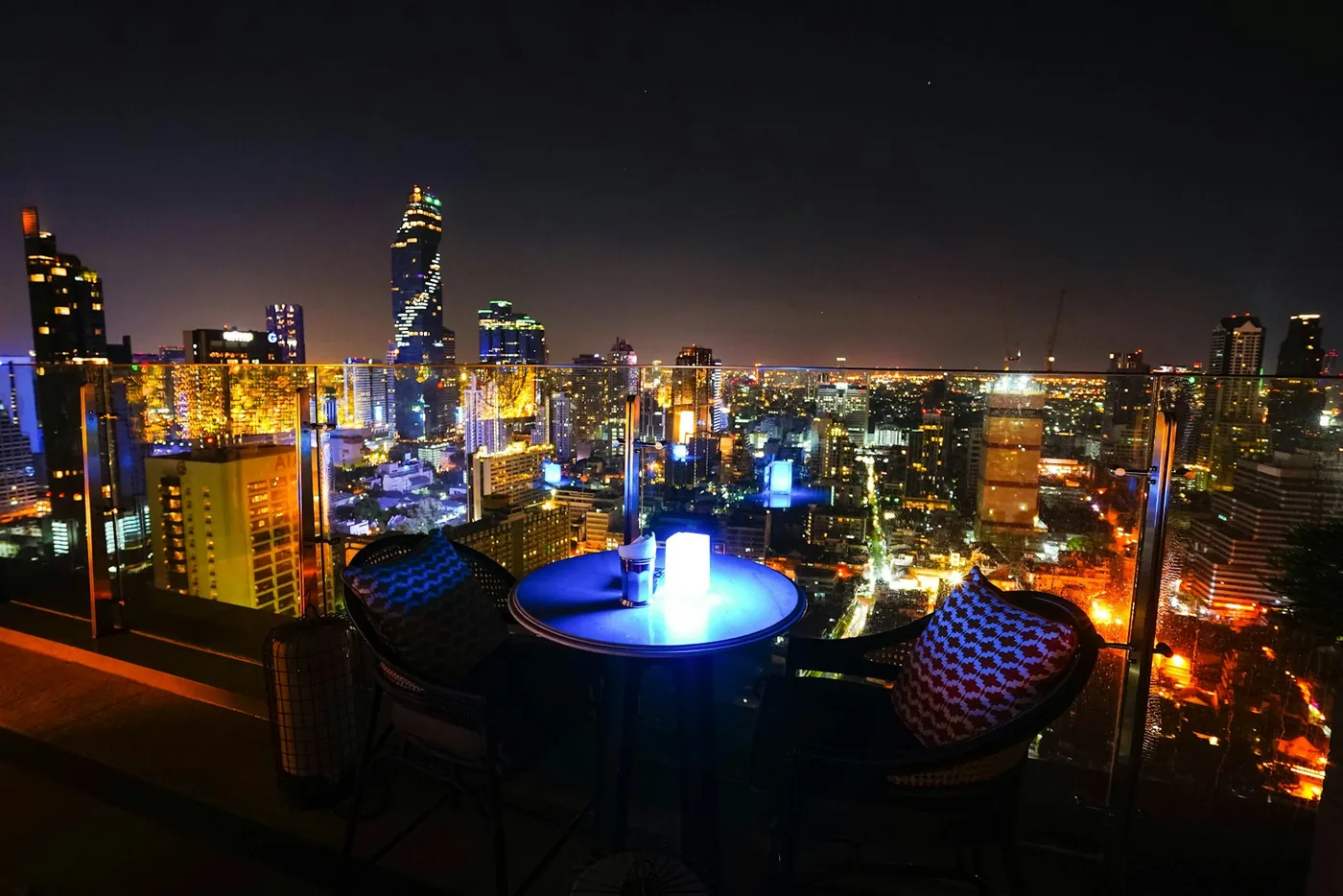
And since the best street food evening runs late, it merges naturally into the rest of the night: our guide to Bangkok nightlife covers what happens afterwards, from rooftops to night markets.
The short version
Choose the busy stall and everything else follows. Start with pad kraphao, boat noodles, som tam and grilled pork with sticky rice, and finish with mango and sticky rice if it is in season. Learn the phrase for not spicy and use it early. Give Chinatown a whole evening on foot, carry small notes, take the train rather than a taxi to get there, and eat six small things a day rather than three big ones.