There is a persistent idea that going vegetarian or vegan in Thailand means plain rice and polite disappointment. The opposite is closer to the truth. Thai cooking already leans on vegetables, tofu, rice and coconut milk, and a real Buddhist vegan tradition means the idea is neither rare nor confusing to a Thai cook. The catch is that a Western sense of vegetarian usually just means no meat, while a lot of Thai savoury cooking runs on fish sauce and shrimp paste by default, including in dishes that look entirely plant-based. Learn where those two ingredients hide and which words work, and eating meat-free here gets easy fast.
Why Thai food already leans vegetarian
Thai cuisine gives a head start in a few real ways. A large share of everyday dishes are built from vegetables, tofu, rice, noodles and coconut-milk curry bases that need no animal product at the level of the recipe itself. Buddhism also has a specific, well-understood vegan practice called jay, so eating without meat, fish, egg or dairy is not a foreign idea here, it already has a name and a place in the culture. Every city has restaurants labelled mangsawirat, the general word for vegetarian.
The modern health-food scene helps too. Bangkok, Chiang Mai and island towns are full of plant-based cafes and juice bars that know exactly what vegan means and rarely need it explained. For the wider picture of what is actually on a Thai menu, our Thai food guide is the place to start.
The invisible ingredients: fish sauce and shrimp paste
Here is the part that catches people out. Two ingredients do a huge amount of the savoury work in Thai cooking, and both come from the sea. Nam pla, fermented fish sauce, supplies the salt in a large share of savoury dishes. Kapi, fermented shrimp paste, sits in the base of many curry pastes and in som tam, the pounded papaya salad. Pad thai usually includes dried shrimp with fish sauce and egg, and soups are often built on a stock that started with prawn shells, chicken bones or pork, none of it visible once the dish is plated.
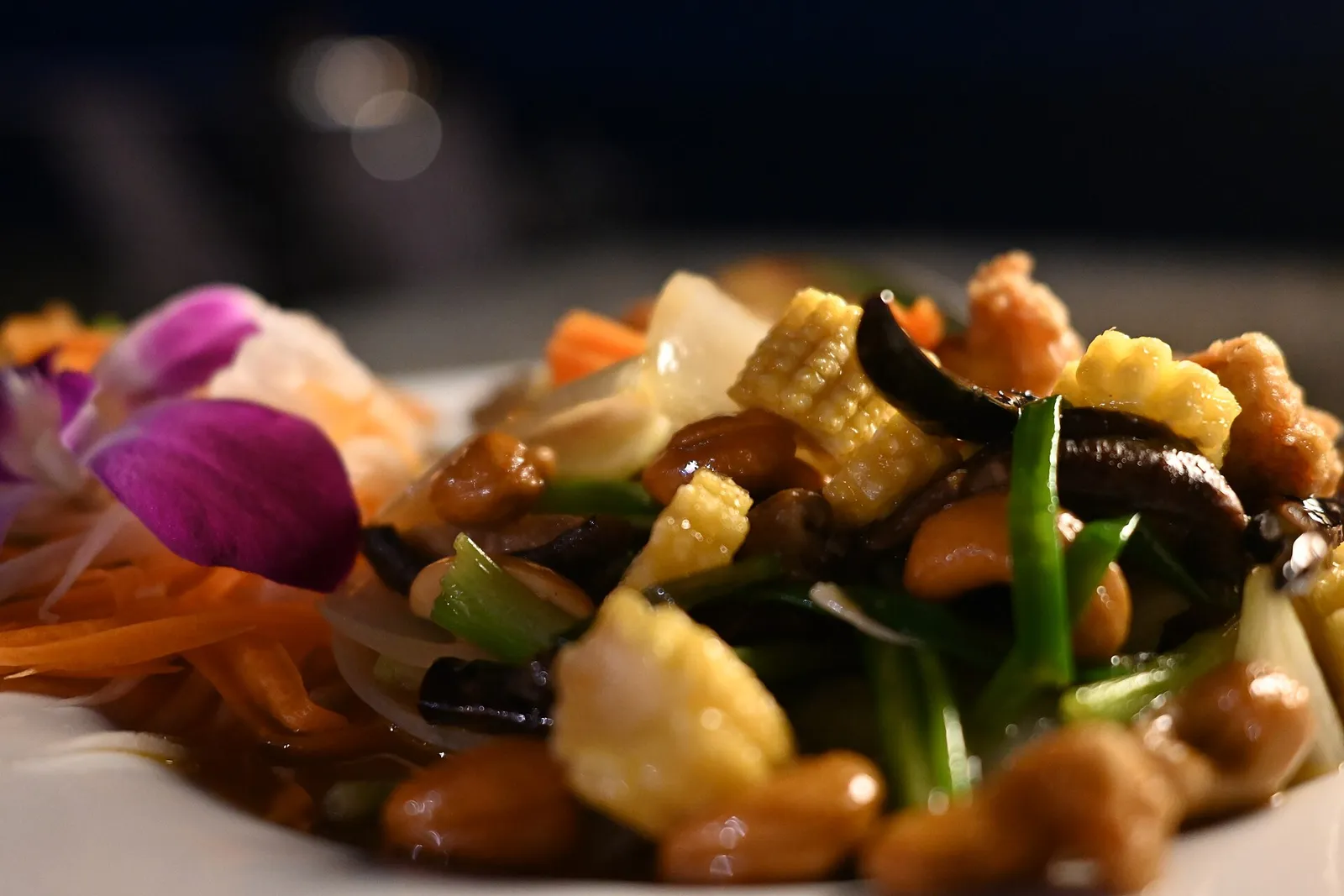
A bowl of stir-fried vegetables or a curry can look completely plant-based and still not be. Assuming a vegetable dish is automatically vegetarian is the single most common mistake, worth unlearning before you order anything.
No meat is not the same as jay
This distinction matters more than any other phrase in this guide. Asking for no meat, or naming a specific meat, tells a cook to remove the muscle itself, chicken, pork or beef. It says nothing about fish sauce, shrimp paste, oyster sauce or a stock built on seafood or bones, and a cook who removes only the meat has, on a reasonable reading, done exactly what was asked.
Jay is a different and much stronger request. It names a specific, recognised Buddhist dietary category that a Thai cook understands as excluding meat, seafood, egg, dairy and pungent alliums such as garlic and onion, all at once, in a single word. Mangsawirat, the general word for vegetarian, sits in between: it reliably means no meat, but it is not automatically understood to exclude fish sauce or shrimp paste unless you say so too. For strict vegans, jay does the most work.
The phrases and signs that make it easy
A short list of words removes most of the risk. Jay covers everything for strict vegans in one go, and mangsawirat gets you vegetarian dishes in general. Mai sai nam pla means no fish sauce, and mai sai kapi means no shrimp paste, worth adding separately since a cook who hears only the first may not think of the second. Mai sai kai means no egg, useful for vegans ordering fried rice. Saying phom kin jay, or chan kin jay for a woman speaking, tells a cook plainly that you eat jay food before anything is even ordered.
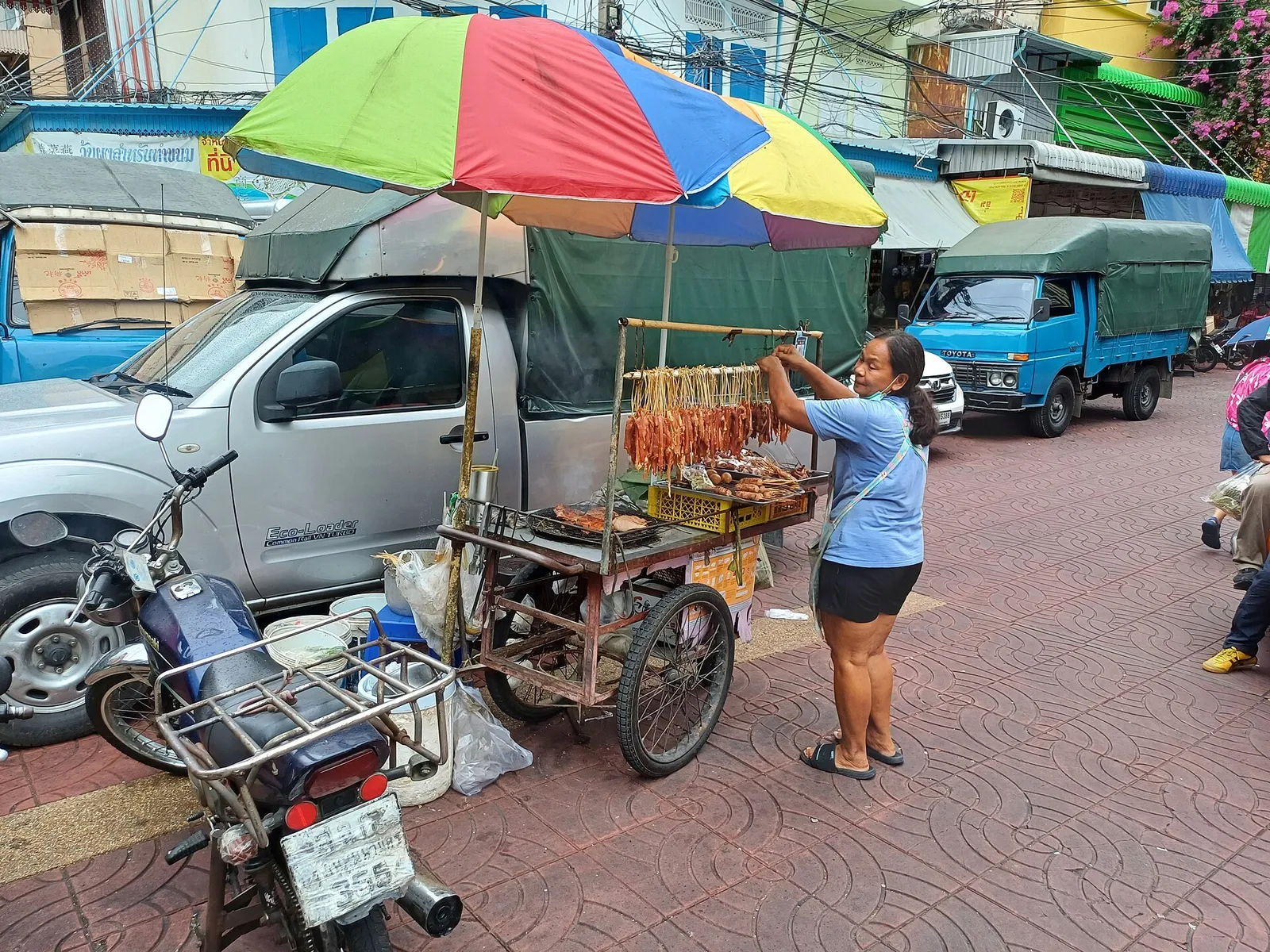
Pronunciation under pressure at a busy stall is unreliable, so the more useful version of this list is a written one. Save the words in your phone, or better, ask a hotel or guesthouse to write them out in Thai script and simply show the card rather than attempting the tones out loud. Watch too for a visual signal: stalls and small restaurants serving strictly jay food fly a yellow flag or sign with red lettering, easy to spot once you know it. Bangkok’s street stalls in particular know these words well, as covered in our guide to Bangkok street food.
Dishes worth ordering, and dishes worth double-checking
A few things are a genuinely easy bet: tofu and vegetable stir-fries at a dedicated mangsawirat or jay stall, coconut-milk vegetable curries from the same kind of place, and mango sticky rice, built from rice, coconut milk and fruit and not typically involving fish sauce or shrimp paste, though it never hurts to ask about whatever else is on the tray beside it. Plenty of familiar dishes, on the other hand, usually contain fish sauce or shrimp paste by default and are worth a specific request rather than an assumption.
| Dish | Usually contains | Worth asking for |
|---|---|---|
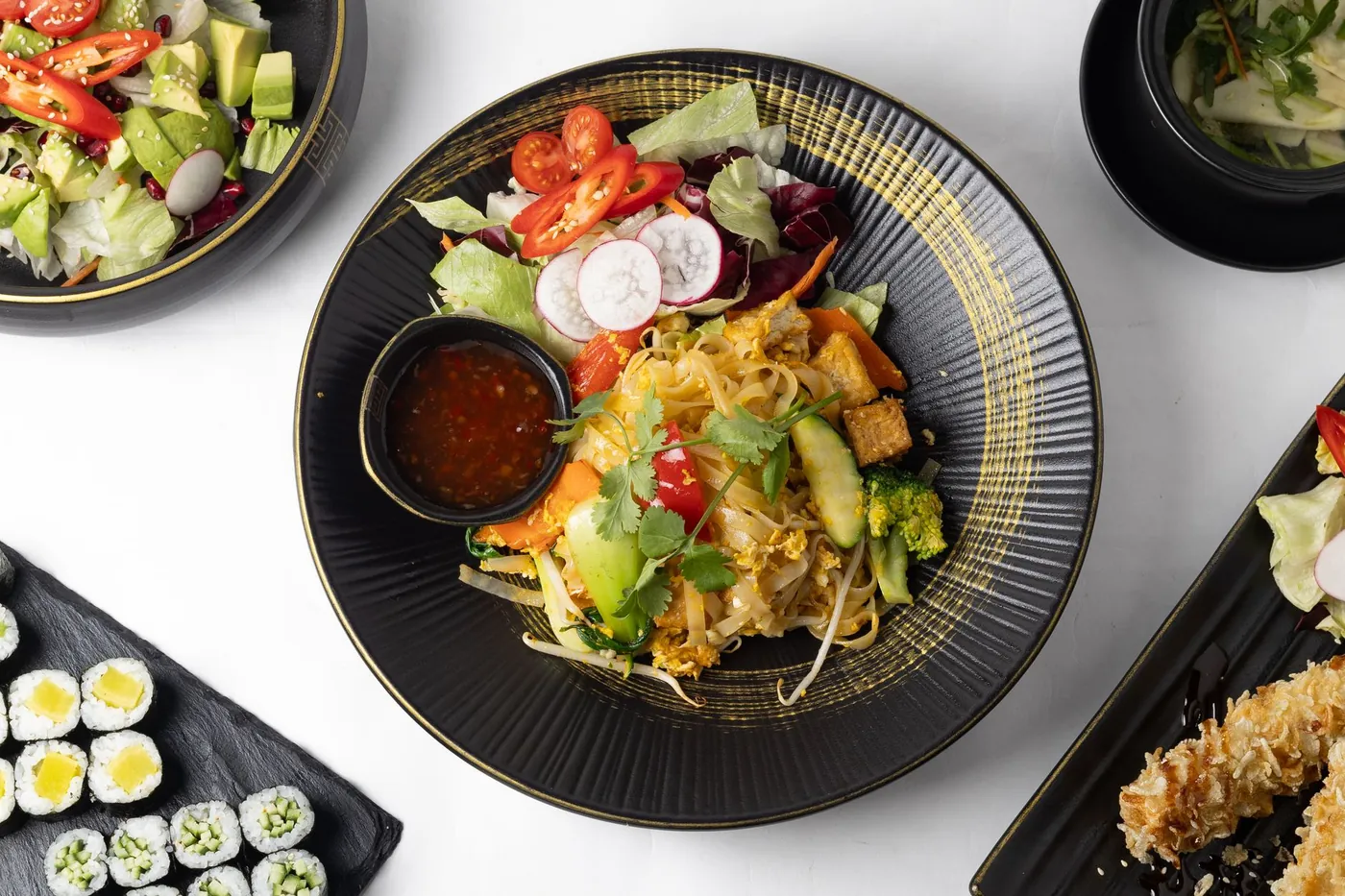
| Pad thai | Dried shrimp, fish sauce, egg | The jay or mangsawirat version, no egg if vegan |
| Som tam (papaya salad) | Shrimp paste, fish sauce | No shrimp paste, no fish sauce |
| Green or red curry | Shrimp paste in the curry paste | A jay stall, or what the paste contains |
| Stir-fried vegetables | Oyster sauce or fish sauce | Soy sauce instead |
| Tom yum soup | Prawn stock or fish sauce | The jay version |
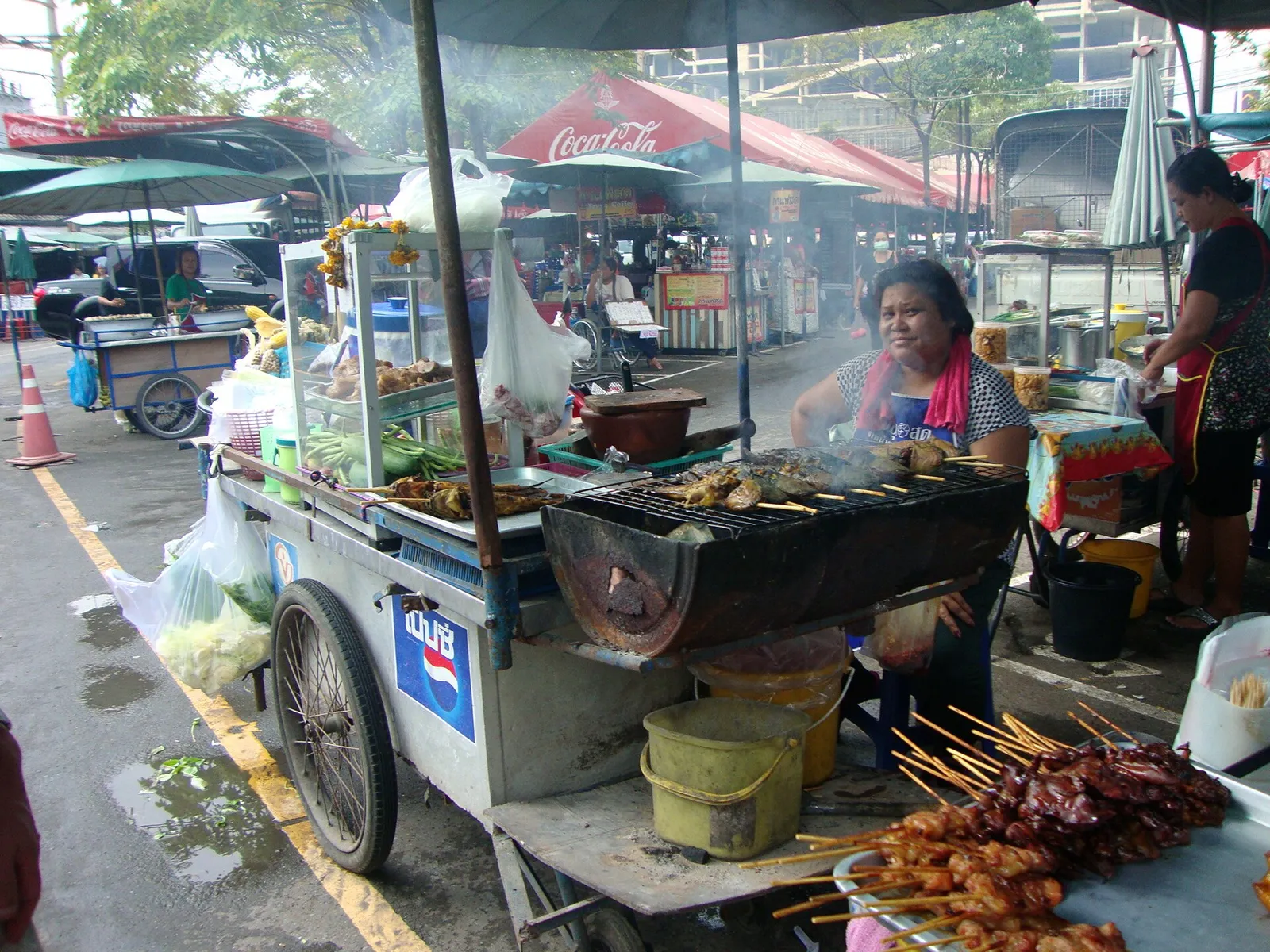
At many street stalls, especially away from tourist areas, the sauces for a dish are already mixed into a prep bowl before the wok gets hot, so asking to leave one out only works if the food is cooked to order. In Bangkok, Chiang Mai and other well-visited spots this is rarely a problem, staff hear the request often and modern cafes are built around it. In a small provincial market it can be a genuine dead end, and the more reliable move is to look for a dedicated jay or mangsawirat stall rather than modifying a standard one.
The annual Vegetarian Festival
Once a year, an event called the Vegetarian Festival turns whole neighbourhoods over to jay food: stalls that serve meat and fish the rest of the year switch to yellow flags and red lettering and cook strictly jay for the duration. It falls roughly in the autumn, generally somewhere around September or October, since the date follows the lunar calendar and moves every year rather than landing on a fixed day. Anyone building a trip around it should check that year’s dates against an official source closer to the time.
Outside festival season, the yellow flag stays the most reliable sign on the street, and the short list of words above covers almost everything else. This is one small piece of a much bigger first trip, and our guide for a first trip to Thailand covers the rest of what to sort out before flying.