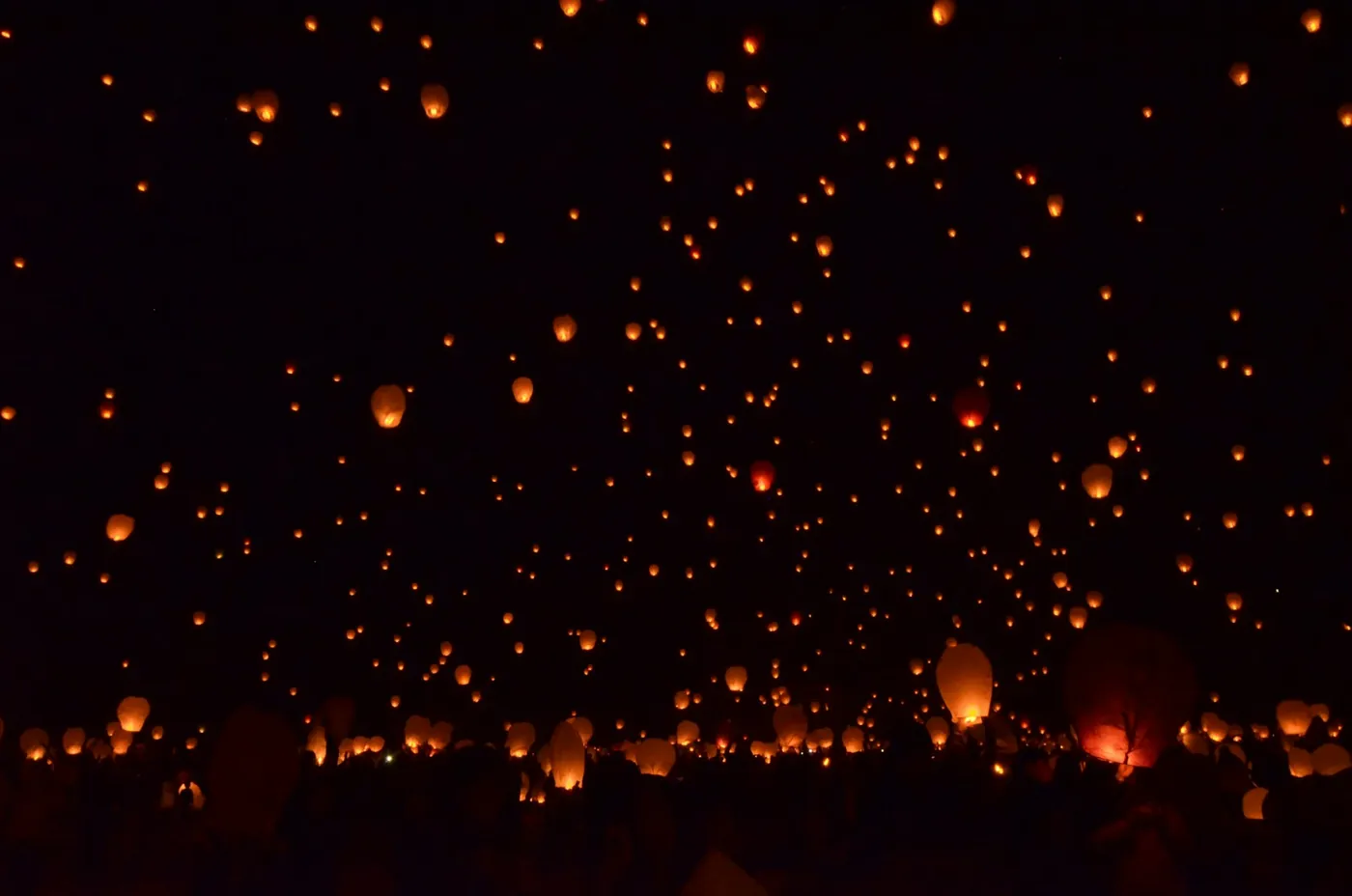
The photograph everyone has seen, thousands of glowing lanterns rising together against a black sky, is not the festival most people think it is. It is one of two festivals that happen on the same nights, and the confusion between them shapes a lot of disappointed trips. One happens on the water and is celebrated across the country. The other happens in the sky and belongs to the north. Knowing which is which decides where you should be standing and whether you need a ticket.
Two festivals, one calendar slot
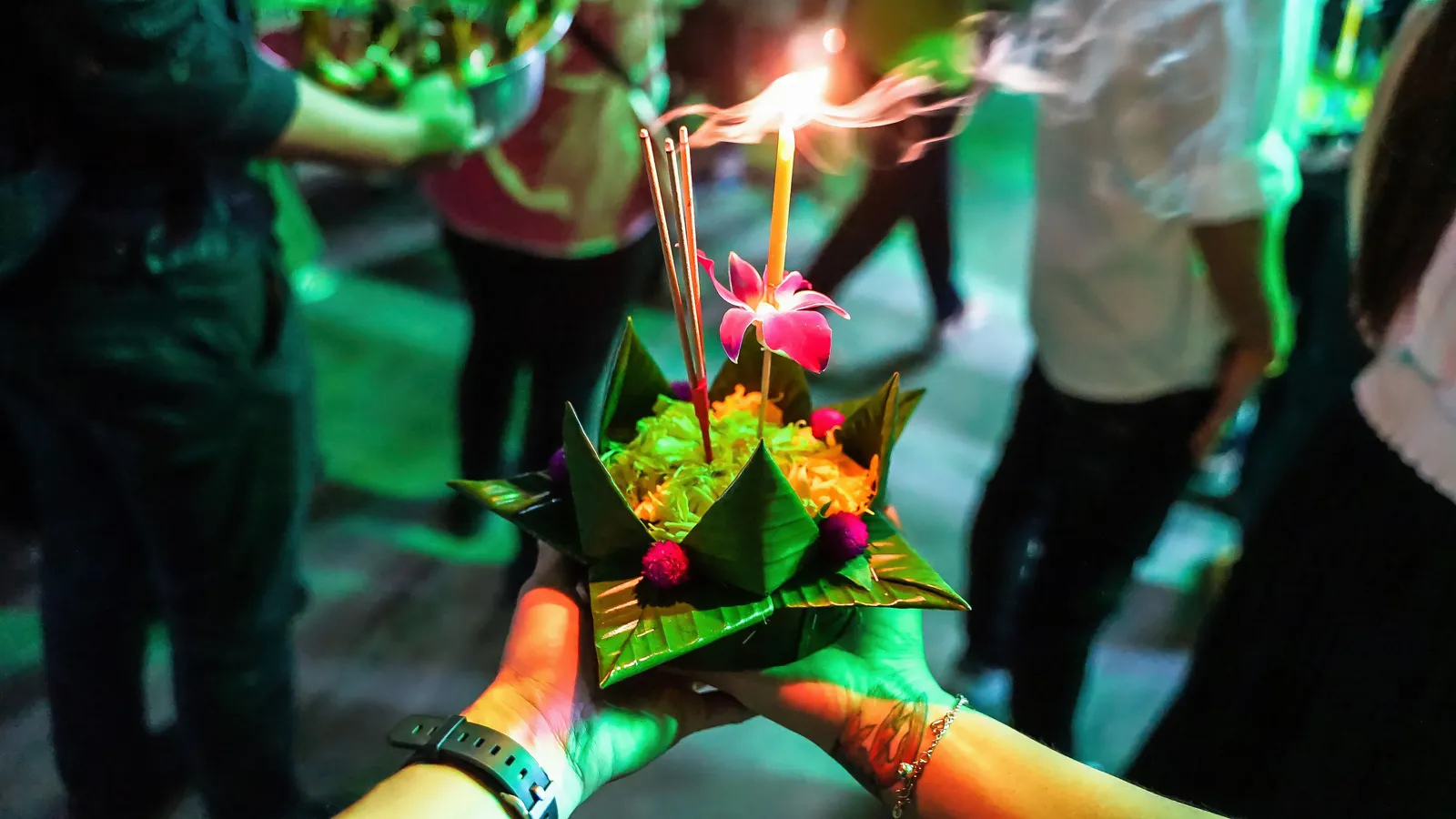
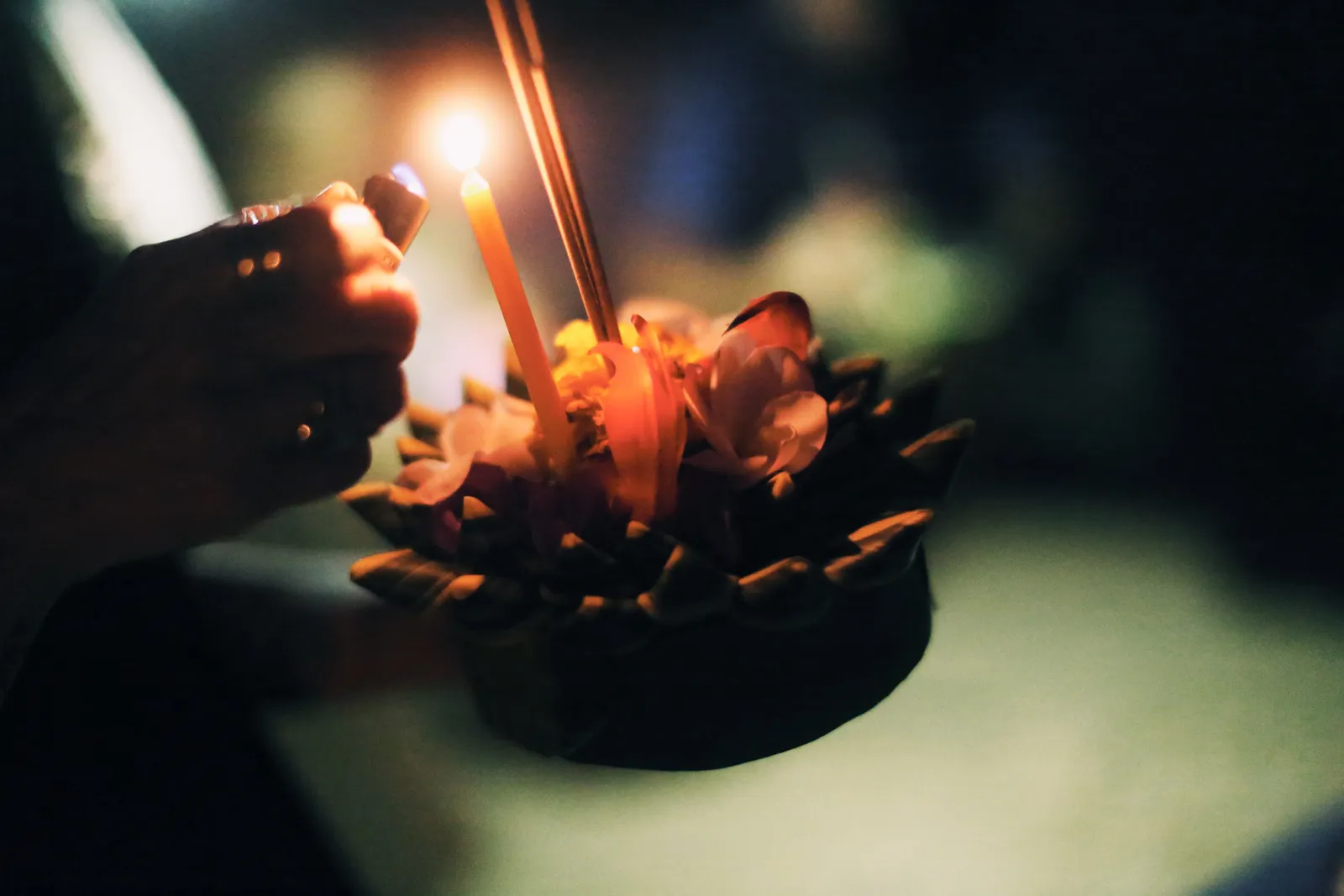
Loy Krathong is the national one and it happens on water. A krathong is a small float, traditionally made from a section of banana trunk and folded banana leaf, decorated with flowers and incense and carrying a candle. You light it, make a wish or an apology to the water, and set it adrift. It happens on rivers, canals, ponds and hotel pools across the whole of Thailand.
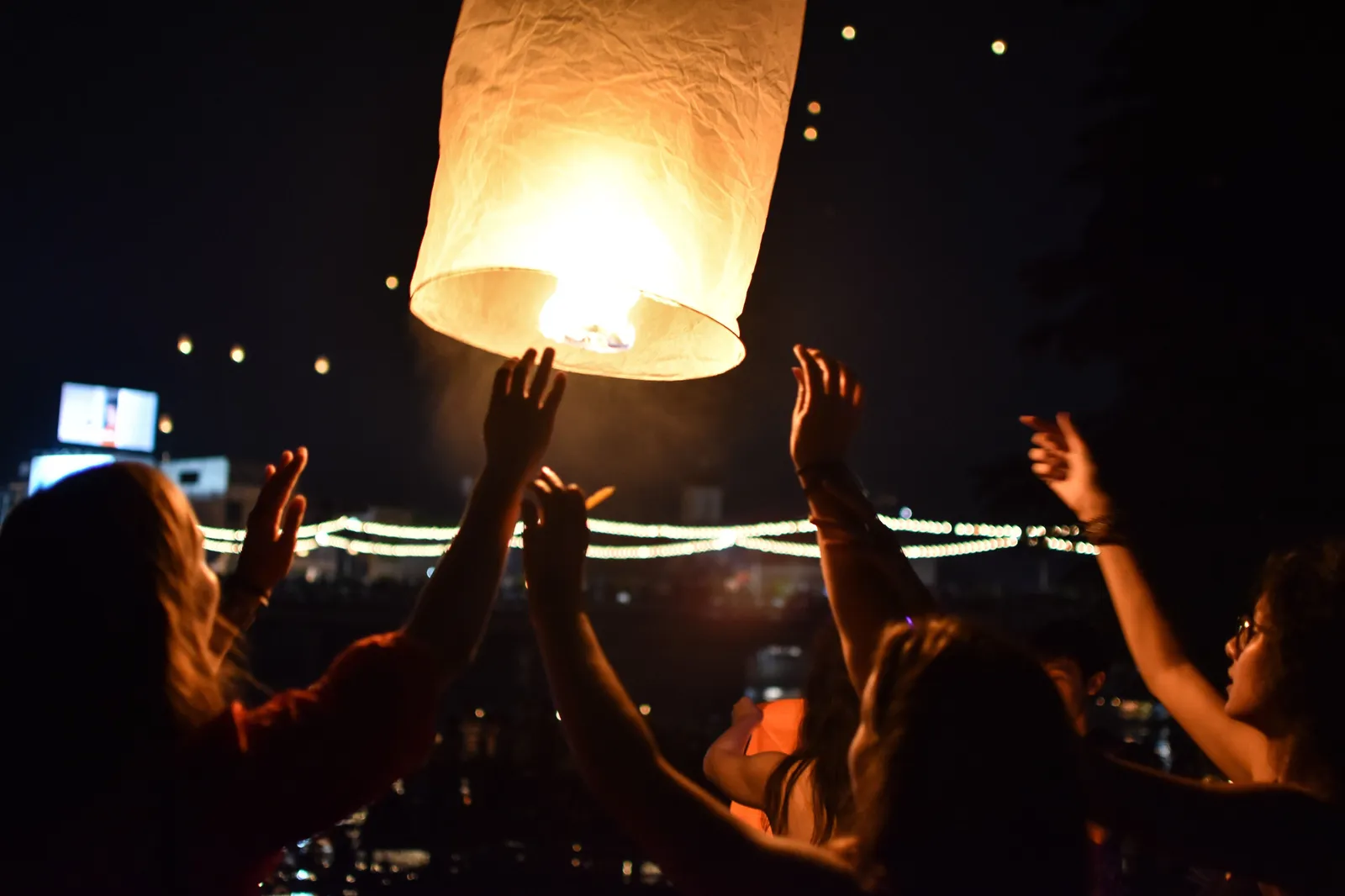
Yi Peng is a Lanna festival from the north and it happens in the air. The lanterns are paper, lifted by a small flame inside them, and released to float away. It is not celebrated nationally in the same way, which is why you can spend Loy Krathong in Bangkok and see almost no lanterns in the sky at all.
Chiang Mai is where both run at once, and that overlap is the entire reason it has become the destination for the festival.
When it happens, and why the date moves
The timing follows the lunar calendar, falling on the full moon of the twelfth lunar month, which generally places it in November. Because the lunar and western calendars do not align, the dates shift from year to year and are announced rather than fixed.
That has a practical consequence worth taking seriously: you cannot plan next year from last year’s dates, and a trip booked around the wrong week misses the whole thing. Confirm the current year’s dates before committing to flights, and expect the celebrations to spread over several nights rather than one. Our guide to the best time to visit Thailand covers where November sits in the wider weather picture, which is generally in its favour.
Where to be
Chiang Mai is the headline choice, because it is where you get both festivals at the same time and where the sky lantern element reaches its full scale. It is also, for the same reason, extremely busy, and the old city becomes very hard to move around on the main nights.
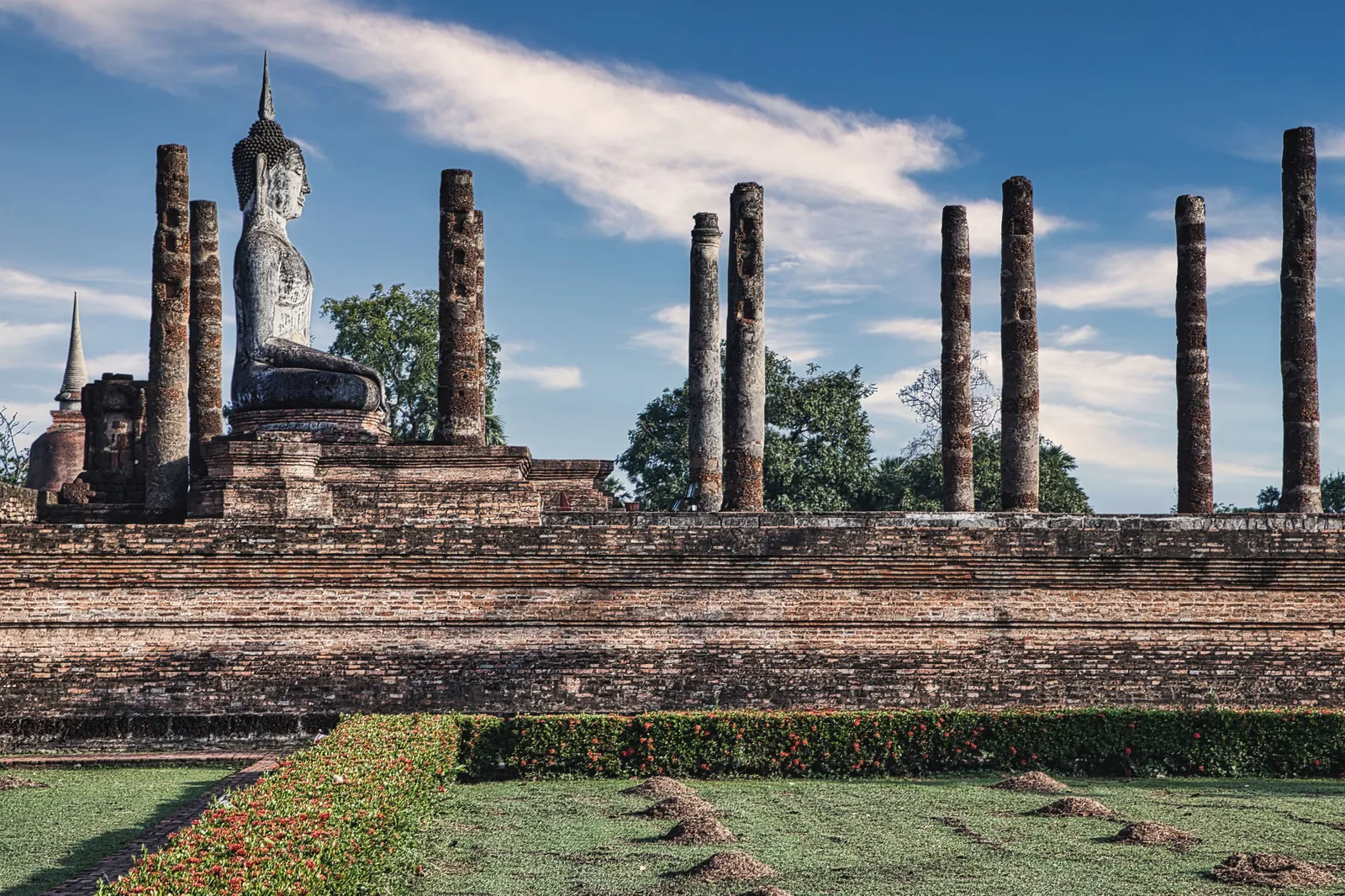
Sukhothai is the connoisseur’s answer. The festival is celebrated among the ruins of the old capital, with floats on the historical park’s water and a setting that no modern city can match. It is quieter, it takes more effort to reach, and for a lot of visitors it is the better experience. Our Sukhothai guide covers the site itself.
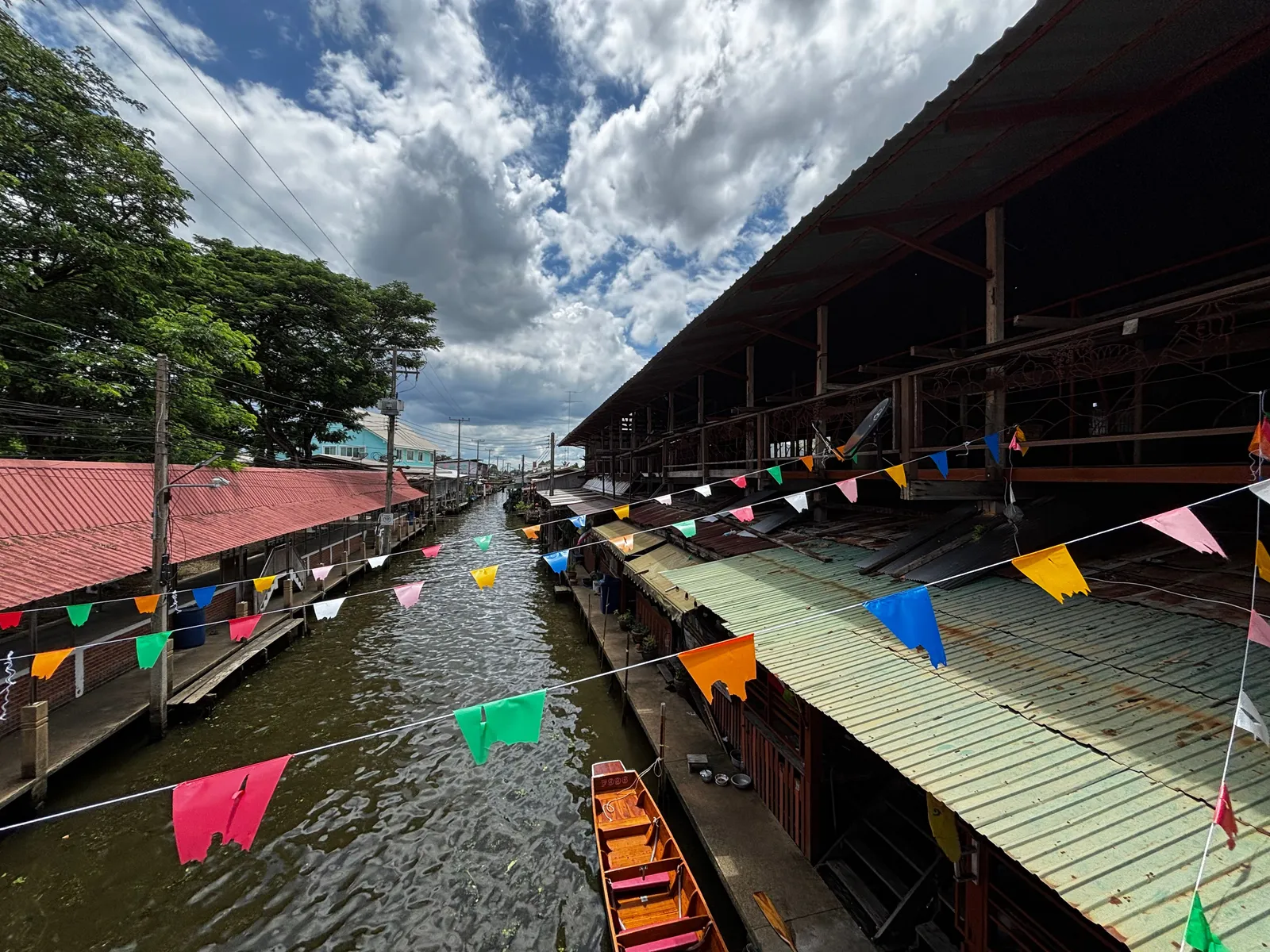
Bangkok celebrates Loy Krathong on the river and the canals. It is the easiest option if you are already there, it lacks the lantern spectacle, and it is a perfectly genuine version of the festival.
The ticketed releases, and the free ones
This is the distinction that catches people out most often, and it is worth being blunt about.
The images that sell the festival, thousands of lanterns released in perfect unison from a dark field, come from organised ticketed events held outside the city. They have paid admission, assigned seating, a ceremonial programme and a fixed release time, and they sell out well in advance. If that specific image is what you have come for, it has to be booked, and it has to be booked early.
The community celebrations in and around the city are free, considerably less choreographed, and in many people’s view the better night out: parades, temple grounds, food stalls, and people releasing lanterns and floats in their own time. What you will not get is the massed simultaneous release.
What the night actually looks like
The festival is not a single event with a start time, which is the thing photographs never convey.
It builds through the late afternoon. Stalls selling floats appear near the water, temple grounds fill up, and food vendors set up along the routes. Parades pass through in the evening, varying by city and by night, and the temples stay busy well past dark. People drift towards the water in their own time rather than at an appointed hour, light the candle and the incense on the float, and set it going.
In Chiang Mai the sky element runs in parallel, with lanterns going up in ones and twos from permitted spots across the evening rather than all at once. The effect is scattered rather than synchronised, and many people find it more affecting than the mass release precisely because it goes on for hours. Expect to spend a whole evening out rather than turning up for a moment.
Practical notes
Book everything early. Accommodation in Chiang Mai during the festival is the hardest of the year and rates rise well above the ordinary November level. Domestic flights into the north fill in the same way. Prices are quoted in baht and move enough during festival week that any figure is worth confirming directly.
Buy your krathong locally. Stalls appear near the water in the days beforehand. Ask for a biodegradable one; polystyrene has been discouraged and restricted in many places, and the clean up after the festival is a real municipal problem.
Expect crowds and closed roads. The old city becomes congested and parts of it are closed to traffic on the main nights, so plan to walk.
Check what you are allowed to release before you buy a lantern. Sky lantern releases around Chiang Mai are restricted to permitted zones and hours, and the festival week is also when flights in and out of the city get moved. Our guide to the lantern rules covers where you can release one, what the ticketed mass events actually are, and how to plan flights around the restriction windows.