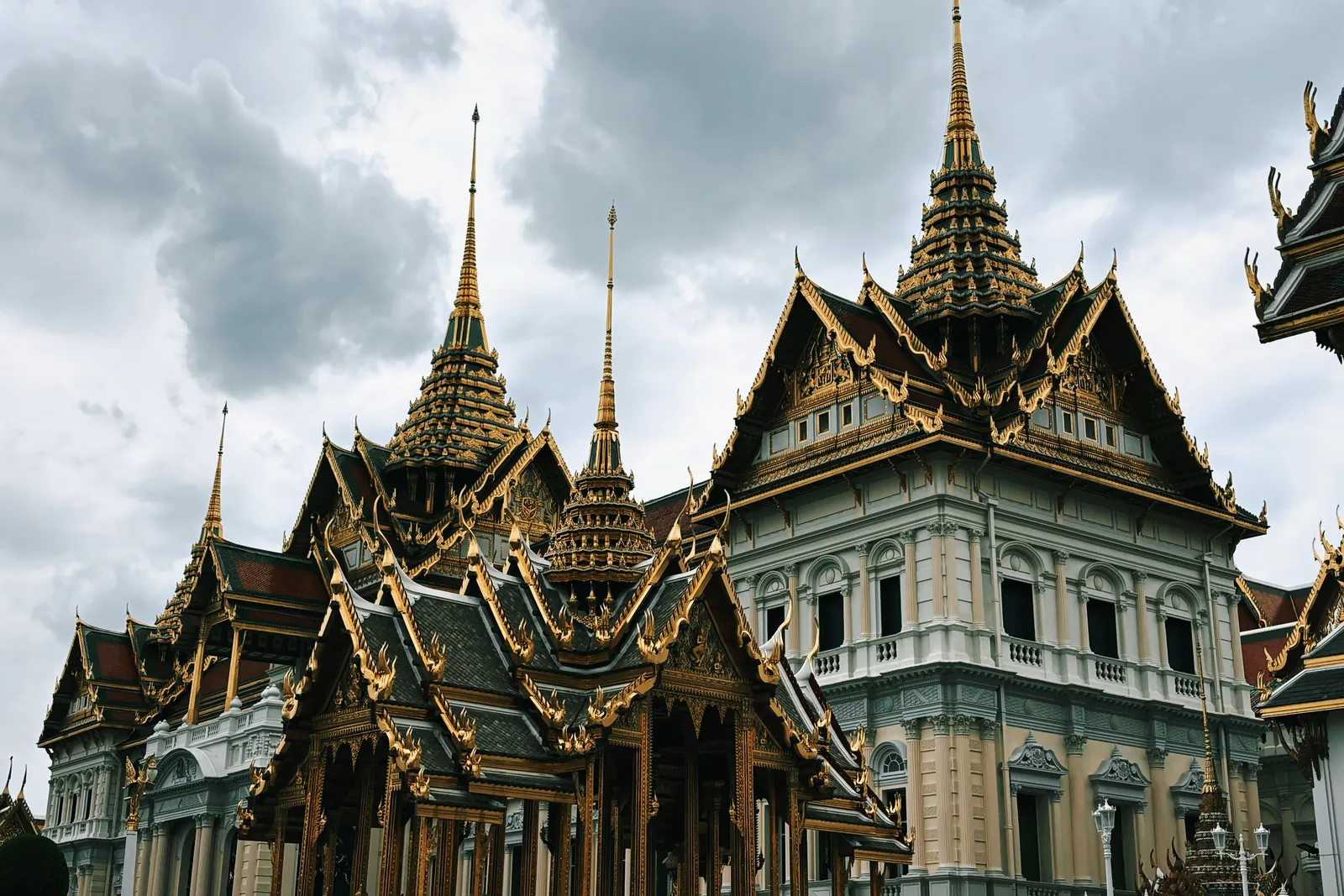
This trip follows Thai religious art rather than a straight geographic line: from the working royal temples of Bangkok, back to the ruined capitals that came before it, and on to the modern, artist-built temples of the north that reinvent the whole tradition in glass and mirror. Five days is enough to see how the style has moved across centuries, from gilded classical forms to something genuinely contemporary. Start with first time in Thailand for the basics of temple etiquette before you go, since it matters more here than almost anywhere else in the country, and read the Grand Palace guide for the details on Bangkok’s own dress code enforcement.
Itinerary at a glance
| Day | Base | The signature experience |
|---|---|---|
| 1 | Bangkok, the royal city | The Emerald Buddha and Wat Arun’s porcelain spire |
| 2 | Ayutthaya | Cycling between the ruins of the old capital |
| 3 | Sukhothai or Lopburi | Serene walking Buddhas, or Khmer ruins and resident monkeys |
| 4 | Chiang Rai | The mirrored, contemporary White Temple |
| 5 | Chiang Mai | Old city temples and a monk chat |
Day 1: Bangkok’s royal temples
Start at the Grand Palace and Wat Phra Kaew, the Temple of the Emerald Buddha, inside the same walled complex, home to Thailand’s most sacred image and some of the most intricate mosaic and gilding in the city. The dress code here is strictly enforced and applies to everyone regardless of the weather: shoulders and knees covered, no exceptions, and people are turned away at the gate every single day for showing up in shorts or a vest.
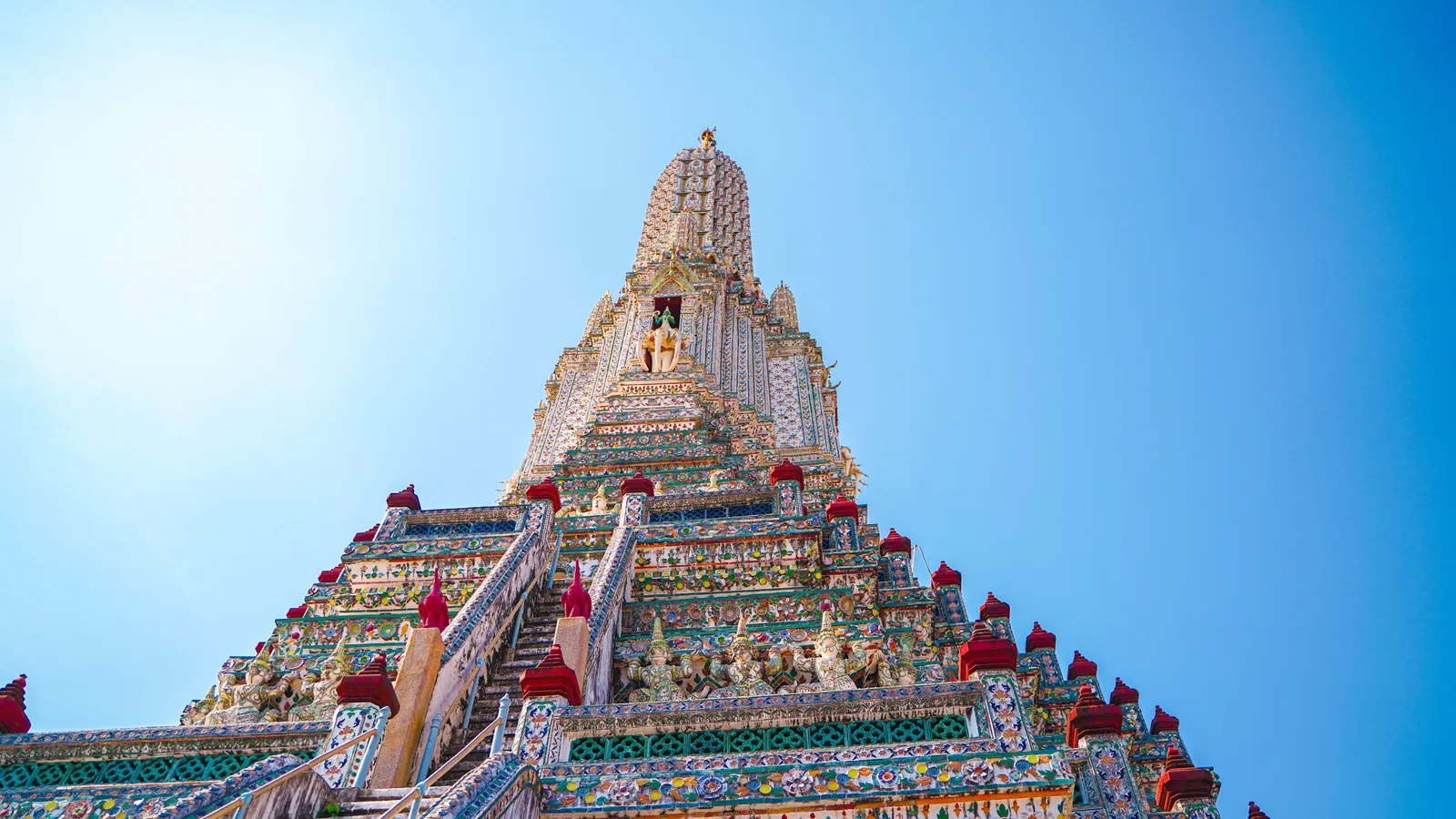
From there, Wat Pho holds the giant gold reclining Buddha under one long roof, one of the more genuinely calm big-ticket sights in the city despite the crowds, and it doubles as the country’s traditional home of Thai massage teaching. Save Wat Arun, the Temple of Dawn, for late afternoon, when the light picks out the thousands of porcelain shards set into its central prang, a technique unique among Bangkok’s major temples.
Food: a riverside lunch between temples, with mango sticky rice from a street cart to close out the afternoon.
The signature experience: Wat Arun’s porcelain-encrusted spire catching the late light from across the river, unlike anything else in the city.
Optional tour: a river crossing by public ferry rather than a tour boat gets you to Wat Arun the same way most Bangkok residents do.
Day 2: Ayutthaya
Ayutthaya was the capital of the Siamese kingdom for over four hundred years before it was sacked, and its ruins spread across a much larger area than a single afternoon can properly cover. Rather than trying to see all of it, focus on three essential complexes: Wat Mahathat, Wat Phra Si Sanphet, the grandest of the old royal temples, and Wat Chaiwatthanaram, whose riverside setting and Khmer-style towers make it one of the most photographed ruins in the country.
Cycling between the sites, rather than joining a coach tour, is genuinely the better way to see Ayutthaya. The distances are manageable, the roads between temples are quiet, and stopping wherever something catches your eye beats being herded between fixed stops on someone else’s schedule, especially once the heat builds through the middle of the day. Our Ayutthaya day trip guide has the practical detail on getting there and around.
Food: a riverside restaurant near the ruins, a good place to rest between temple stops.
The signature experience: the Buddha head grown into the roots of a banyan tree at Wat Mahathat, one of the most photographed single images in Thailand.
Optional tour: a river boat trip out to Ayutthaya, rather than the train, turns the journey itself into part of the day.
Day 3: Sukhothai or Lopburi
Two very different options for today, depending on how far you want to travel. Sukhothai, an older capital than Ayutthaya, holds its ruins inside a landscaped historical park, and the style here is distinct: serene, elongated walking Buddhas rather than the more ornate forms that came later, spread across wide lawns and around lotus ponds that make for a noticeably calmer visit than Ayutthaya’s denser site.
Lopburi, closer to Bangkok, takes the day in a completely different direction. Its Khmer-era ruins, remnants of the same empire that built Angkor, share the town with a large resident population of macaques that treat the temple grounds as their own territory. They are bold, used to visitors, and will take anything left loose, including sunglasses, food and phone straps, so keep bags zipped and hold on tight to anything you are not prepared to lose.
Food: a simple local restaurant near whichever site you choose, since neither town is geared heavily toward tourist dining.
The signature experience: Sukhothai’s walking Buddhas at dusk, caught in silhouette across the historical park’s ponds.
Optional tour: a bicycle rental at Sukhothai covers the historical park at a relaxed pace, much like the approach at Ayutthaya.
Day 4: Chiang Rai’s artist temples
Chiang Rai flips the whole trip on its head, and our White Temple guide has the fuller picture of all three sites here. The White Temple is not an ancient site at all but a contemporary artwork, still under construction by the artist who conceived it, and its bridge lined with reaching hands leading toward the main hall is a deliberate statement about temptation and desire rather than a historical decoration. It is unlike anything else on this itinerary, and unlike much else in the country.
Nearby, the Blue Temple’s cobalt walls and gold Buddha make a striking visual contrast, and the Black House, part gallery and part the artist’s former home, fills a cluster of dark timber buildings with bones, skins and unsettling sculptural furniture. Together, the three sites make the case that Thai religious art is still very much alive and evolving rather than something frozen in the past.
Food: a lunch stop in Chiang Rai town between the three sites, a good break in the middle of a full day.
The signature experience: crossing the bridge of hands at the White Temple, its mirrored spires reflecting the sky from every angle.
Optional tour: a combined day tour covering all three artist-built sites in one trip is the simplest way to see them without arranging separate transport.
Day 5: Chiang Mai temples and etiquette
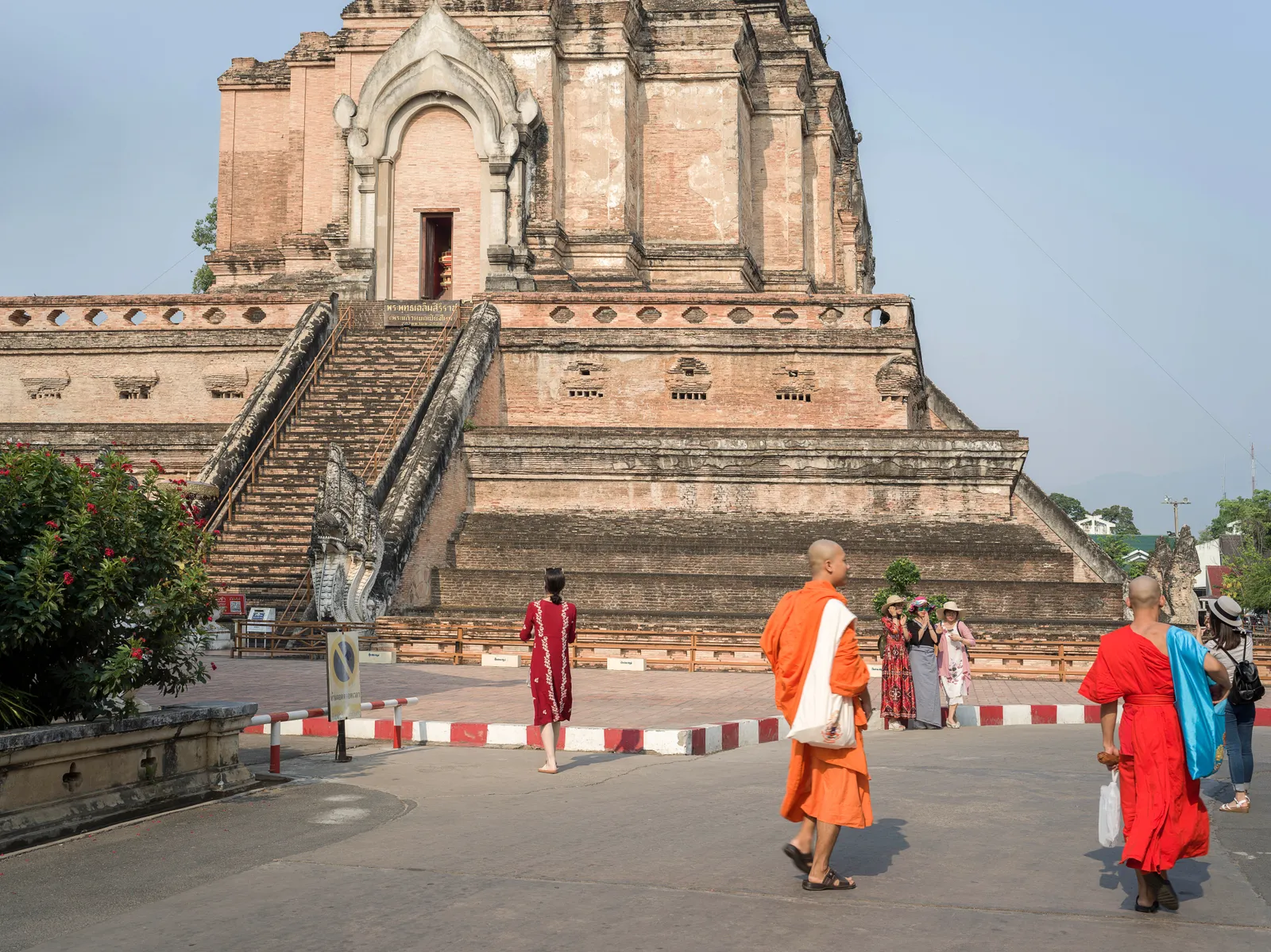
End the trip back in Chiang Mai’s old city, a return to classical form after Chiang Rai’s contemporary detour. Wat Chedi Luang and Wat Phra Singh anchor the old city’s temple circuit, both easily walkable inside the moat, and several run informal monk chat sessions where novice monks sit down with visitors to talk about monastery life and answer questions, entirely free and unstaged.
By now, the etiquette that separates a welcome visitor from an awkward one should be second nature: shoes off before entering any temple building, feet never pointed toward a Buddha image while seated, and shoulders and knees covered at every site regardless of how relaxed a particular temple might look. Getting this right, rather than apologising for getting it wrong, is a large part of what makes the difference across five days of temple visits.
Food: khao soi for a last northern meal, the region’s coconut curry noodle soup.
The signature experience: a monk chat in an old city temple courtyard, closing the trip on the same informal, human note it started on in Bangkok.
Optional tour: a guided old city temple walk covers the etiquette and the history together, useful if you want the context rather than working it out alone.
Before you go
Dress code is the one rule that applies without exception at every single site on this itinerary: shoulders and knees covered, and closed shoes are safer than sandals at sites with uneven ancient stonework. Carry a light scarf or sarong that can be produced at short notice, since not every temple provides cover-ups for visitors who arrive underdressed, pace the days so that the busiest sites, the Grand Palace and the White Temple above all, are visited early rather than in the middle of the afternoon heat, and see getting around Thailand for how the trains, minivans and domestic flights between these five stops actually connect.