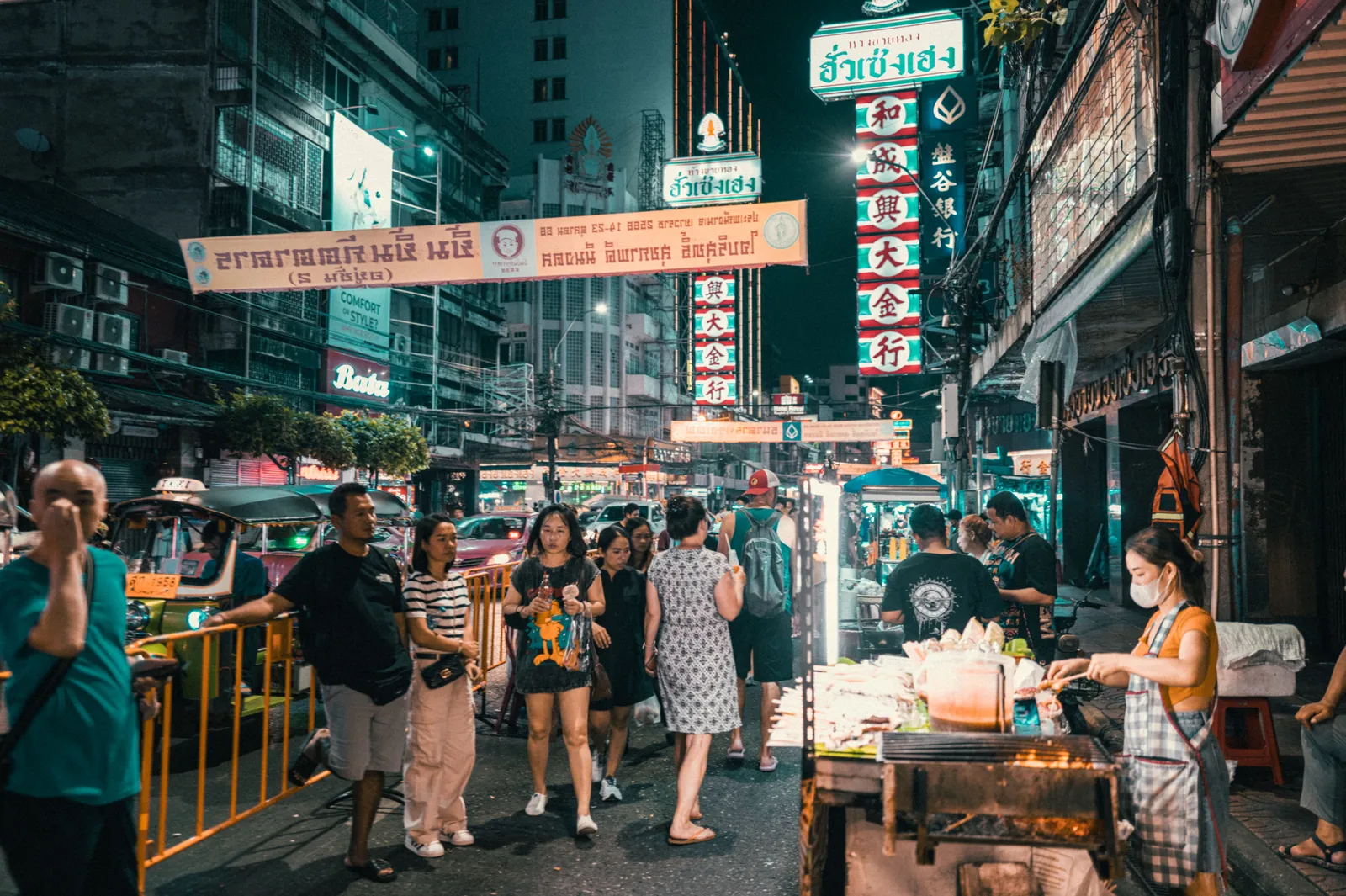
This is not a sightseeing trip with meals worked in around it. It is the reverse: five days built entirely around the food, split between Bangkok’s street kitchens and markets and Chiang Mai’s northern and northeastern flavours, which are different enough from central Thai cooking to feel like a second cuisine. You will eat more in five days than most people manage in two weeks, and that is the point. Start with our Thai food guide for the vocabulary you will want on the ground, and read Thailand scams once, mostly for the section on overpriced tourist-menu restaurants that this itinerary is designed to avoid.
Itinerary at a glance
| Day | Base | The signature experience |
|---|---|---|
| 1 | Bangkok, Chinatown | Eating your way down Yaowarat after dark |
| 2 | Bangkok markets | A dawn fresh market walk before the heat |
| 3 | Bangkok cooking class | Pounding your own curry paste from raw ingredients |
| 4 | Chiang Mai | A proper bowl of khao soi and a walking street food run |
| 5 | Northern and northeastern flavours | Som tam pounded to your own heat level |
Day 1: Bangkok street day
Yaowarat, the spine of Bangkok’s Chinatown, is at its best after dark, when the pavements turn into a continuous open-air kitchen and the whole street fills with steam, smoke and the clatter of woks. Many of the stalls here make exactly one dish and have made it for decades, refining a single recipe rather than offering a menu, and the busiest ones tend to be the best ones, not the flashiest.
Spend the evening working your way down the street rather than committing to one place. A short walk off the main road, a boat noodle alley serves small, intense bowls of dark, spiced broth, traditionally sold in portions this small so that diners can order several different stalls in one sitting. The real skill on a night like this is learning to read a stall properly: a queue of locals and fast turnover matter far more than a laminated English menu or a photo out front.
Food: Yaowarat’s street kitchens after dark, plus a boat noodle alley for small, intense bowls.
The signature experience: learning to gauge a good street stall by its turnover and its queue of regulars, rather than by how it is dressed up for tourists.
Optional tour: a guided Chinatown food walk is worth considering on your first night here, since it shortcuts the learning curve on which stalls are worth the queue.
Day 2: Bangkok market day
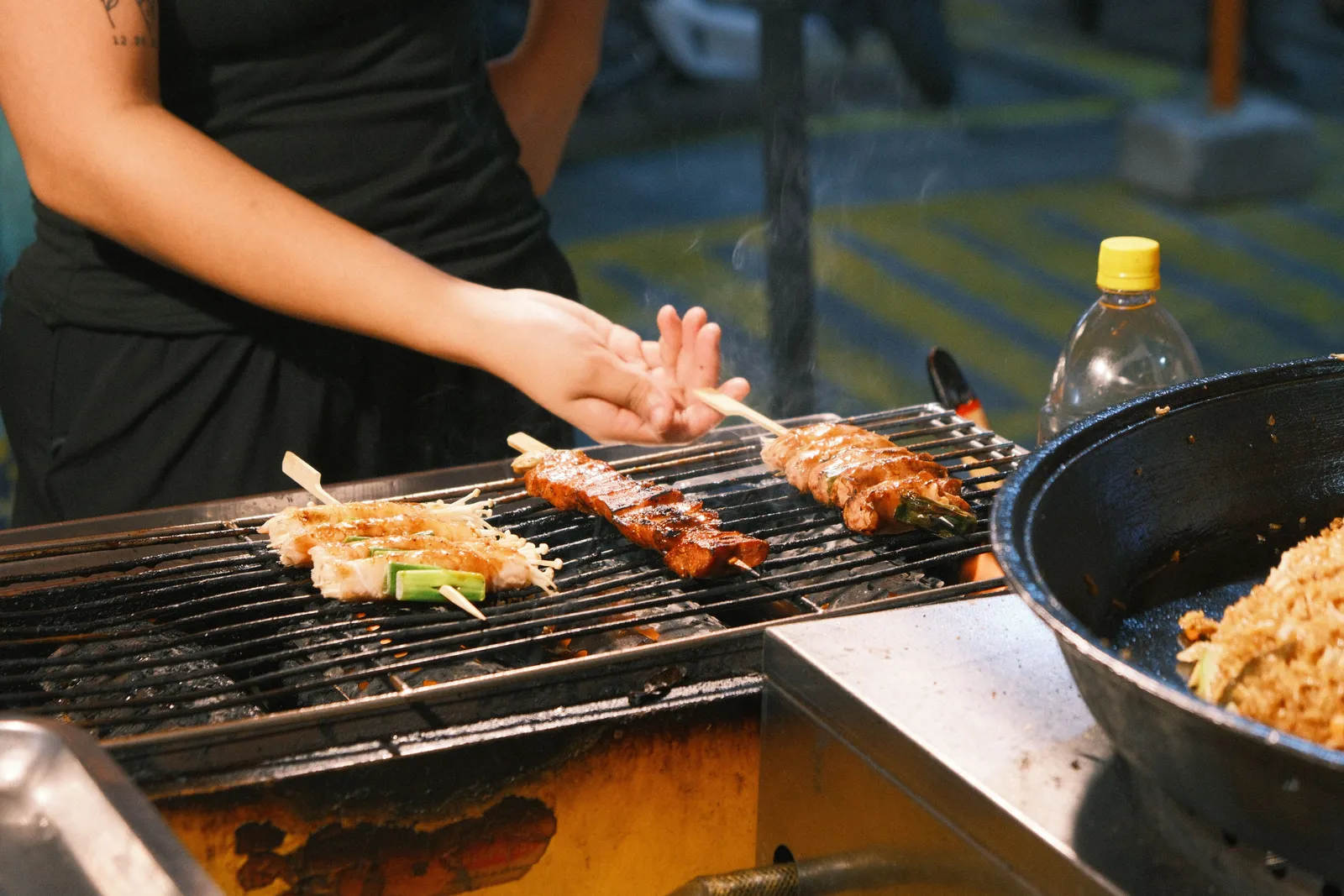
Set an early alarm for this one. A fresh market at dawn, ideally with someone who can name what you are looking at, shows a side of Thai food most visitors never see: produce, herbs and cuts of meat that never make it near a tourist menu, and cooked breakfast stalls serving the vendors and workers who keep the market running rather than sightseers. Go before the heat sets in, both for comfort and because that is when the market is at its most alive.
Later in the day, do not overlook a shopping mall food court, which sounds like a step down but genuinely is not: they are clean, cheap by the standards of the dishes on offer, and often the best place to try regional specialities from across the country side by side under one roof. For contrast in the evening, a rooftop dinner shows Bangkok’s other register, though the food itself will not compete with what you had that morning.
Food: the regional dishes at a mall food court that rarely make it onto a standalone restaurant menu.
The signature experience: the dawn fresh market walk, the produce and the breakfast stalls that belong to the people who work there rather than to visitors.
Optional tour: a market tour with a local guide is genuinely useful here, since half the value of a fresh market is knowing what you are looking at.
Day 3: Cooking class day
A good Thai cooking class starts at a market, not in the kitchen, walking you through the herbs, chillies and pastes before you touch a pan. From there it moves to the part that actually teaches you something: building your own curry paste from scratch in a mortar and pestle, garlic and chilli and galangal pounded down by hand rather than blitzed in a blender. It is harder work than it looks and considerably more satisfying, and the paste you end up with tastes nothing like the jarred version.
Most classes turn the paste into two or three dishes over the course of the day, and you leave with both a full meal and a rough sense of how to rebuild it at home, even without access to every ingredient. It is the single best way to understand Thai food from the inside rather than just from the plate.
Food: your own curry paste, pounded by hand and cooked into the dishes of your choice.
The signature experience: the pounding itself, which is harder and more satisfying than it looks and teaches you more about Thai food than a week of eating alone would.
Optional tour: classes vary between a half day and a full day with a market visit included; the market version is worth the extra time if it is offered.
Day 4: Chiang Mai northern day
Fly or travel north to Chiang Mai (see getting around Thailand for how the overnight train and the flights compare) and the food changes with the landscape. Khao soi, the region’s signature dish, is a coconut curry noodle soup finished with crispy fried noodles on top, and it does not really exist in this form further south. Northern cooking leans on fermented and bitter flavours that central Thai food mostly avoids, along with dishes like sai ua, a herb-dense grilled sausage, and nam prik noom, a roasted green chilli dip eaten with sticky rice and raw vegetables.
If your dates land on a Sunday evening, the old city’s walking street closes to traffic for a long run of food stalls, and it is one of the better places in the country to graze your way through a whole evening’s worth of small plates without committing to a single sit-down meal.
Food: khao soi, sai ua and nam prik noom, three dishes that barely exist outside the north.
The signature experience: a Sunday walking street food run through the old city, grazing stall to stall rather than sitting down once.
Optional tour: a northern food walking tour with a local guide, useful for finding the stalls that locals rather than visitors tend to queue for.
Day 5: Regional flavours day
Isaan food, from Thailand’s northeastern region, is built around heat, sourness and fermentation, and som tam, green papaya salad pounded in a mortar with chilli, lime and fish sauce, is its best-known export. Order it to your own heat level rather than the kitchen’s default, and learn the phrase for mild in Thai before you sit down; it genuinely changes the experience if chilli is not your thing. Sticky rice, eaten by hand rather than with cutlery, is the standard accompaniment across the northeast, along with grilled meats cooked over charcoal.
One thing worth knowing before this last day, and really the whole trip: fish sauce and shrimp paste appear in an enormous range of dishes, including many that look purely vegetable-based, so it is worth asking directly if that matters to you rather than assuming from the menu.
Food: som tam pounded to your own heat level, sticky rice and grilled meats, the core of northeastern Isaan cooking.
The signature experience: ordering som tam exactly as spicy as you can handle, and watching it pounded fresh in front of you.
Optional tour: an Isaan-focused food market or night bazaar, if one is running locally, gives the widest single-visit spread of northeastern dishes.
Before you go
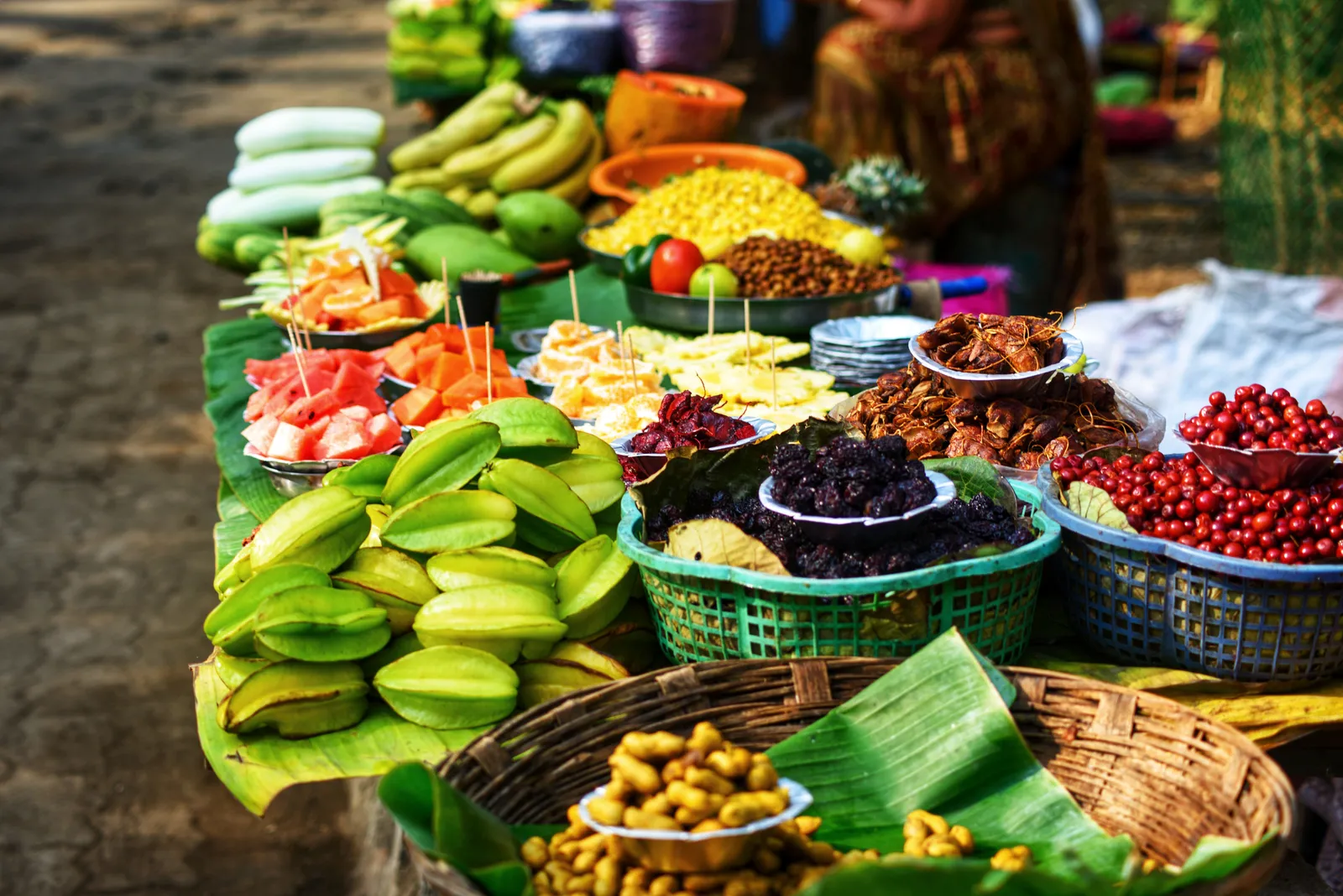
Spice levels vary enormously between kitchens and cannot be judged from a dish’s colour, so ask rather than guess if you are unsure. A good general rule for street food is the same everywhere in this itinerary: busy stalls with a queue of locals turn over their ingredients fast and are almost always safer and better than a quiet one nearby. Carry small notes and coins for street stalls, since few of them take cards, and pace yourself across the five days; this is a trip that rewards a genuinely empty stomach each morning rather than skipping meals to catch up later. Street food is cheap enough that it barely moves the needle in Thailand budget and costs, so spend the savings on the cooking class and a proper sit-down meal or two instead.