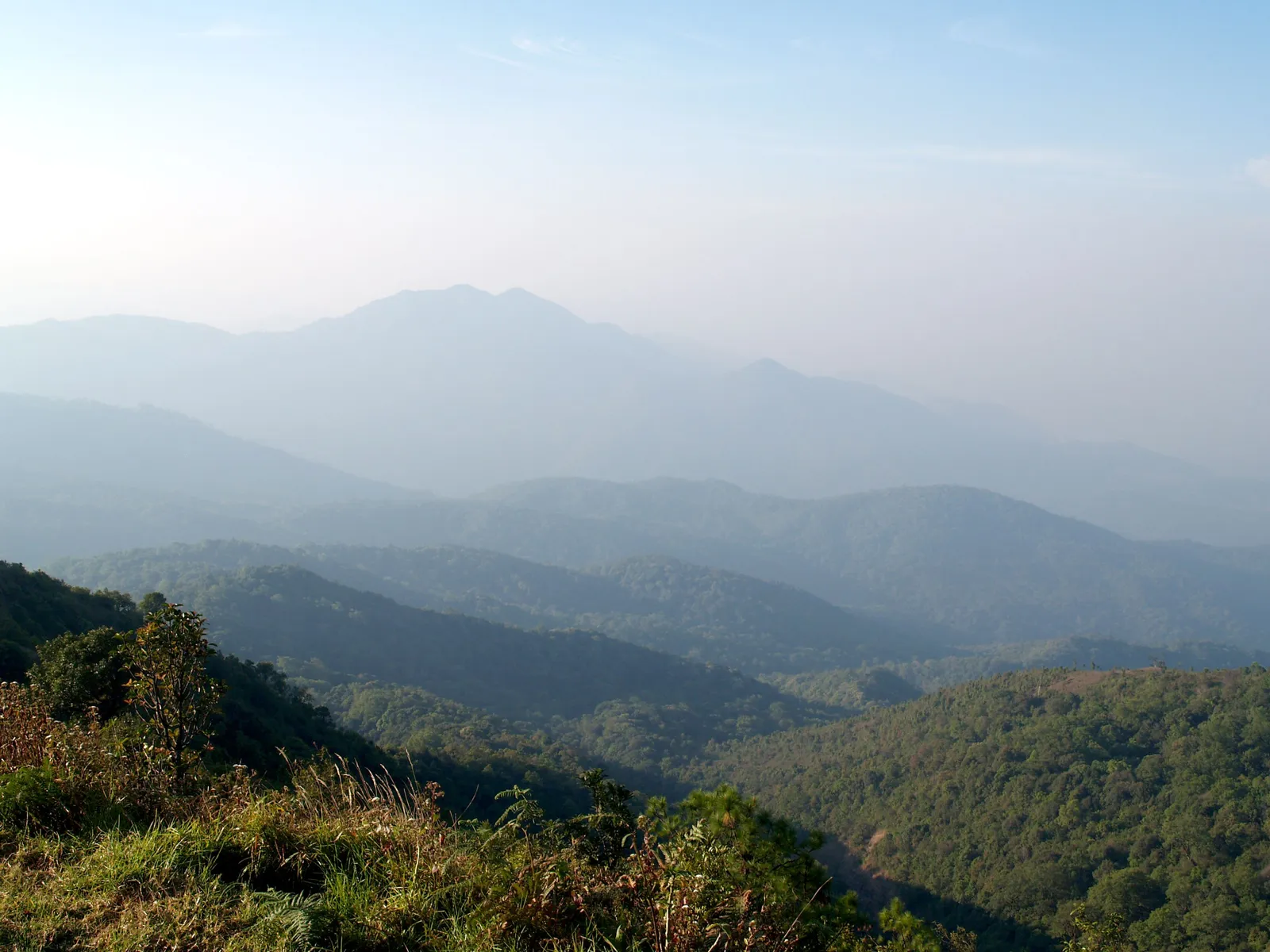
Almost every guide to northern Thailand tells you what to see. Far fewer tell you when not to come, and in Chiang Mai that omission costs people entire holidays. For several weeks each dry season the air over the northern provinces fills with smoke from agricultural and forest fires, the mountains vanish behind a grey wall, and the city has repeatedly ranked among the most polluted places on earth on individual days. It is the single biggest planning variable in the north, and it is entirely avoidable if you know the window. Our Chiang Mai city guide covers what the place is like at its best; this is the other half of the picture.
What burning season actually is
The smoke is not one thing. A large share of it comes from agricultural burning, where crop residue from rice, maize and sugarcane is cleared with fire because it is the fastest and cheapest method available to smallholders. Forest fires in the surrounding uplands add to it, as does burning across the border in neighbouring countries, which is why a burn ban inside Thailand does not clear the sky on its own. Studies attributed to Thai monitoring bodies put biomass burning behind the large majority of fine particulate pollution in the north at the peak of the season.
Geography then makes it worse. Chiang Mai sits in a basin ringed by hills, and during the cool, still weeks of the dry season there is often not enough wind or vertical mixing to flush the valley out. The smoke settles and accumulates. That is why the city can register far worse readings than open, flatter provinces experiencing similar amounts of burning nearby.
When it happens, and how bad it gets
The general pattern is a build through the dry months with the worst weeks clustering from late February into March, sometimes running through April, and clearing once the rains begin in earnest. That window moves. A wet, late-arriving dry season pushes the peak back; an early one brings it forward.
The severity is what surprises people. In the 2026 season Chiang Mai reached the top of global city pollution rankings on multiple days in late March, with fine particulate concentrations far above what health guidance considers acceptable for sustained exposure. Authorities responded with burn bans covering a large group of northern provinces. None of that means every day is unbreathable: within a single bad season there are clear mornings, and a shift in wind can improve things sharply for a few days. But the risk of losing a chunk of your trip to it is real, and it is concentrated in a predictable part of the calendar.
Where the smoke does and does not reach
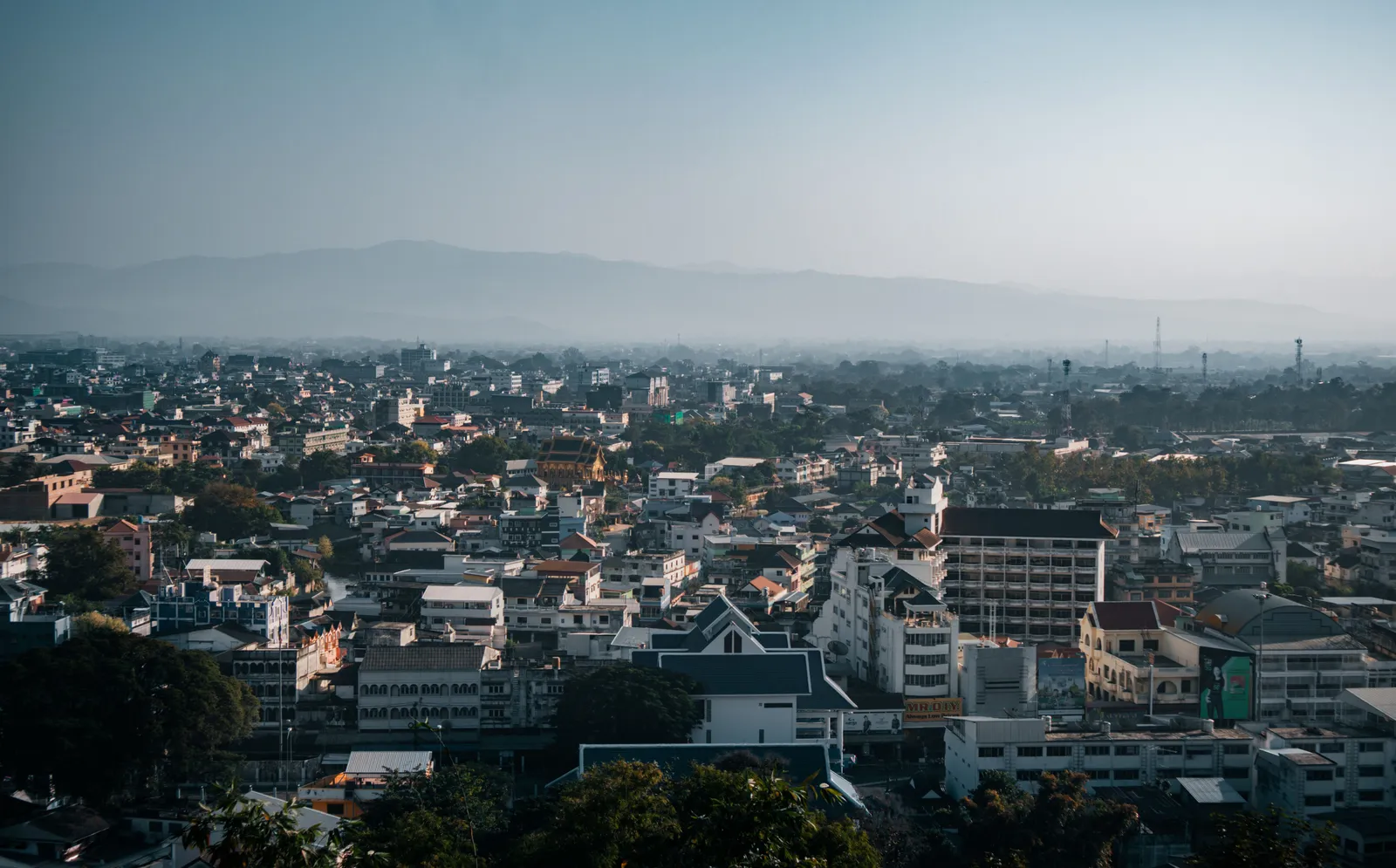
This is a regional problem, not a national one. The affected area is the northern upland belt: Chiang Mai, Chiang Rai, Mae Hong Son, Lampang, Lamphun, Phrae and their neighbours. Pai and the mountain loops sit squarely inside it, and being surrounded by forest offers no protection, since the forest is part of the source.
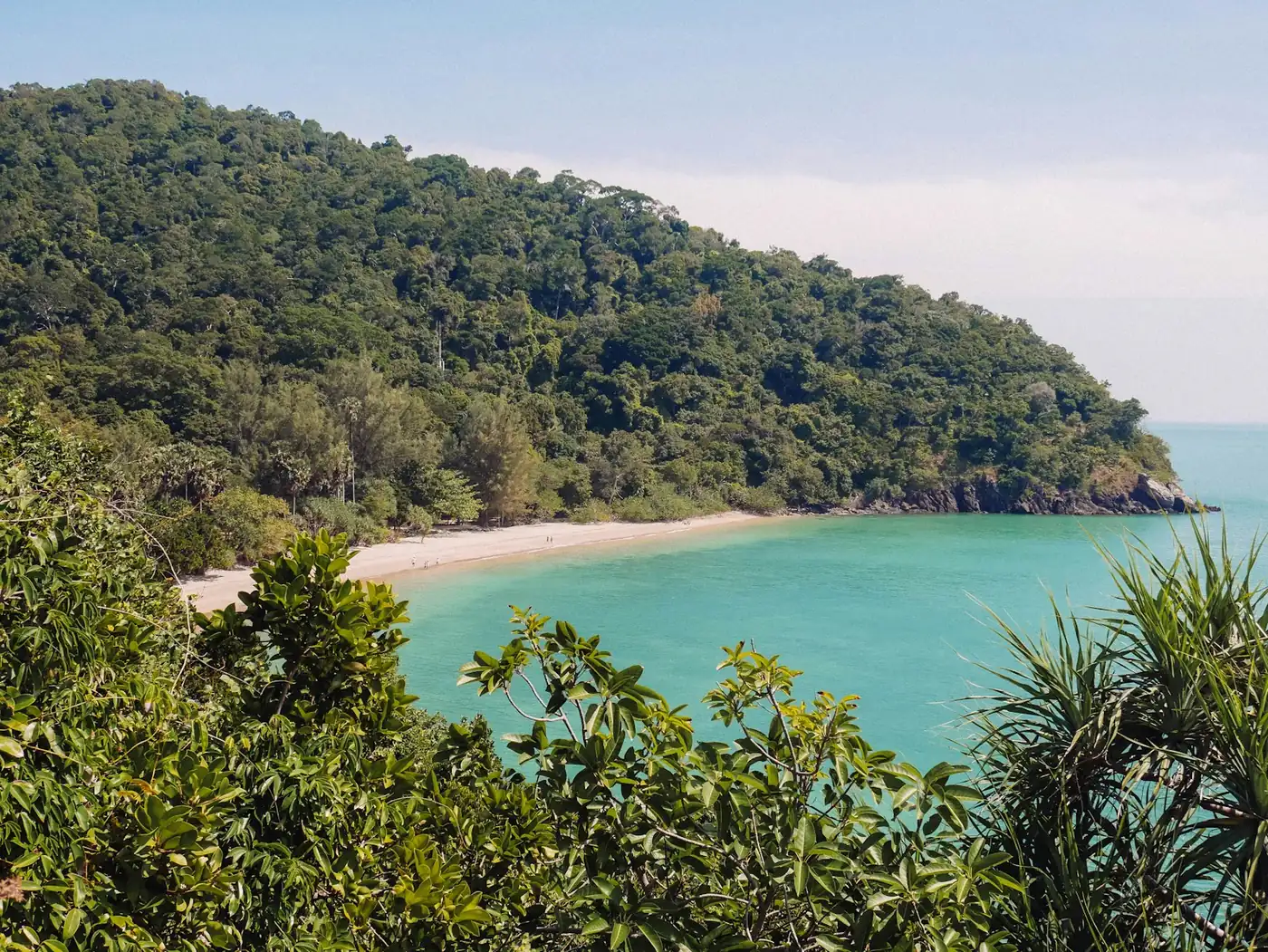
The south is a different country as far as air is concerned. Phuket, Krabi, Koh Samui, Koh Phangan and the rest of the island belt are not exposed to the northern smoke. Bangkok has its own pollution pattern, driven largely by traffic and industry rather than crop fires, which peaks in the cool season and behaves differently. In practice, if your dates land inside the risk window, moving time south solves the problem rather than merely diluting it.
Rearranging a trip instead of cancelling it
The best fix is usually a change of shape rather than a cancellation. If you were planning a fortnight split between Bangkok, the north and an island, and your dates fall in March, invert the weighting: keep the north short, keep it flexible, and put the bulk of the trip on the coast. Our guide to the best time to visit Thailand sets out how the seasons differ region by region, which matters here because the months that are worst in the north are often excellent in the south.
Three practical habits make this workable. Book northern accommodation on free-cancellation rates so a late decision costs nothing. Keep internal flights, which are frequent and cheap between the north and the southern airports, as your escape route rather than committing to a long overland itinerary. And decide roughly a week out, when live readings and short-range forecasts actually mean something.
An internal flight is what makes a late change of plan possibleBangkok, Chiang Mai and the southern airports are connected several times a day, so switching regions late costs less than most people assumeIf you are already in the north
Plenty of people arrive to find conditions worse than expected, and there is a lot you can do short of leaving.
Choose your indoor hours. Readings are often at their worst in the evening and overnight, when the air stops mixing, and better in the mid morning. Front-load outdoor plans and retreat during the peak.
Sort out your room. Air conditioning alone does not filter fine particulates. A room with a decent air purifier makes an enormous difference to how you sleep and whether you wake with a headache, and many northern hotels and guesthouses now list them; it is worth asking directly before booking rather than assuming.
Wear a proper mask outside. A surgical or cloth mask does very little against fine particulates. A well-fitting respirator-grade mask does, and they are widely sold in Thai pharmacies during the season.
Swap the activity, not the destination. Cooking classes, temples, markets, massage, museums and cafes all work on a bad-air day. Multi-day trekking, long motorbike loops and viewpoint hikes are the things to postpone, since they mean hours of heavy breathing outdoors.
Checking the air yourself before you commit
Do not rely on a single number or a single day. The Pollution Control Department publishes the official national monitoring data through the Air4Thai website and app, and that is the source to treat as authoritative for Thailand. Independent consumer-sensor networks are a useful cross-check and often show meaningful variation between neighbourhoods within the same city.
Read the trend, not the snapshot. Three days of steadily improving readings with rain in the forecast is a very different signal from one clear morning in the middle of a bad fortnight. If you are building a route through the mountains, our northern Thailand itinerary is worth reading alongside the live data, because some of its legs are far more exposed than others: the long loops and the trekking days are the first things to drop, and the cities are the easiest to keep.
None of this makes the north a place to avoid. For most of the year the air is fine and the region is the best part of the country. It simply has a season, it is well documented, and the travellers who get caught out are almost always the ones who never knew to look.