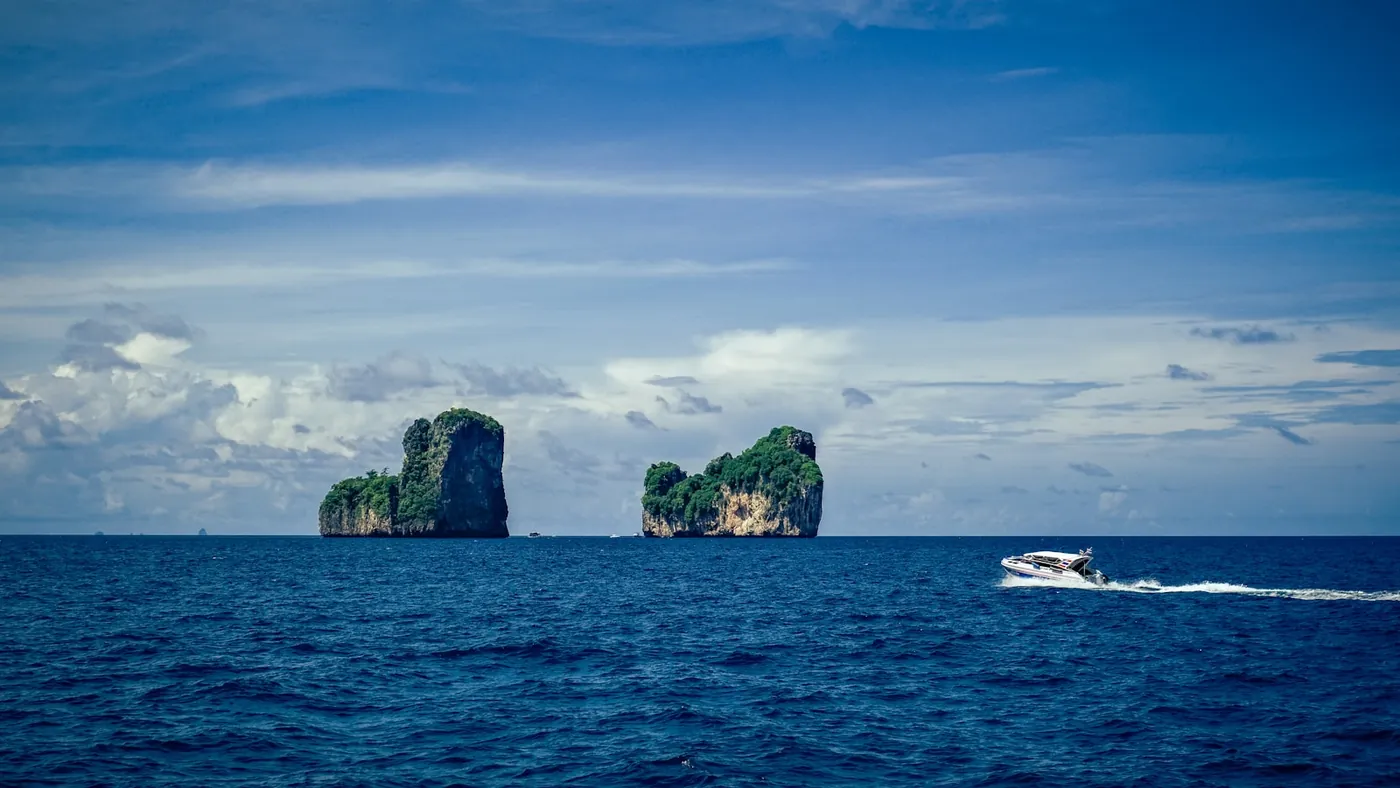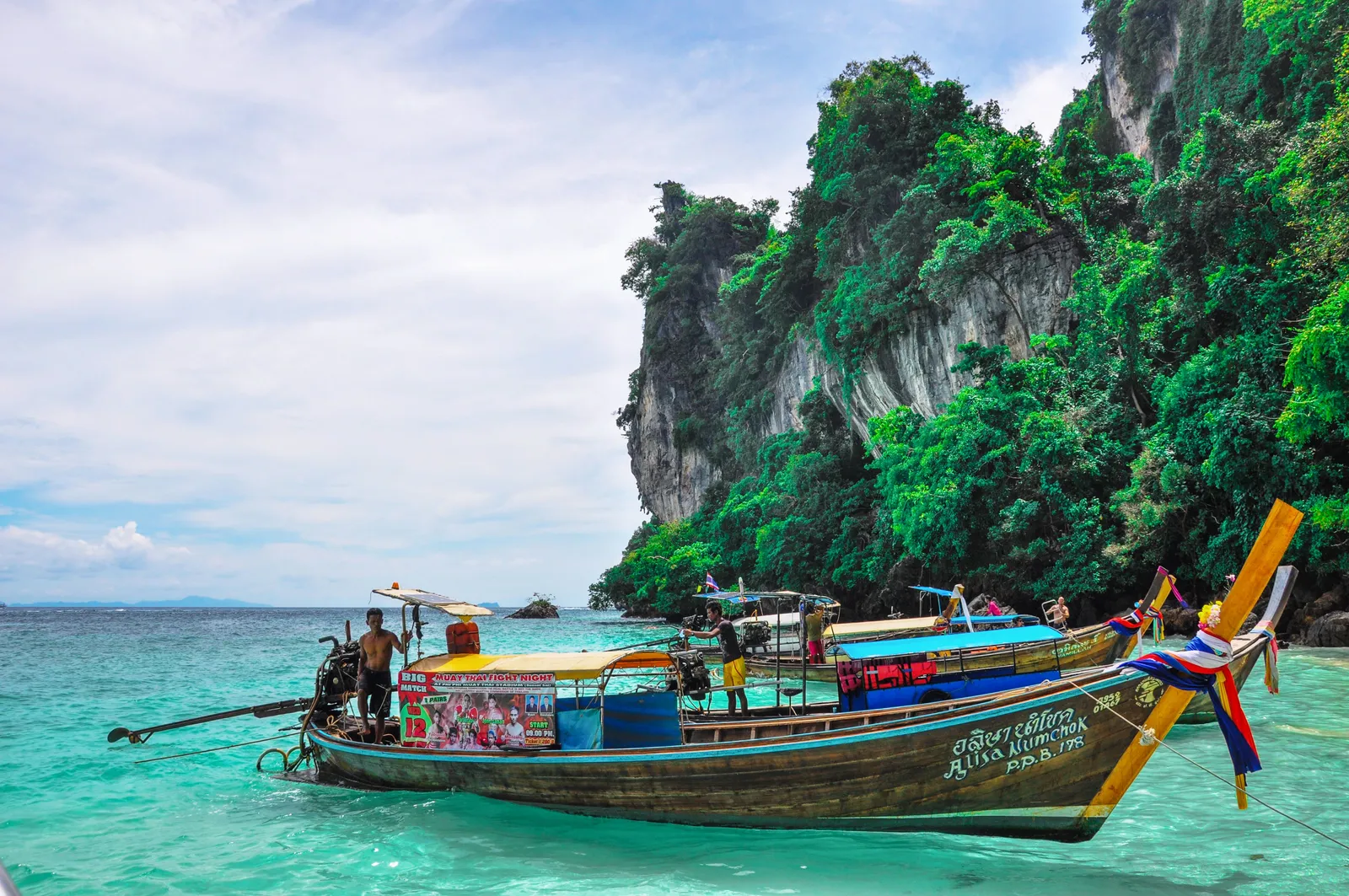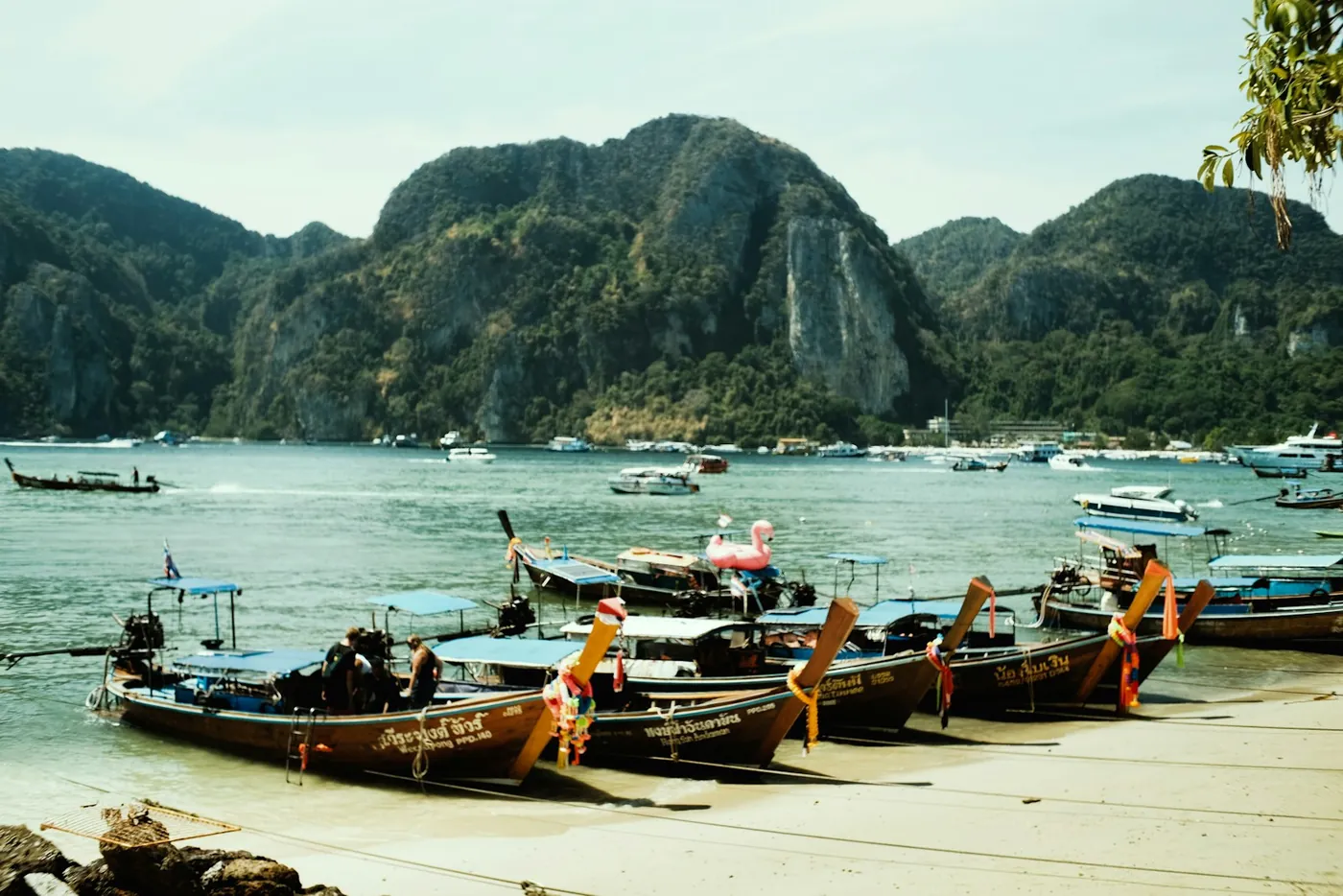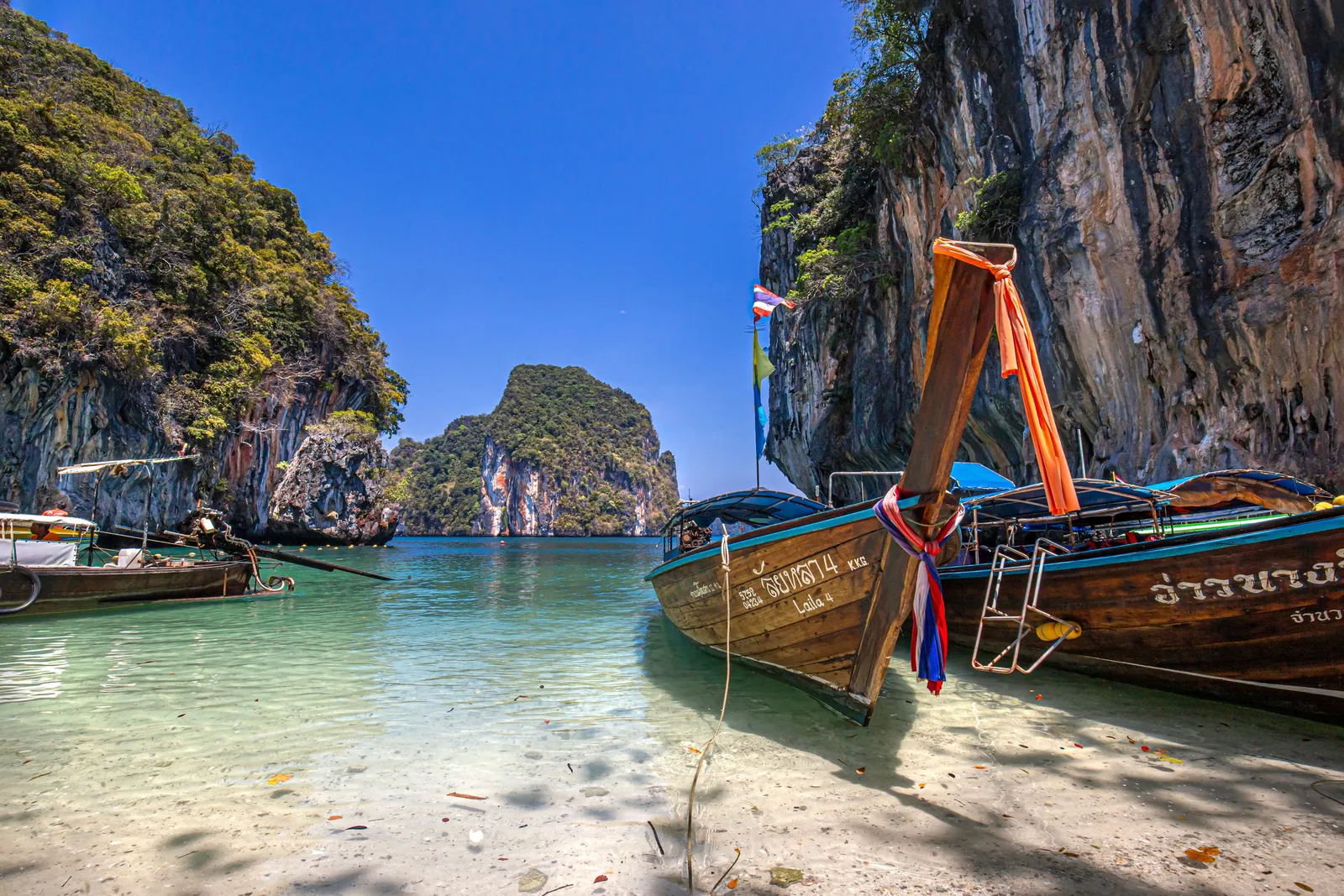
Island hopping in Thailand sounds like drifting from one beach to the next. In practice it is a logistics problem, and the travellers who enjoy it most are the ones who solve it before they arrive rather than during. The country has two island coasts, they sit on opposite sides of a peninsula, they have opposite rain seasons, and almost every wasted day on an island trip comes from ignoring one of those three facts. This is a route article rather than a ferry explainer: for the mechanics of which boats run where, our guide to getting to the islands by ferry covers the operators and crossings in detail.
The one rule that shapes everything
There is no boat between the Andaman coast and the Gulf of Thailand. They are separated by the Malay Peninsula, and crossing between them means an overland transfer of several hours or a domestic flight, usually connecting through Bangkok.
This single fact determines the entire structure of a Thai island trip. Hopping within a coast is cheap, quick and often scenic. Hopping between coasts is a lost day. So the first decision is not which island, it is which sea, and our comparison of the Andaman coast against the Gulf islands sets out what each one actually offers.
Pick one coast for any trip under two weeks. Consider both only if you have three weeks or more, and even then, put the crossing at the midpoint with a night either side rather than treating it as a connection.
Reading the weather backwards
The two coasts do not share a season, and this is the most useful planning fact in the country.
The Andaman side. Roughly November to April is the settled stretch: calmer seas, clearer water for diving, reliable ferry schedules. From around May to October the southwest monsoon brings heavier rain and rougher water, some smaller operators reduce services, and visibility for snorkelling drops.
The Gulf side. Holds up well through the middle months when the Andaman is wet, then typically takes its heaviest rain and roughest seas towards the end of the year, often around October to December.
That asymmetry means there is no month when all of Thailand’s islands are bad, only months when one coast is better than the other. Treat both patterns as tendencies rather than guarantees. Individual years vary and a wet-season week can be brilliant.
Route one: the Andaman chain
The classic route, and the easier one to sequence, because everything connects through a small number of piers.
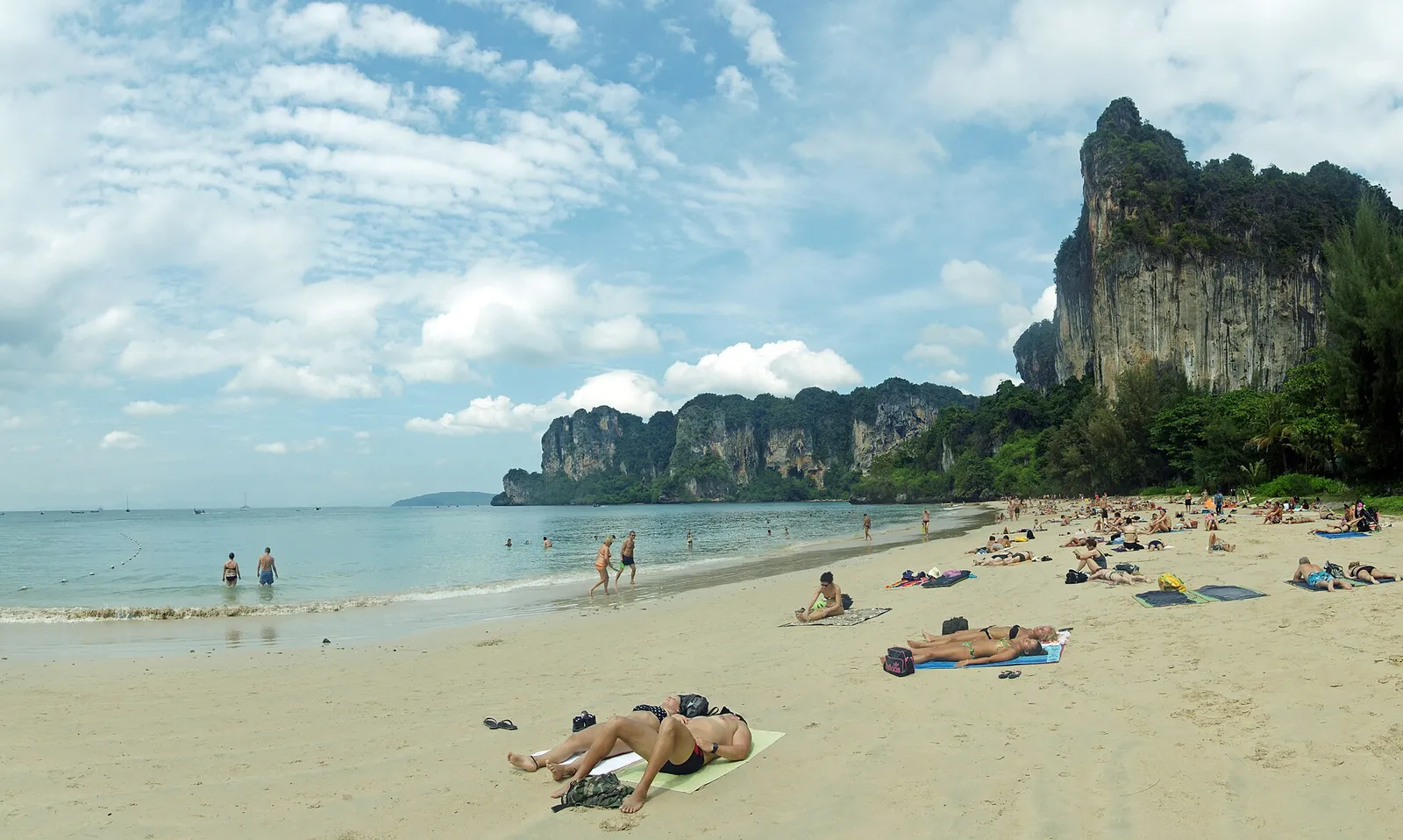
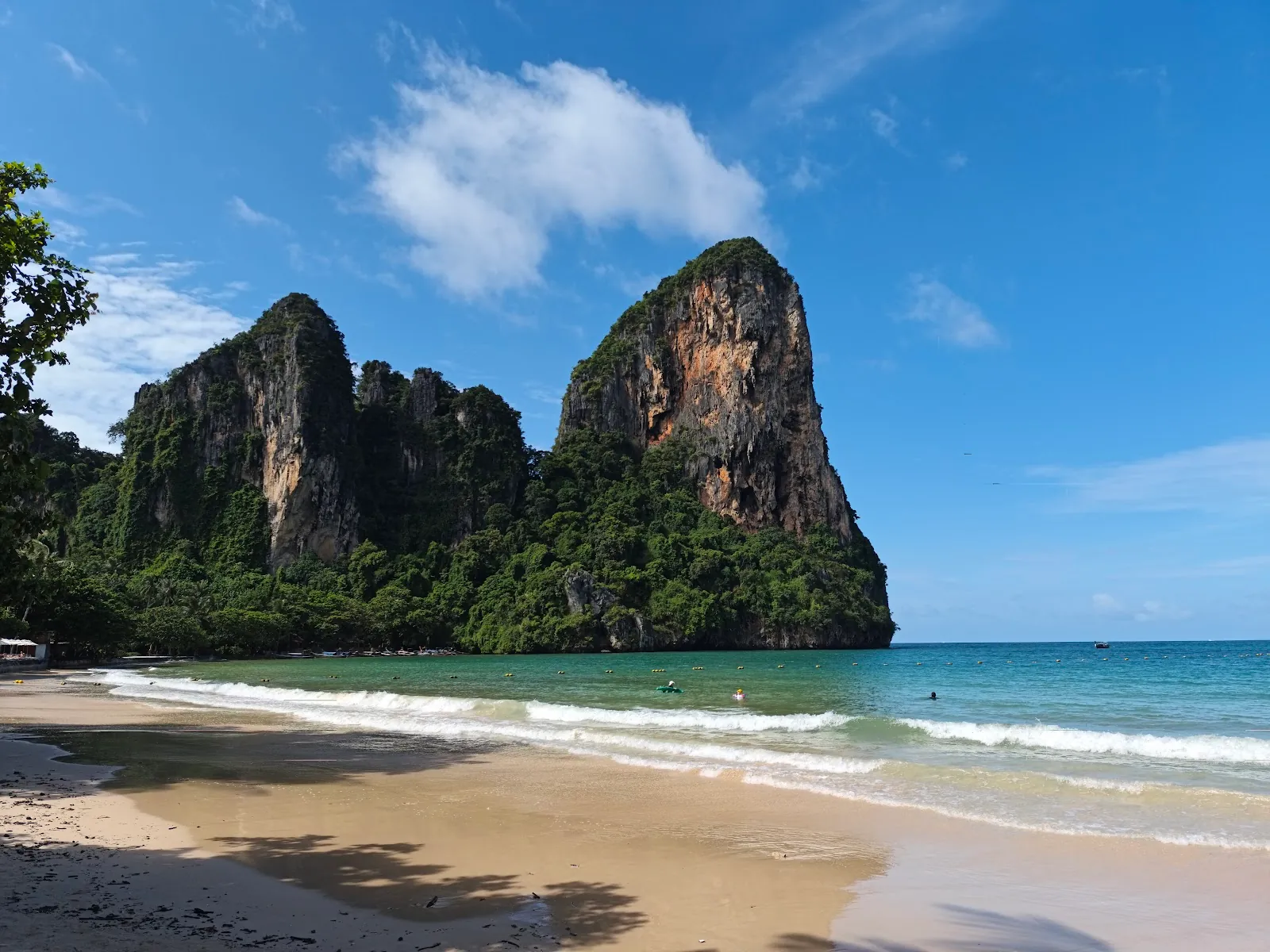
Krabi or Ao Nang, two to three nights. The mainland base with the karst scenery, and the gateway to Railay, which is reached only by boat despite being on the mainland.
Koh Phi Phi, two nights. Spectacular and busy in roughly equal measure. Two nights is plenty for most people. Note that Maya Bay closes annually for reef recovery, and in 2026 that closure ran from 1 August to 30 September.
Koh Lanta, four nights. The one to slow down on. Longer, quieter beaches, a working island rather than a resort strip, and easy ferry links north. Our Koh Lanta guide covers the individual beaches, which vary far more than the island’s flat profile suggests.
Optional: Koh Yao Noi or Koh Jum. Smaller, quieter, less developed, and a good substitute if Phi Phi does not appeal.
Phuket sits at the top of this chain and works better as an arrival airport than as an island stop on a hopping trip.
Route two: the Gulf triangle
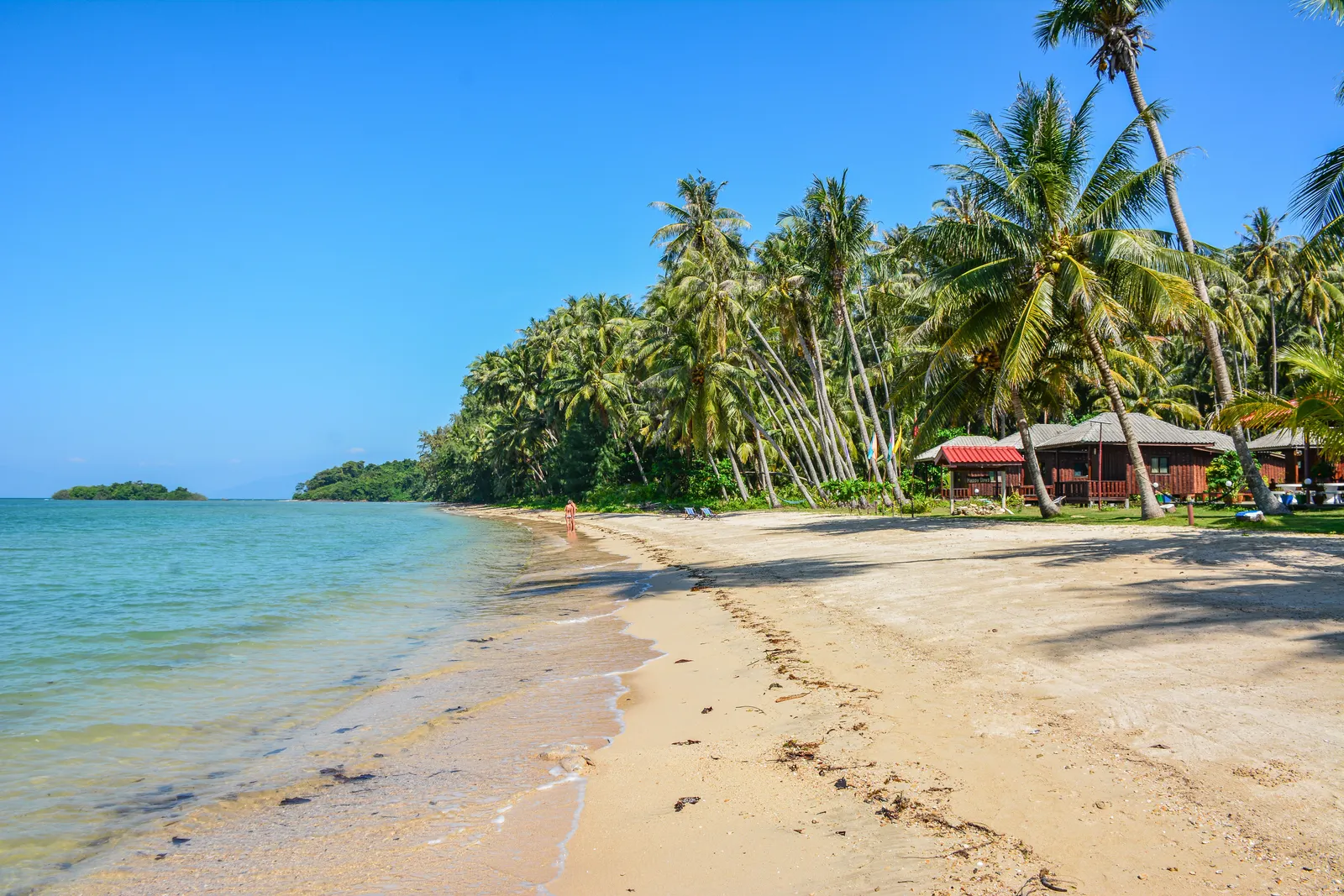
Three islands, close together, connected by frequent boats, and genuinely different from one another.
Koh Samui, three nights. The largest and most developed, with its own airport, proper roads and the widest range of accommodation. The practical entry point.
Koh Phangan, three to four nights. Far more than the Full Moon Party. The north and east of the island are quiet, forested and slow, and the party is confined to one beach.
Koh Tao, three nights. Small, hilly and built around diving. It is one of the cheapest places in the world to certify as a diver, which shapes the whole atmosphere of the island.
The crossings between the three are short, frequent and among the easiest boat journeys in the country, which is what makes this the better route for a first hopping trip.
Combined boat and transfer tickets remove most of the island-hopping frictionOne booking covering the pier transfer and the crossing means someone else is responsible if the first leg runs lateThe national park islands
Several of Thailand’s best snorkelling and diving destinations are marine national parks rather than places you stay, and they follow their own calendar.
Similan and Surin Islands. These close annually for roughly five months, from around 15 May to 15 October, during the monsoon. The Department of National Parks announces the reopening date only one or two weeks ahead, so treat mid-October as approximate rather than fixed. Do not book non-refundable flights around an assumed opening day.
Ang Thong Marine Park. Reached as a day trip from Samui or Phangan, and generally more weather-dependent than distance-dependent.
Access is by day trip or liveaboard. You cannot casually turn up, and park entry fees are charged separately from the boat trip.
Building the actual itinerary
A workable two-week island trip has this shape:
Days 1 to 2. Arrival and a night near the airport or in the gateway town, because arriving at a pier straight off a long-haul flight is how people miss boats.
Days 3 to 12. Three islands, with the longest stay in the middle one. Four nights, three nights, three nights is a good distribution.
Days 13 to 14. Back to the mainland with a full day of slack before the flight home. Ferries get cancelled. Build for it.
Move in the morning. Boats run more frequently early, the sea is generally calmer, and you arrive with the afternoon still ahead of you rather than checking in at dusk.
Never connect a ferry to a same-day international flight. This is the single most common way island-hopping trips go wrong.

A few practical notes.
Luggage. Boats mean carrying your bags across sand, up ramps and onto pickup trucks. A soft bag or a backpack is worth more here than on any other kind of Thai trip.
Cash. ATMs exist on all the main islands but charge a fee per withdrawal, and smaller islands have fewer of them. Carry more baht than feels necessary before heading somewhere small.
Weather cancellations. Operators cancel for sea conditions rather than rain. A grey day usually means boats run normally; a windy one may not.
Booking rhythm. Reserve the popular high-season crossings a day or two ahead, and reconfirm on the morning of travel. Timetables published online are often out of date by a season.
Park fees. National park entry is charged separately at each park and in cash, so keep small notes accessible on day trips.
In short. Choose a sea, not an island. Stay somewhere long enough to unpack. Move in the mornings, keep a spare day at the end, and never let a ferry be the last link in a chain that finishes at an international departure gate. Do that and island hopping in Thailand is exactly as easy as it looks in the photographs. Ignore it and you will spend your holiday looking at piers.