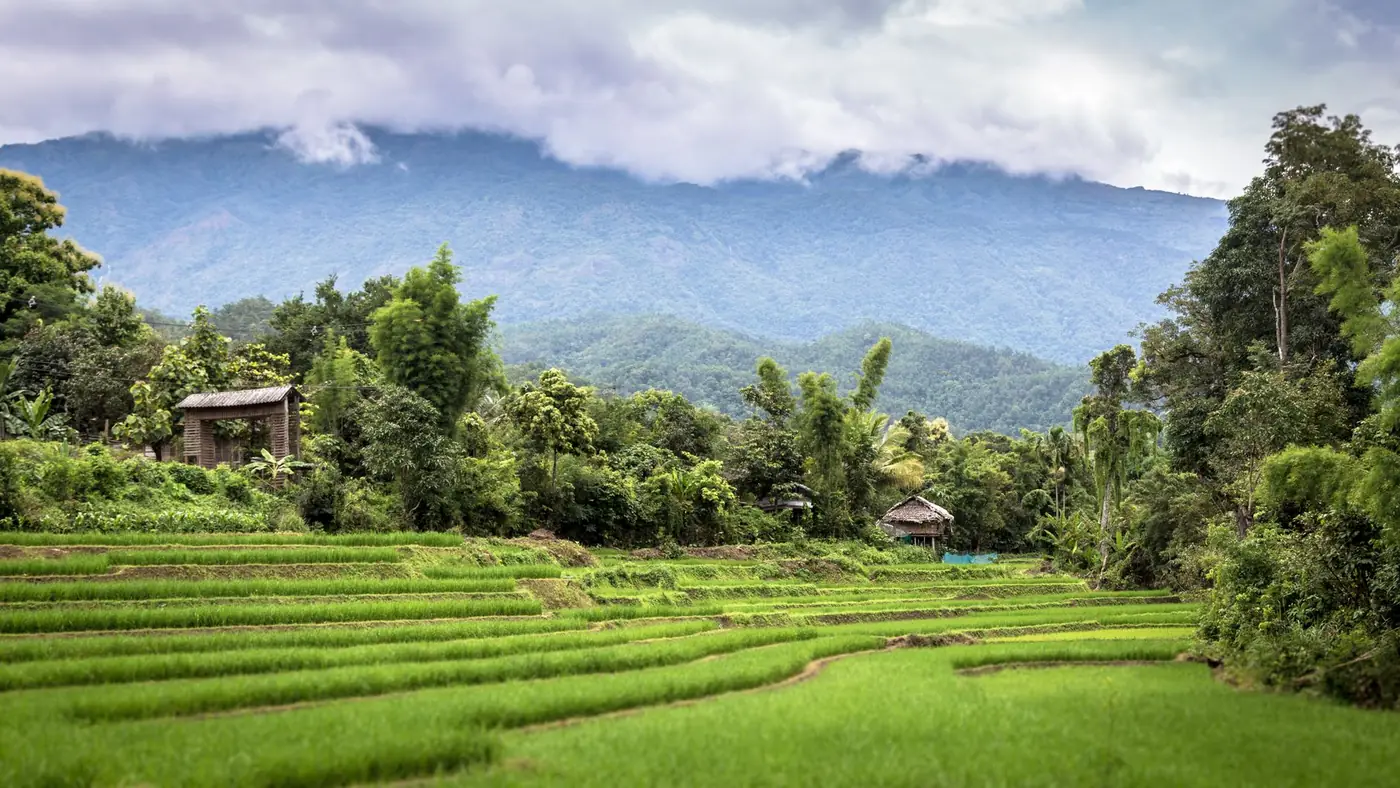
Pai is a small town in a mountain valley three hours north of Chiang Mai, reached by a road with a famously large number of bends, and it has been a fixture of the northern Thai backpacker route for decades. It is cheap, green, slow and extremely easy to stay in for longer than planned. It also divides people sharply: some find it the most relaxed place in the country and others find it a hill town with a bar street attached. Both readings are fair, and where you sleep decides which one you get.
The road
Around three hours from Chiang Mai on a modern mountain road with a very large number of tight bends, climbing and descending through forest.
Minibuses run frequently from the Chiang Mai terminal and are the standard method.
Motion sickness is the recurring theme, and it is real. Sit at the front, take tablets an hour before, skip the heavy breakfast, and look out of the window rather than at a phone.
By scooter it is a genuinely lovely ride for a confident rider and a serious undertaking for a novice, with luggage and mountain bends both working against you.
The road is the town’s filter, which is part of why the valley stays as it does.
What to do
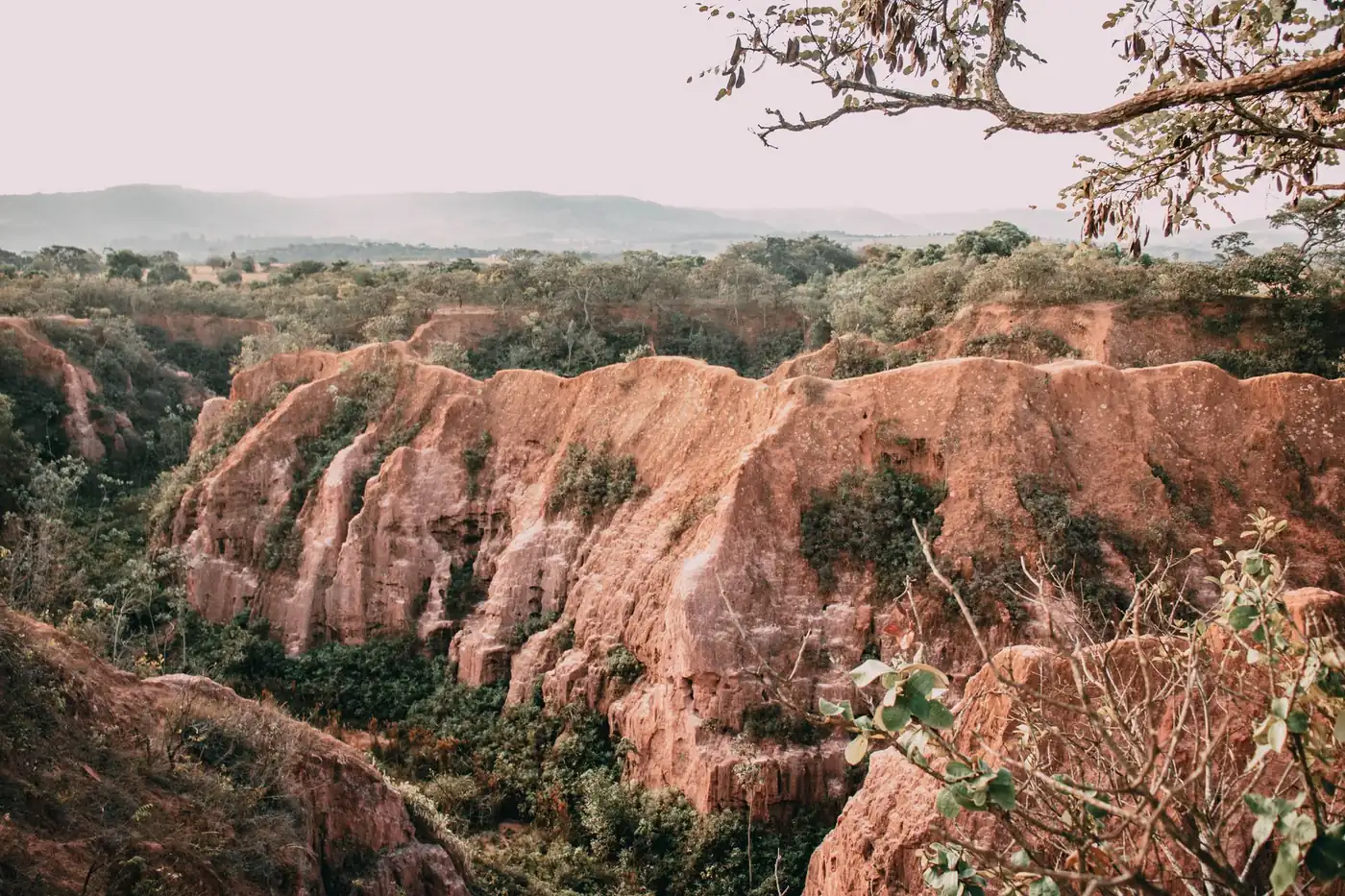
The canyon, a set of narrow eroded ridges with steep drops on both sides, walkable along the top and busiest at sunset, which is when to come.
Waterfalls, several within a short ride, varying with the season and best after the rains.
Hot springs, both developed and rough, in the valley around the town.
The bamboo bridge across the rice fields, which is the photograph everybody takes and is genuinely pleasant early in the morning.
Viewpoints on the ridges above the valley, reached by scooter, with the morning mist sitting in the bottom.
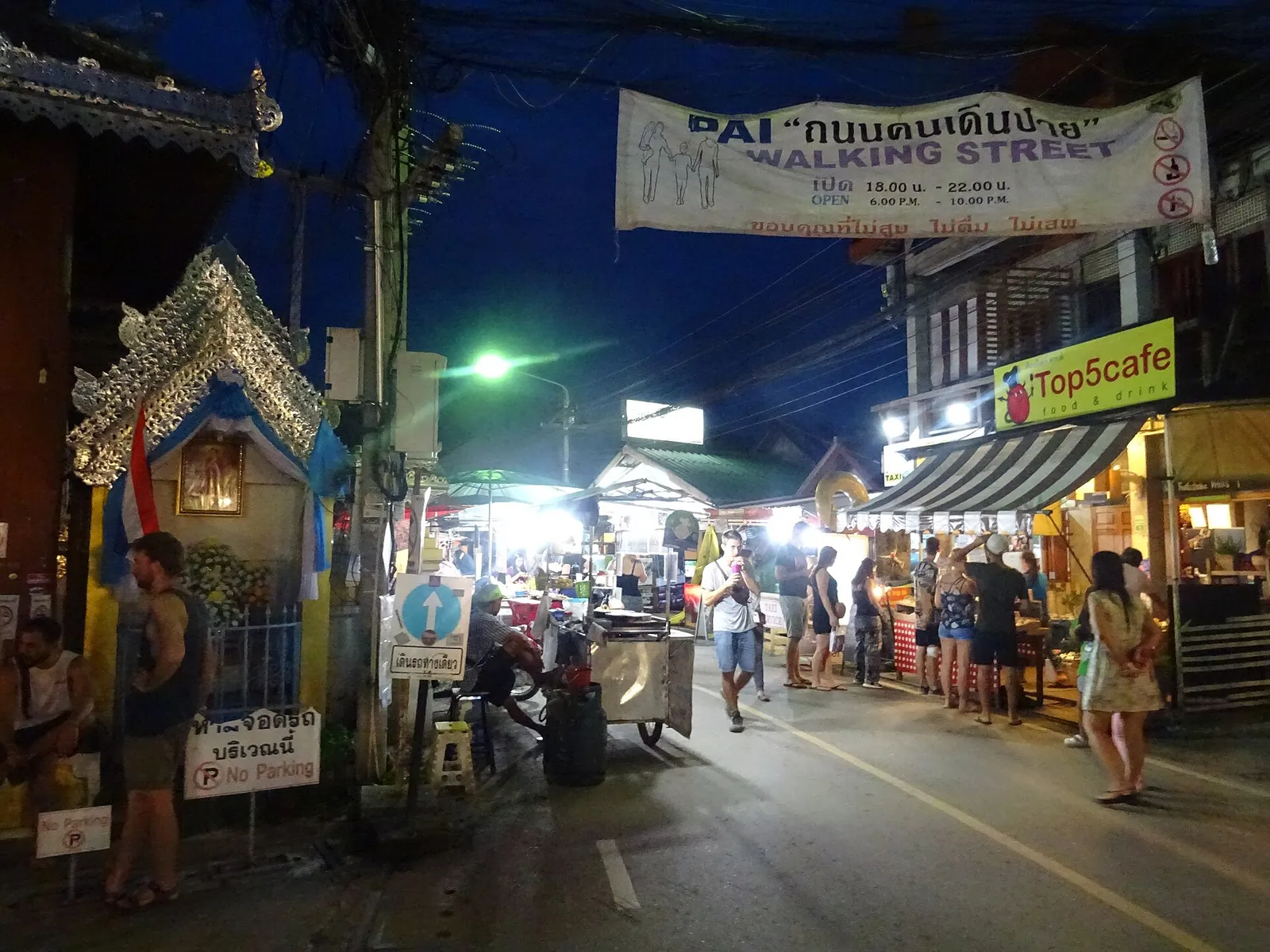
The walking street, which fills with food stalls and bars each evening and is the town’s social centre.
Where to stay
In town, within walking distance of the walking street, for evenings, food and company.
In the valley, in bamboo bungalows among rice fields a few kilometres out, for quiet, views and mornings with mist.
On the ridges, in the small resorts above the valley, for the view at a distance from everything.
All of it is inexpensive, which is why people stay.
Practical notes
Cash matters more here than in the cities, and machines exist but are limited.
Nights are cold in the cool season, genuinely, and bamboo bungalows are not insulated.
The burning season in roughly February to April affects the whole north, and the valley traps haze. Check current air quality before booking those months.
Book ahead for the cool season peak, when the town fills.
Getting onward to the far northwest loop or back to Chiang Mai runs on the same minibuses.
Where this fits in a northern trip
Pai is an extension of a Chiang Mai stay rather than a stop between places, since the road goes there and comes back.
For the city that everybody reaches first, its temples, markets and food, our Chiang Mai guide covers the base.
For the other long northern day trip, in the opposite direction and towards an artist’s white temple, our guide to Chiang Rai and the White Temple covers whether that drive is worth it.
And for the transport picture across the country, from the overnight trains to the domestic flights and the minibus network, our guide to getting around Thailand covers how the pieces connect.
The short version
Take the minibus, sit at the front and take travel sickness tablets an hour before, because the road is three hours of bends and it defeats a lot of people. Give the town two or three nights and expect to consider a fourth. Choose your accommodation by which Pai you want: walking street for evenings and company, rice fields for quiet and mist. See the canyon at sunset, a waterfall in the morning and a hot spring in between. Ride carefully if you rent a scooter and check what your insurance requires. And check air quality before booking the burning season months.