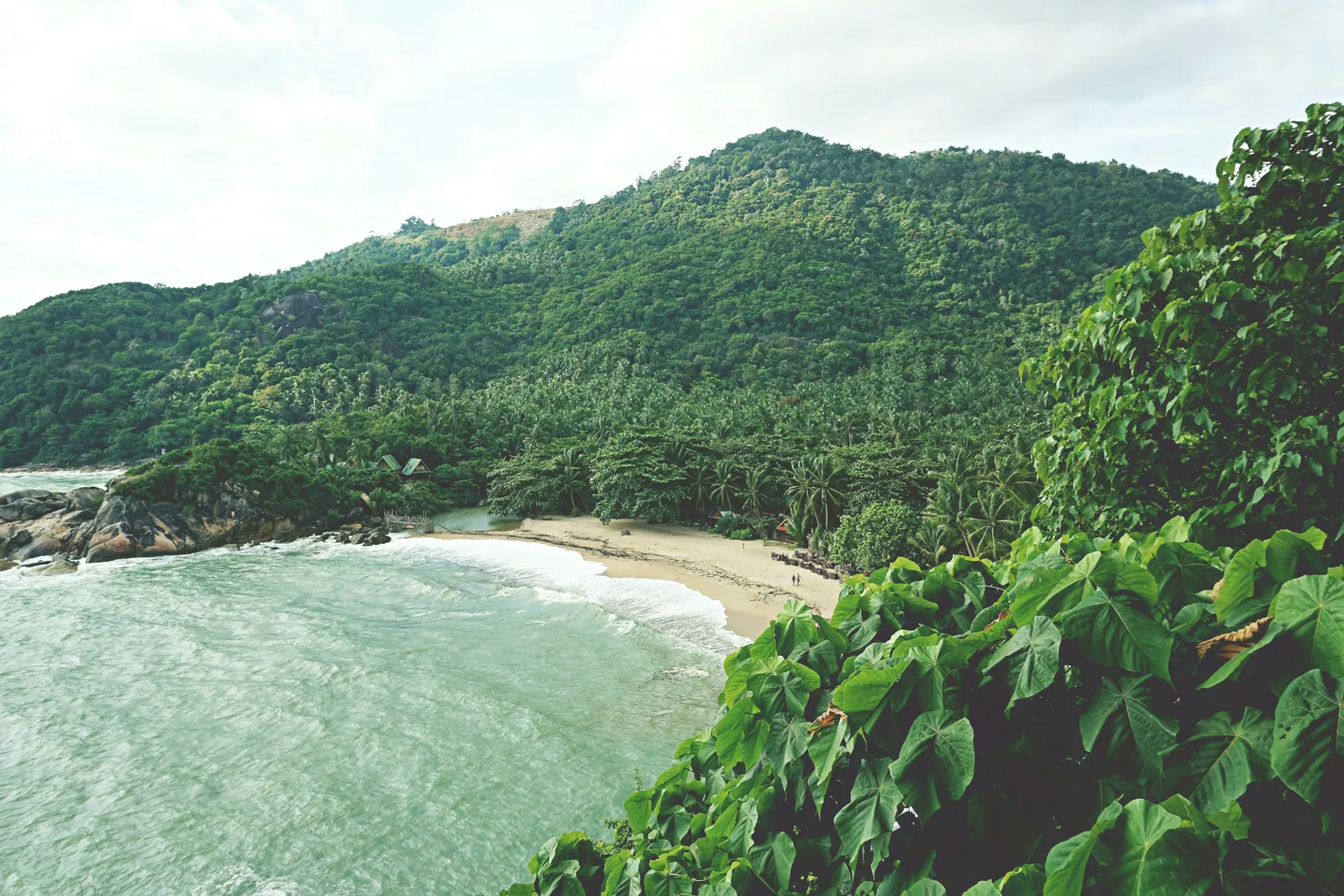
Koh Phangan has an image problem, in that it has exactly one image. Say the name and most people picture a beach full of people in fluorescent paint. That party exists, it happens on one beach, and for the other twenty-nine nights of the month it has almost nothing to do with the island most visitors experience.
The practical consequence is that where you sleep on Koh Phangan matters more than on most Thai islands. The south is nightlife and convenience, the west is wellness and sunsets, the north is quiet bays, and the east is barely developed at all. These are not shades of the same holiday. Choosing badly means either being kept awake or being stranded a long way from anything.
The shape of the island
Koh Phangan sits in the Gulf of Thailand between Koh Samui and Koh Tao. There is no airport and no bridge, so every arrival is by boat, and almost everyone lands at Thong Sala, the main town and pier on the west coast.
A sealed main road runs from Thong Sala around the south to Haad Rin and north up the west coast to Srithanu and beyond, and this is the easy part of the island to move around. Beyond that, the roads to some northern and eastern bays climb and drop steeply and their surfaces vary considerably from one stretch to the next. Some are fine. Some are not a first scooter ride. Conditions also change with resurfacing and with the rains, which is why it is worth asking a property directly how guests usually get there rather than trusting a general assurance.
Haad Rin: the party end
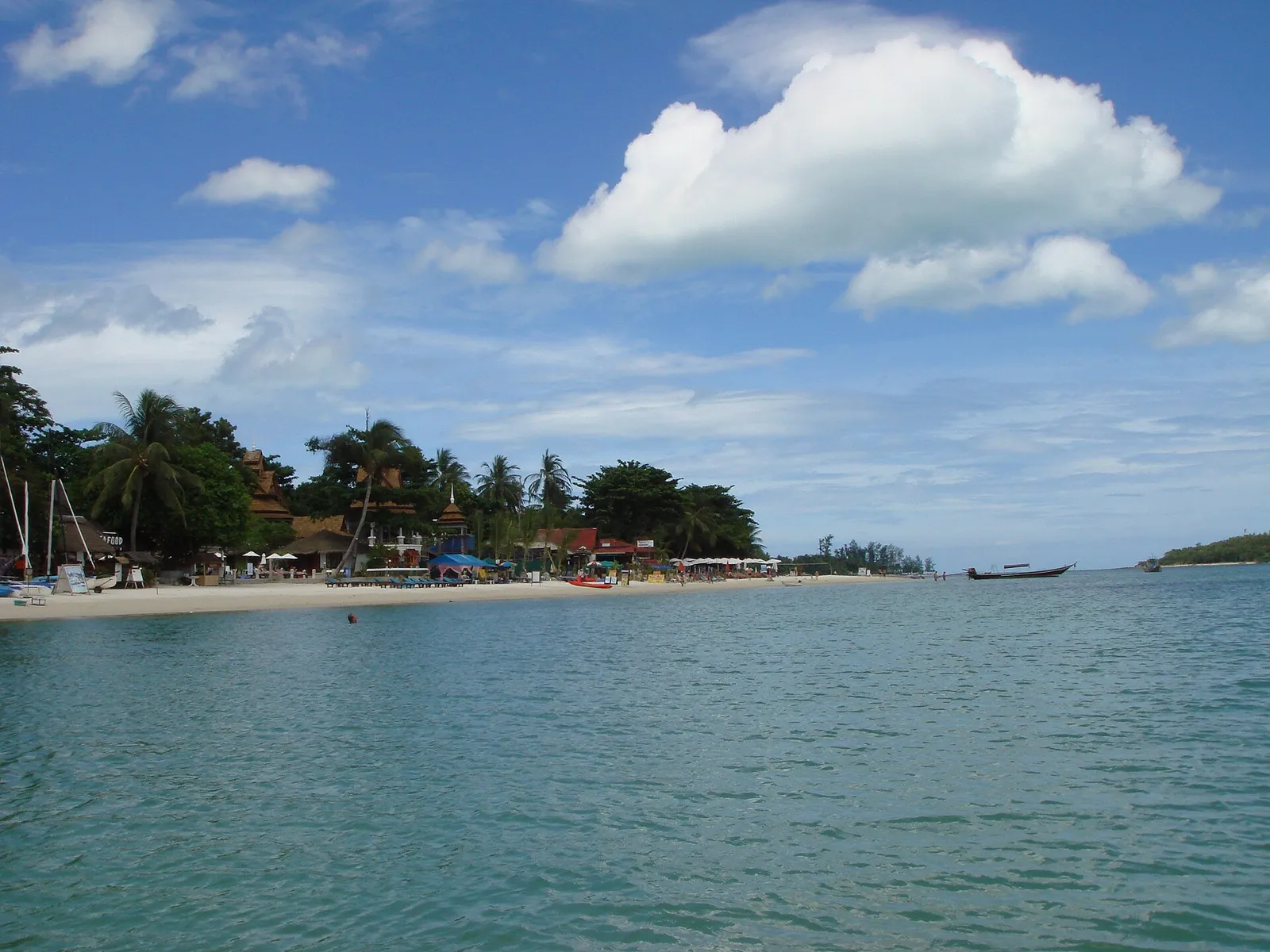
Haad Rin occupies the southeastern tip, effectively a small peninsula with a beach on each side. Haad Rin Nok, the sunrise beach, is where the Full Moon Party takes place; Haad Rin Nai, the sunset side, is quieter and has the pier for boats to Koh Samui.
Staying here has one clear advantage on party nights: you can walk home. Around those dates, though, accommodation across Haad Rin books out, rates rise steeply, and minimum-night stays are common. If a party date is your reason for coming, treat booking as an early task rather than a late one.
Outside those nights Haad Rin is a fairly ordinary small resort town with bars, cheap food and a good beach. It is not a wellness retreat, and it never pretends to be.
Ban Tai and Ban Khai, along the south coast between Thong Sala and Haad Rin, are the sensible compromise: a short ride from the party, a wide spread of budget and mid-range accommodation, calm shallow water and easy access to the pier.
Srithanu and the west coast: wellness and sunsets
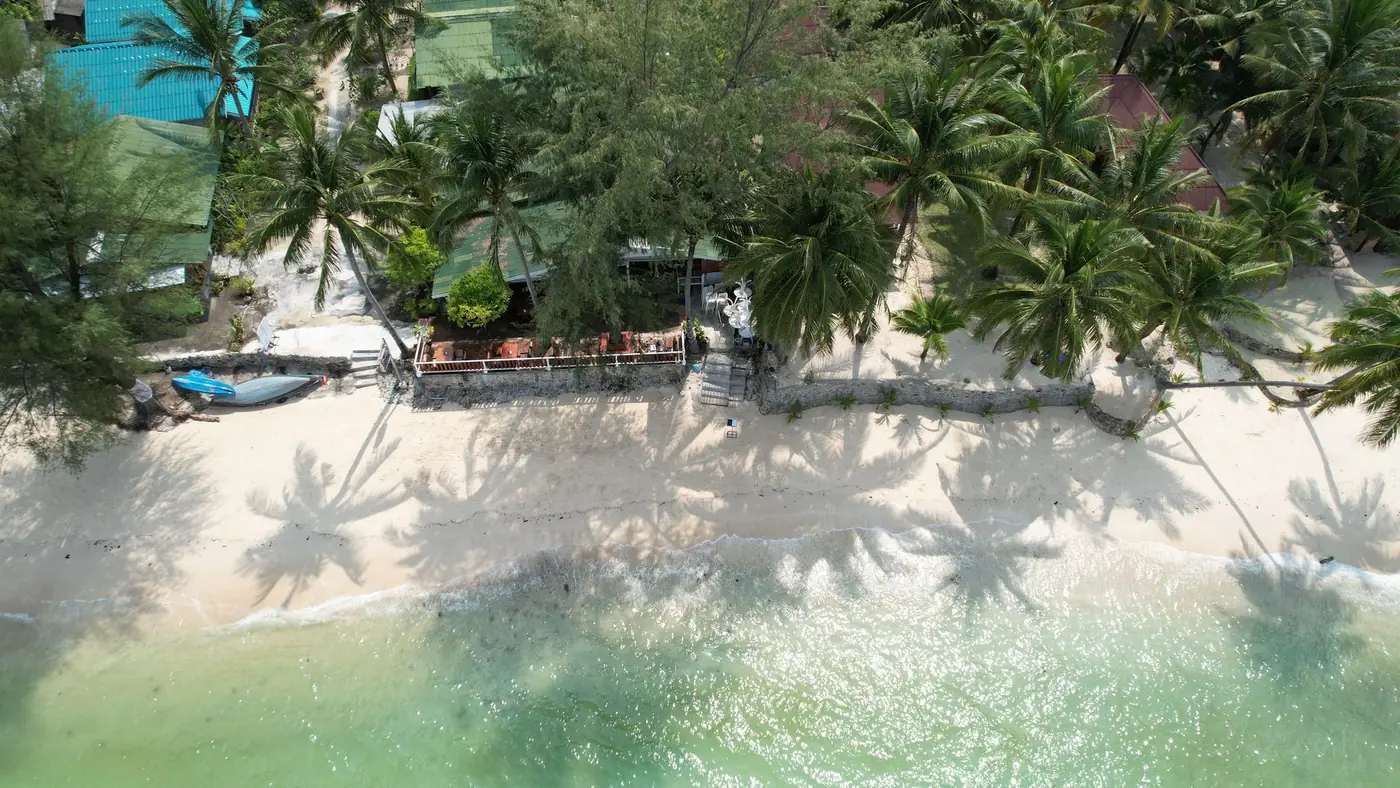
North of Thong Sala, the west coast around Srithanu, Haad Yao and Haad Salad has become the island’s second identity: yoga schools, retreat centres, vegetarian cafes and a long-stay community that gives the area a settled, unhurried feel.
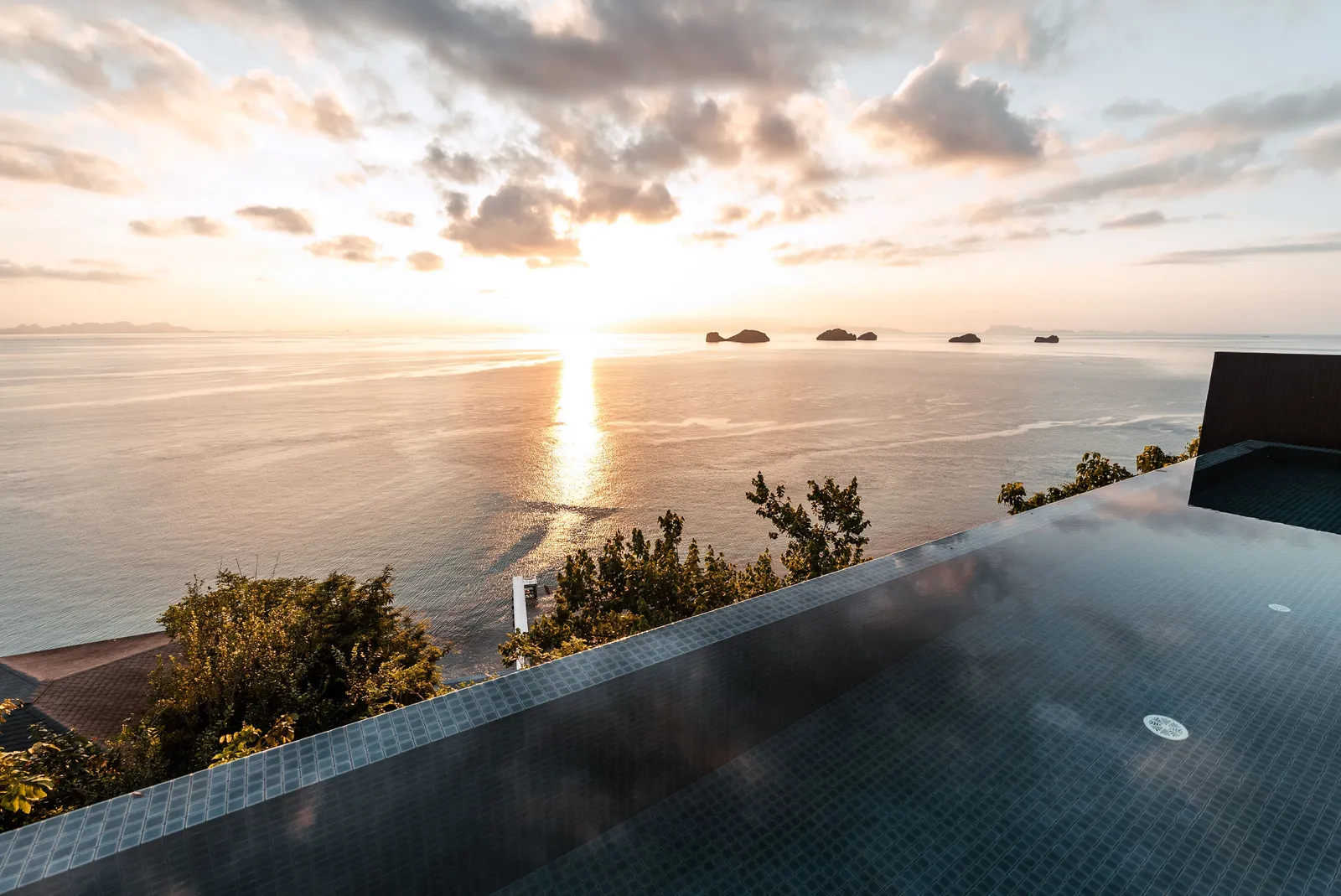
The beaches here face west, so sunsets are the daily event, and the water is generally calm and shallow. Accommodation ranges from simple bungalows to boutique properties, with a mid-range bias. It is well connected to Thong Sala by road, which makes it one of the easier areas to base yourself without your own transport.
The atmosphere is specific enough that it is worth knowing in advance whether you want it. Some travellers find it exactly right; others find it a little insistent.
Koh Phangan rates move with the lunar calendarCheck your dates against the current party schedule before you book, in either directionThe north: Chaloklum, Bottle Beach and the quiet bays
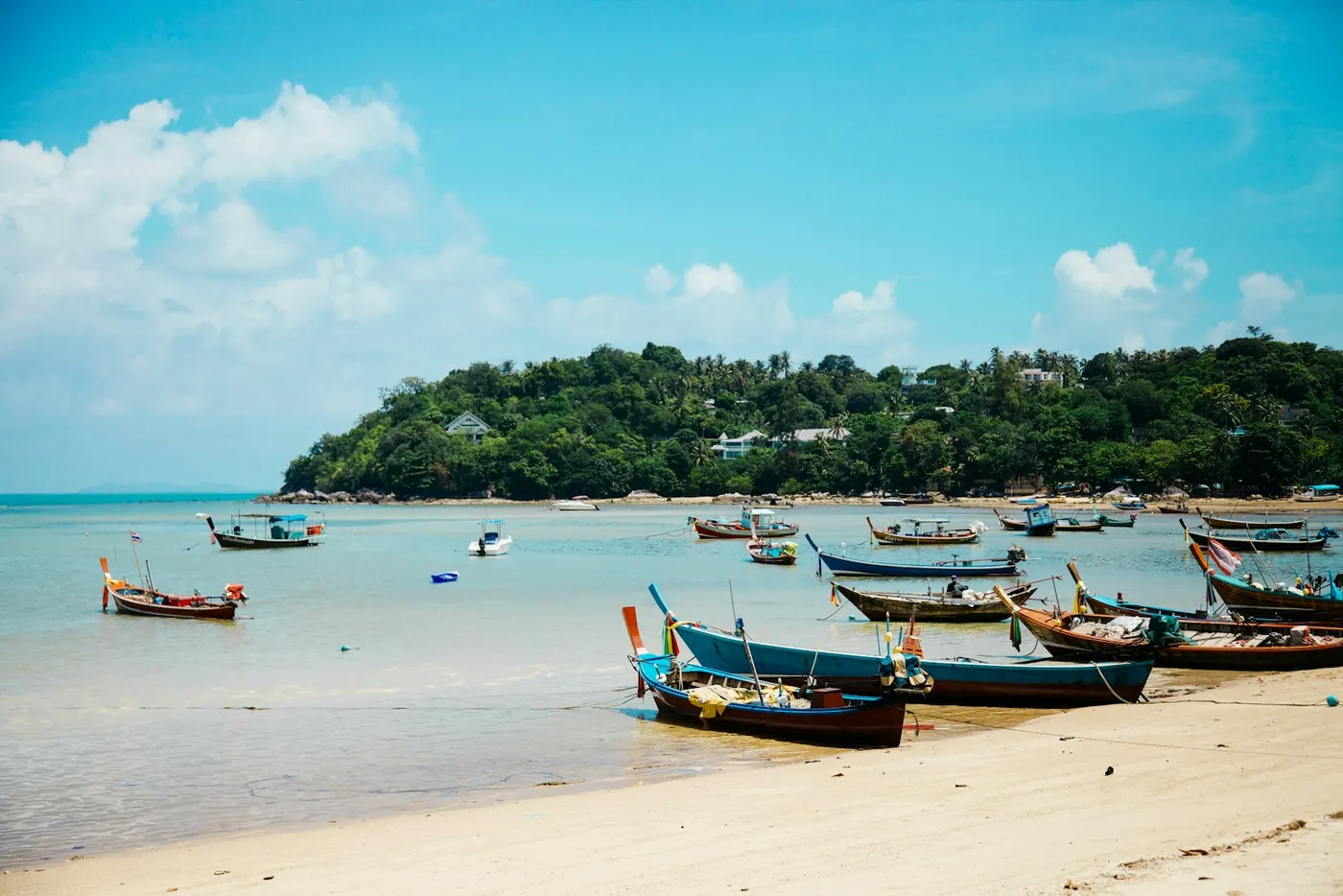
The north coast is where the island gets genuinely quiet. Chaloklum is a working fishing village with a bay, a handful of restaurants and a low-key resort scene. Haad Khom and Haad Khuat, better known as Bottle Beach, sit further east along the coast in small coves backed by hills.
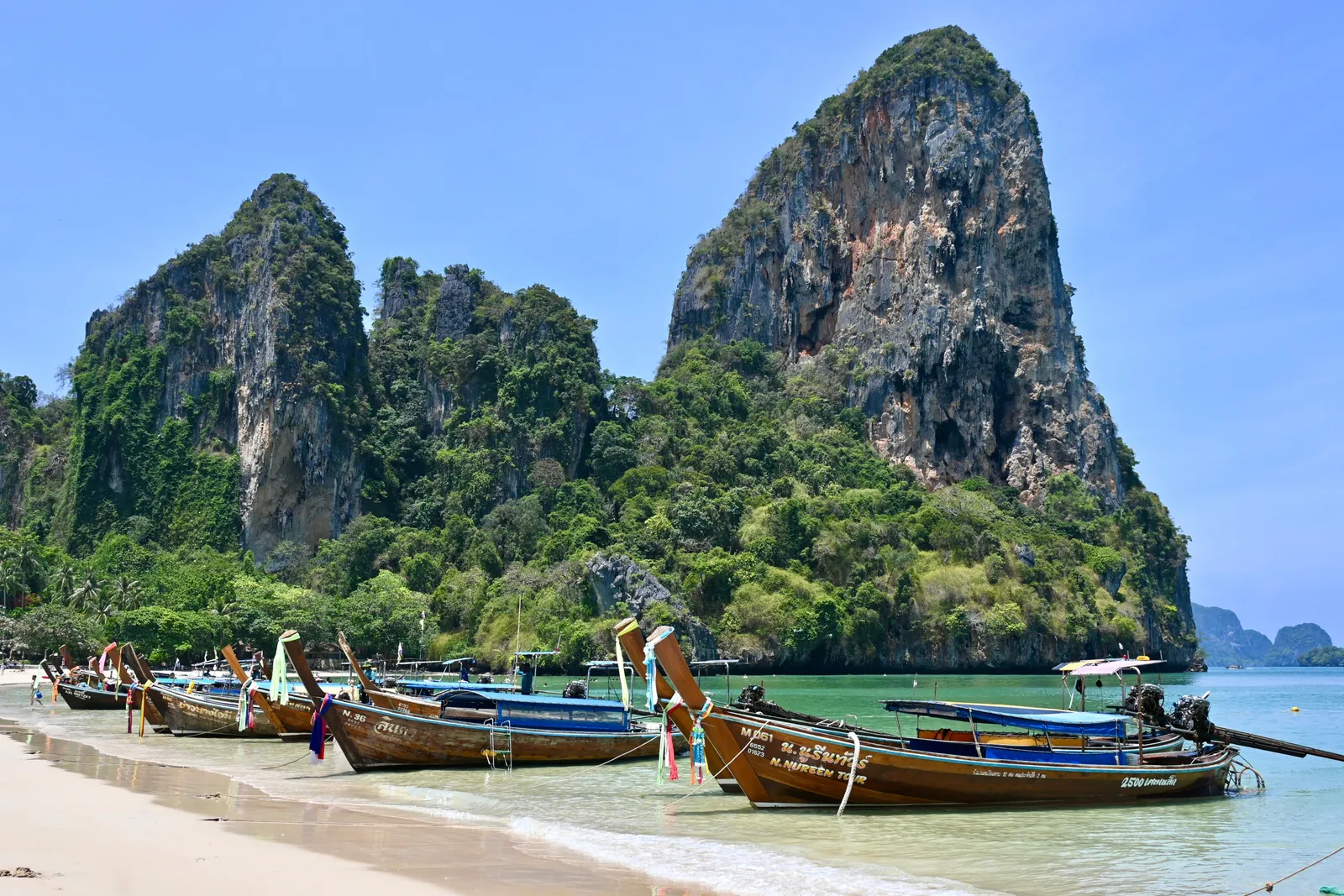
Bottle Beach in particular has long been reached most easily by longtail boat from Chaloklum rather than overland, and the walking route is a proper hike. That inaccessibility is what has kept it as it is.
This is the right area if what you want is a beach, a hammock and very little else. It is the wrong area if you want choice of restaurants, reliable late transport or a short trip to the pier.
The east coast: for the determined
The eastern bays, including Than Sadet and Thong Nai Pan, are the least developed part of the island. Thong Nai Pan has resorts, including some at the upper end, and a beautiful double bay; the smaller eastern coves have very little.
Access has historically been the defining issue here, over roads that climb sharply through the interior. It is manageable with the right vehicle and considerably less so on a small scooter in the rain. Most properties in this area arrange transfers, and taking them up on it is usually the right call.
Getting there, and pairing with Samui
Every route to Koh Phangan is a boat. Ferries and speedboats run from Koh Samui, from Koh Tao, and from the mainland piers at Surat Thani and Chumphon, operated by several companies on overlapping routes. Crossing from Samui is the shortest and most frequent option, and many travellers fly into Samui and continue from there. Weather cancels sailings from time to time, so do not schedule a same-day connection to an international flight. Our guide to ferry routes between the Thai islands sets out how the network fits together.
Plenty of trips combine the two islands, and they work as a pair precisely because they are so different: Samui has the airport, the malls and the full resort infrastructure, as our overview of Koh Samui explains, while Phangan has the beaches and the space. If you are splitting a week between them, the area-by-area breakdown for Samui is worth reading alongside this one, since the same logic of picking a coast applies there too.